
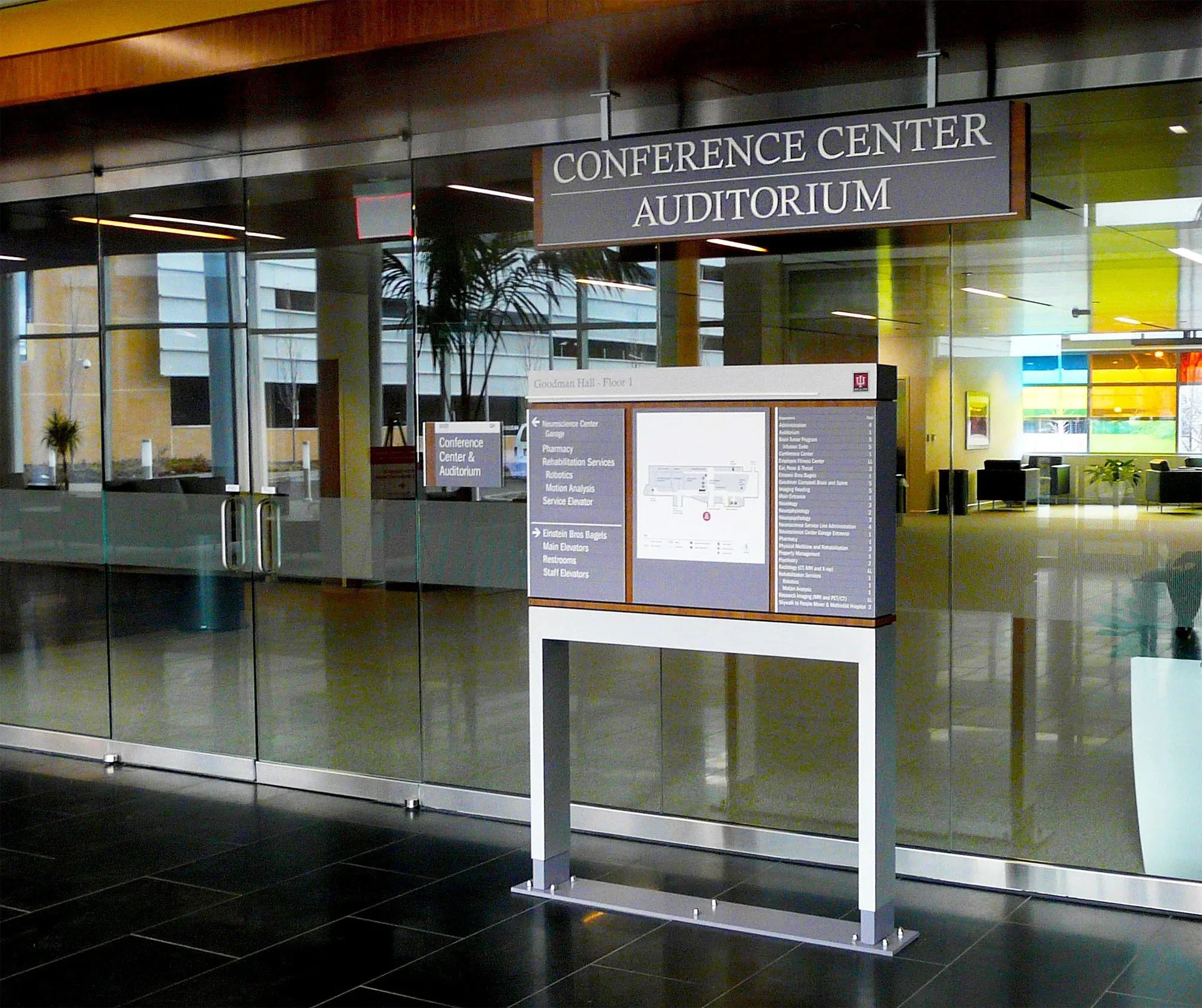
Directional Signs & Wayfinding Systems
Directional signs are the backbone of any effective wayfinding program. In complex environments from sprawling hospital campuses to multi-tenant office centers, clarity is not a luxury; it is an operational necessity. Effective directional signage does more than point left or right; it reduces visitor anxiety, improves traffic flow, and reinforces a space's architectural identity.
The Strategy Behind the Arrow
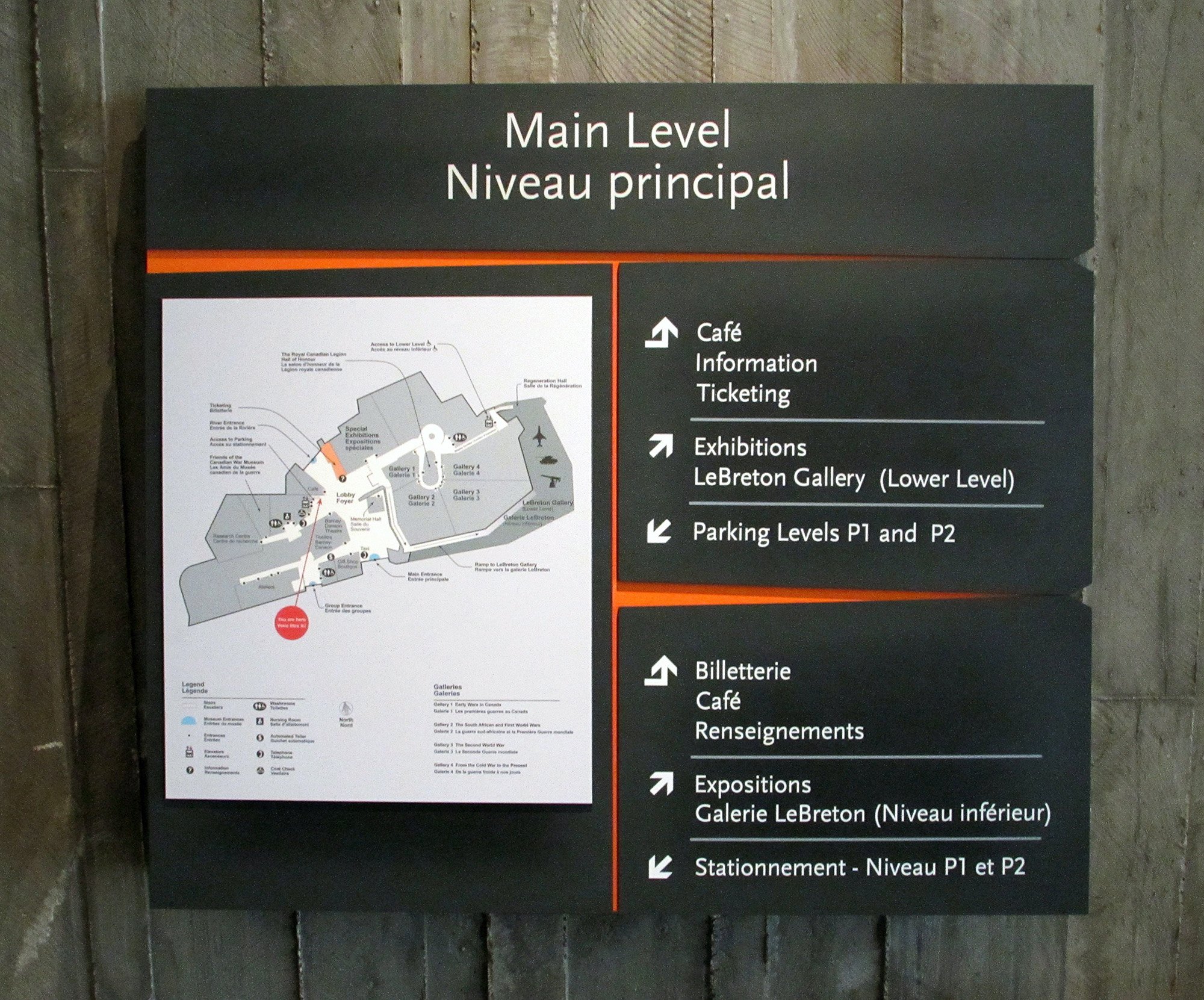
A directional sign is only as effective as the strategy behind it. At Nicolson Associates, we treat arrows and symbols as part of a larger communication hierarchy. Effective directional signage requires:
Progressive Disclosure: Providing users with only the information they need at each decision point, avoiding cognitive overload.
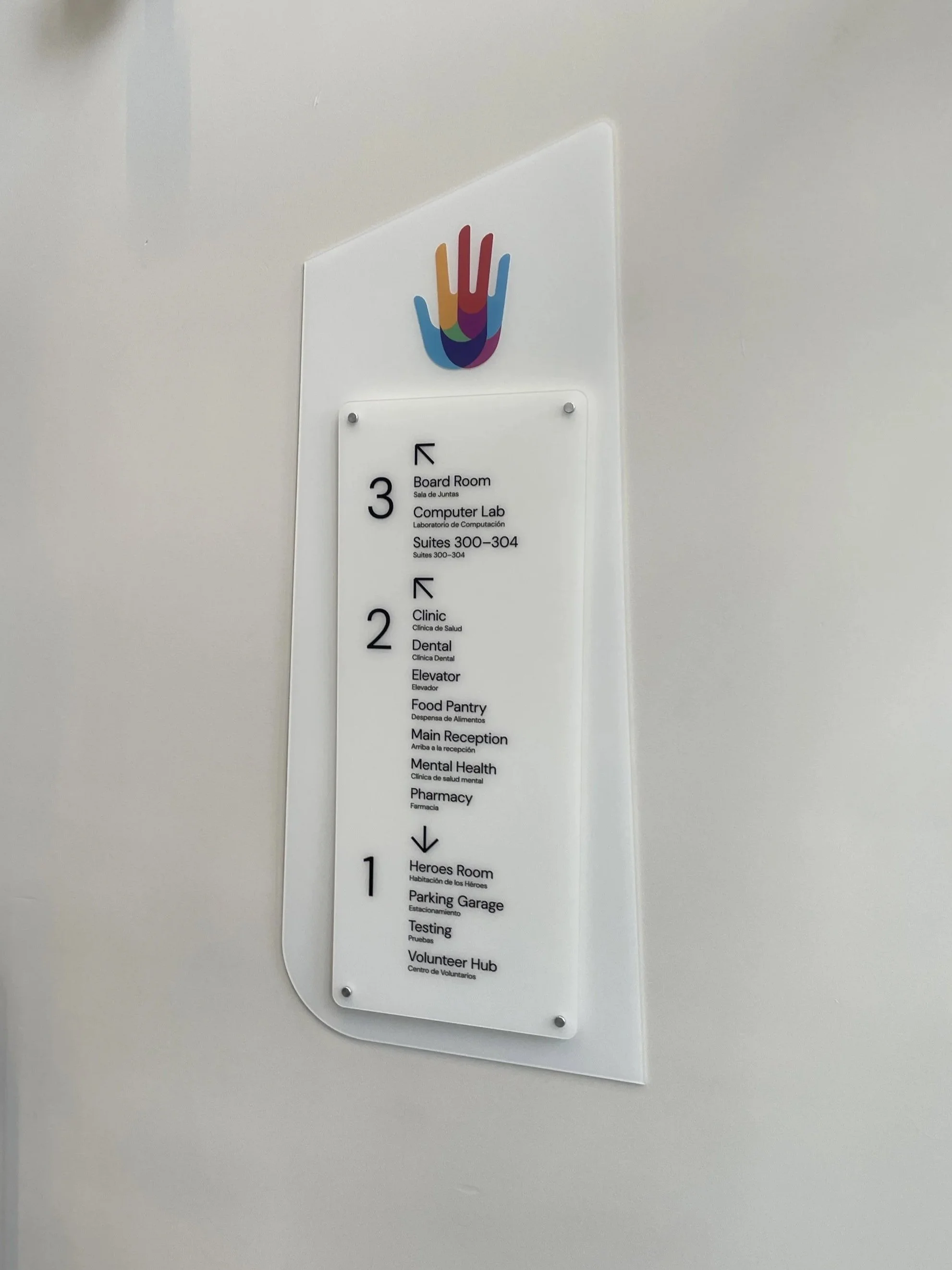
Consistent Visual Language: ensuring arrows, typography, and symbols maintain a uniform weight and style across the entire facility.
Architectural Integration: Placing signs where they are intuitively looked for, rather than as an afterthought. Whether for an interior corridor or a primary vehicular entrance, the "arrow" is the final step in a rigorous planning process.
Directional Solutions by Environment
We tailor directional systems to the specific operational demands and existing designs of the environment:
-
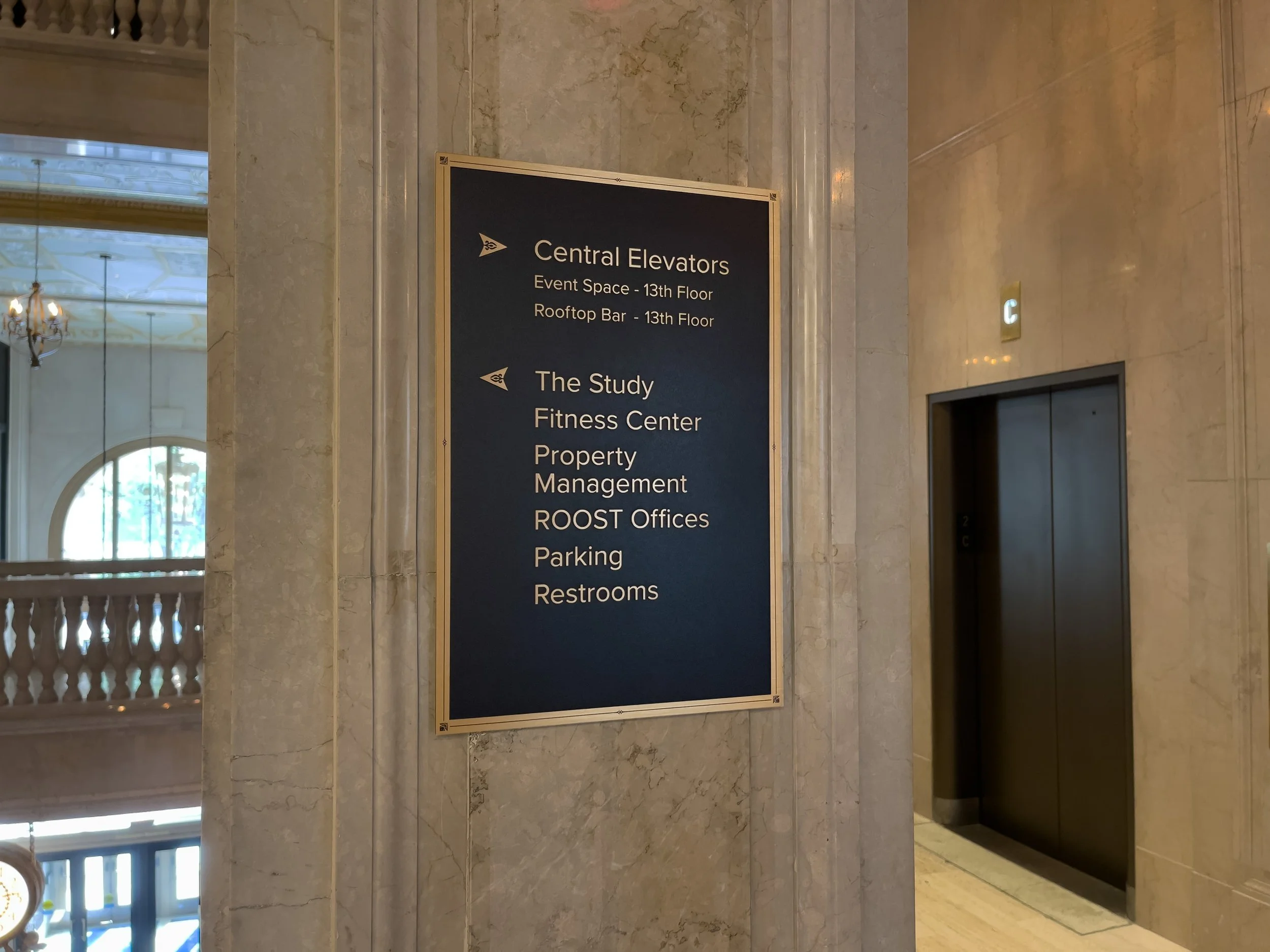
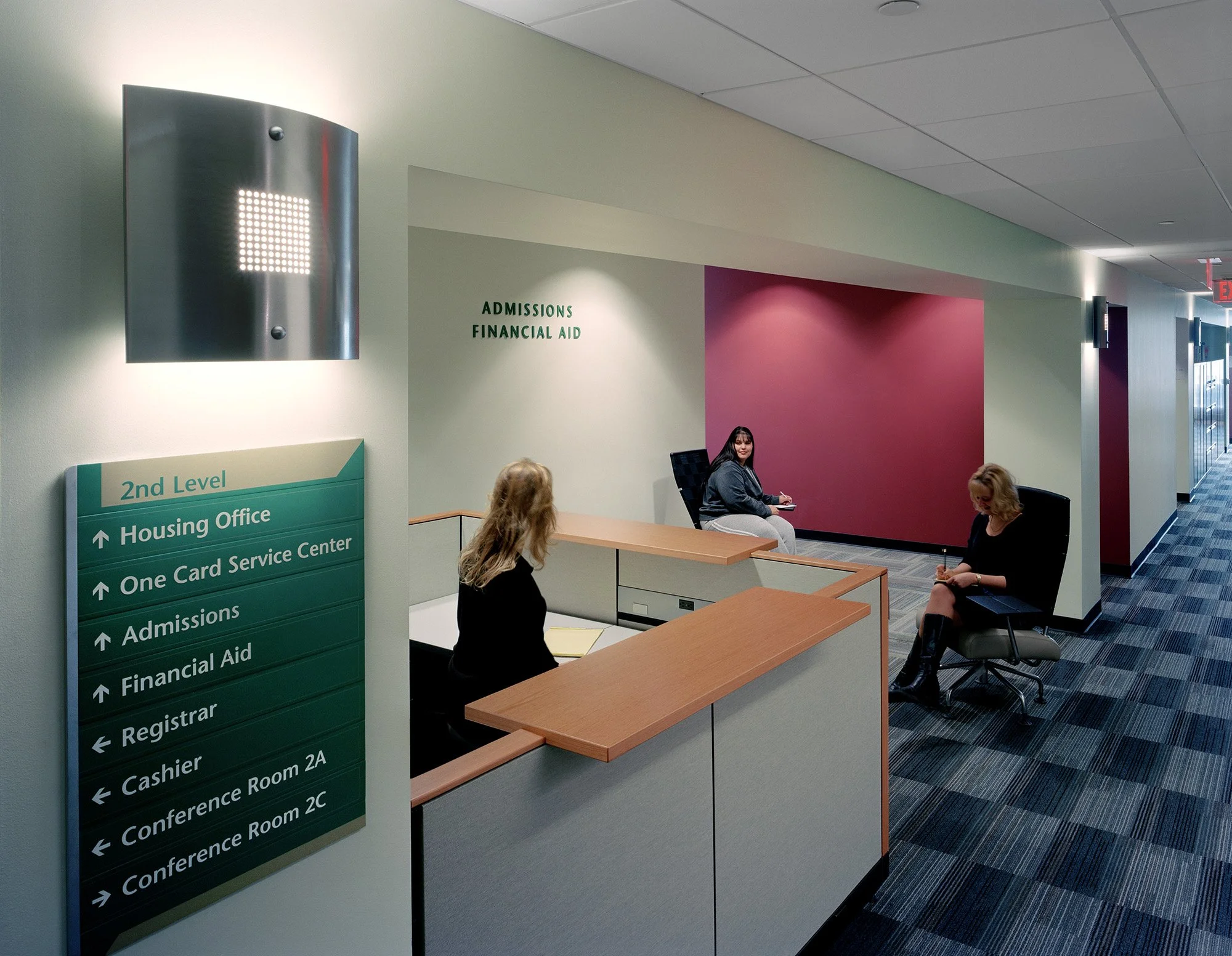
Interior Directional & Wayfinding:
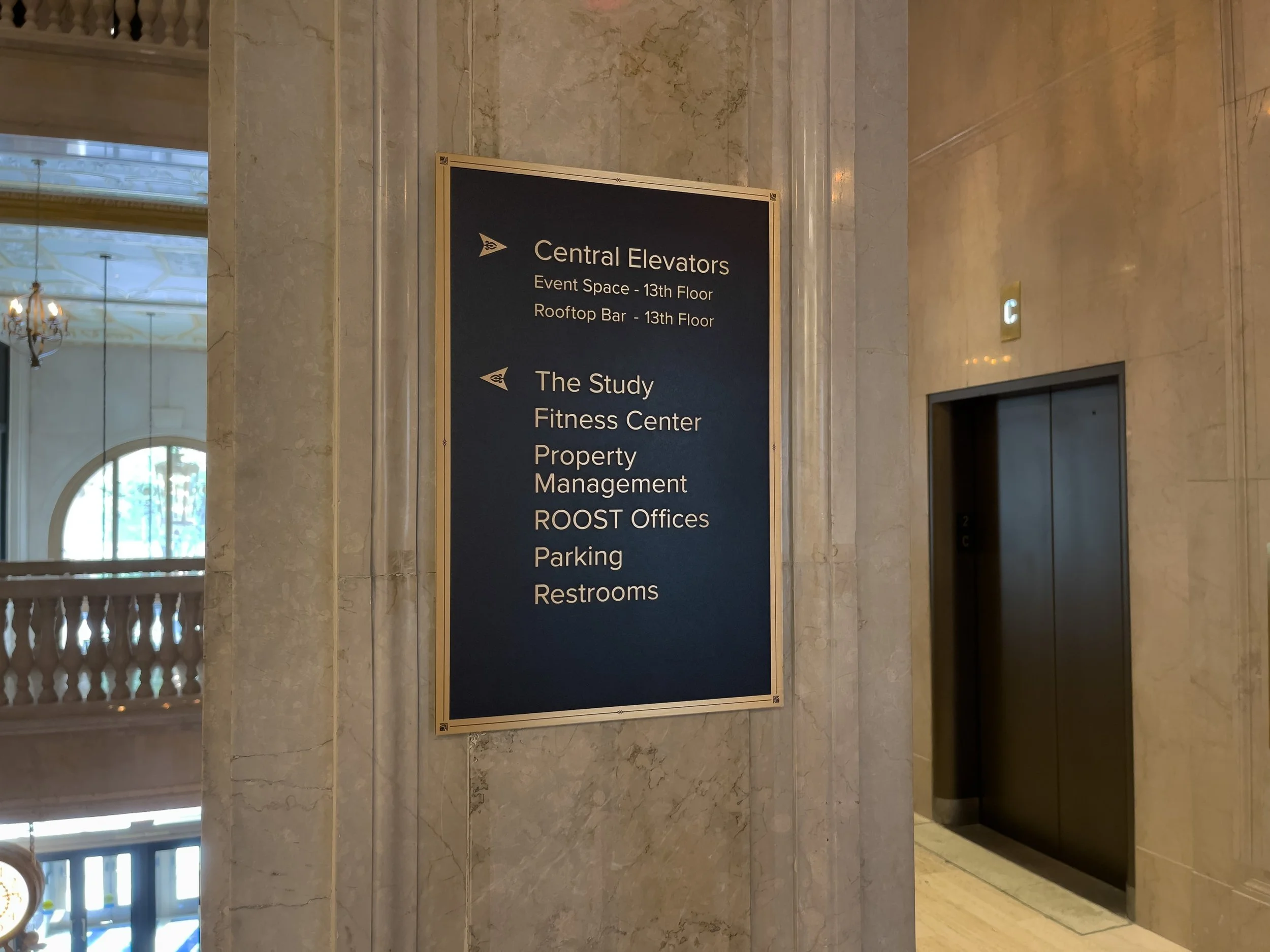
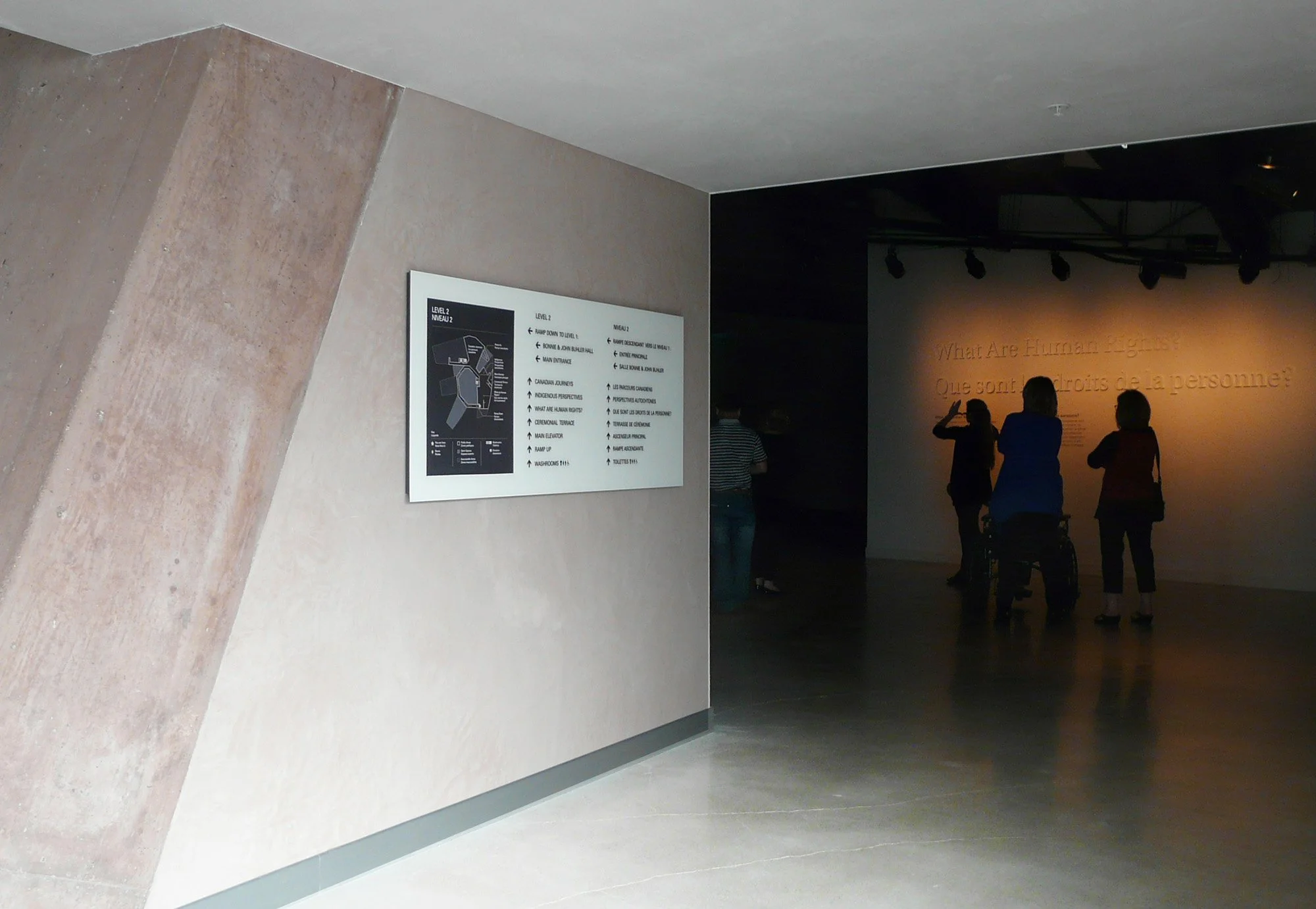
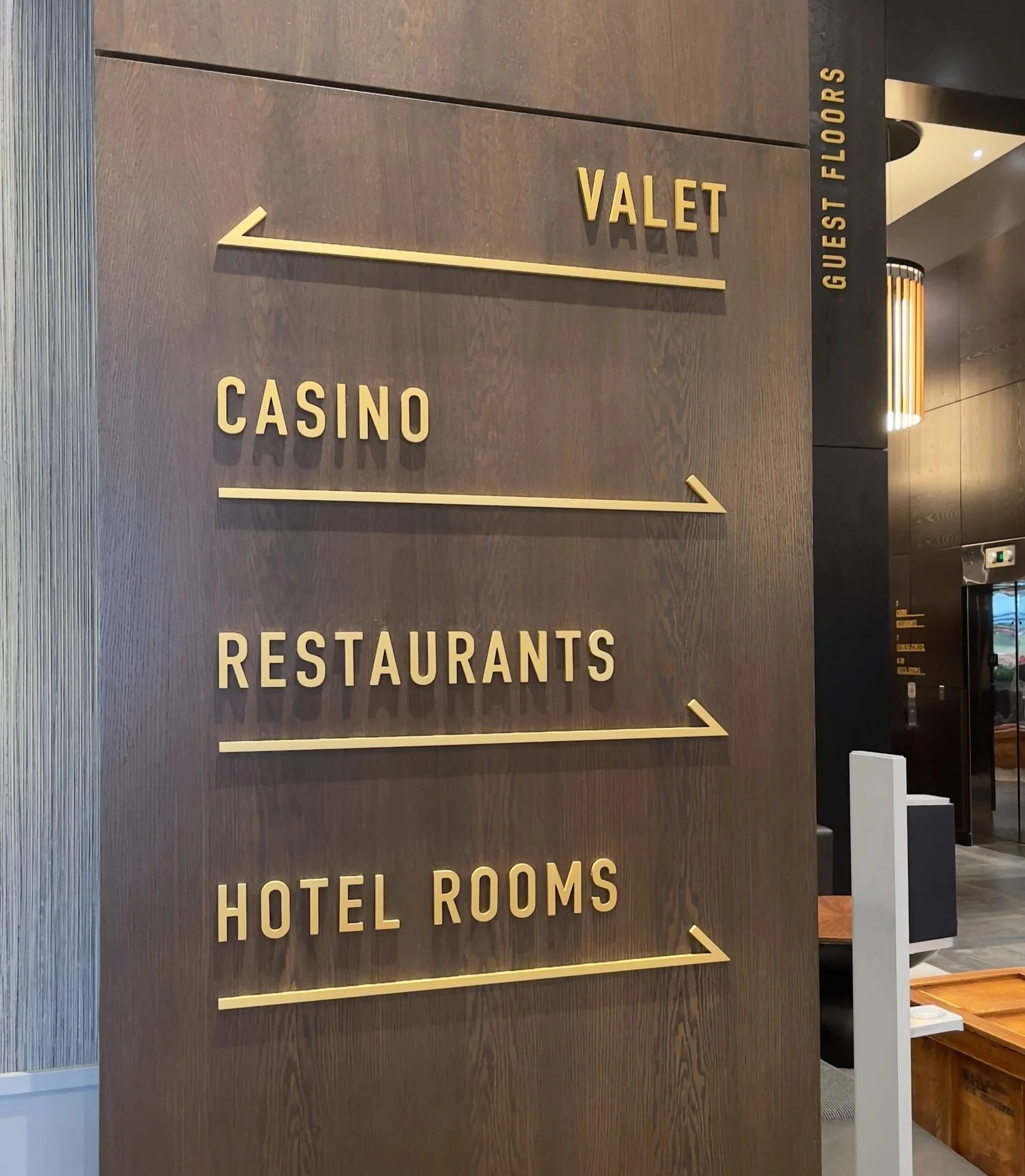
Guiding visitors through lobbies, corridors, and transition points. In complex layouts, these signs serve as the "connective tissue" that links arrival points to final destinations.
-
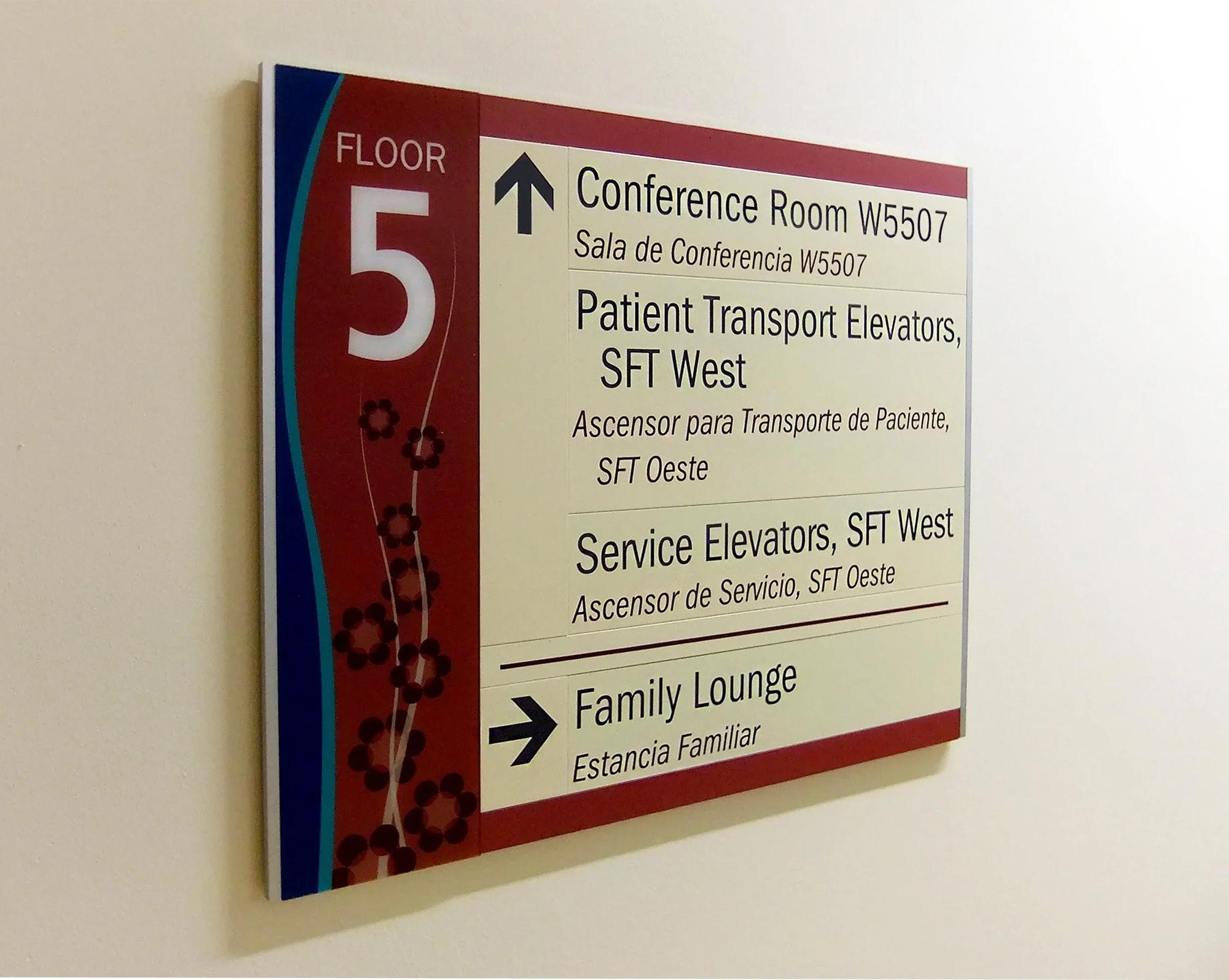
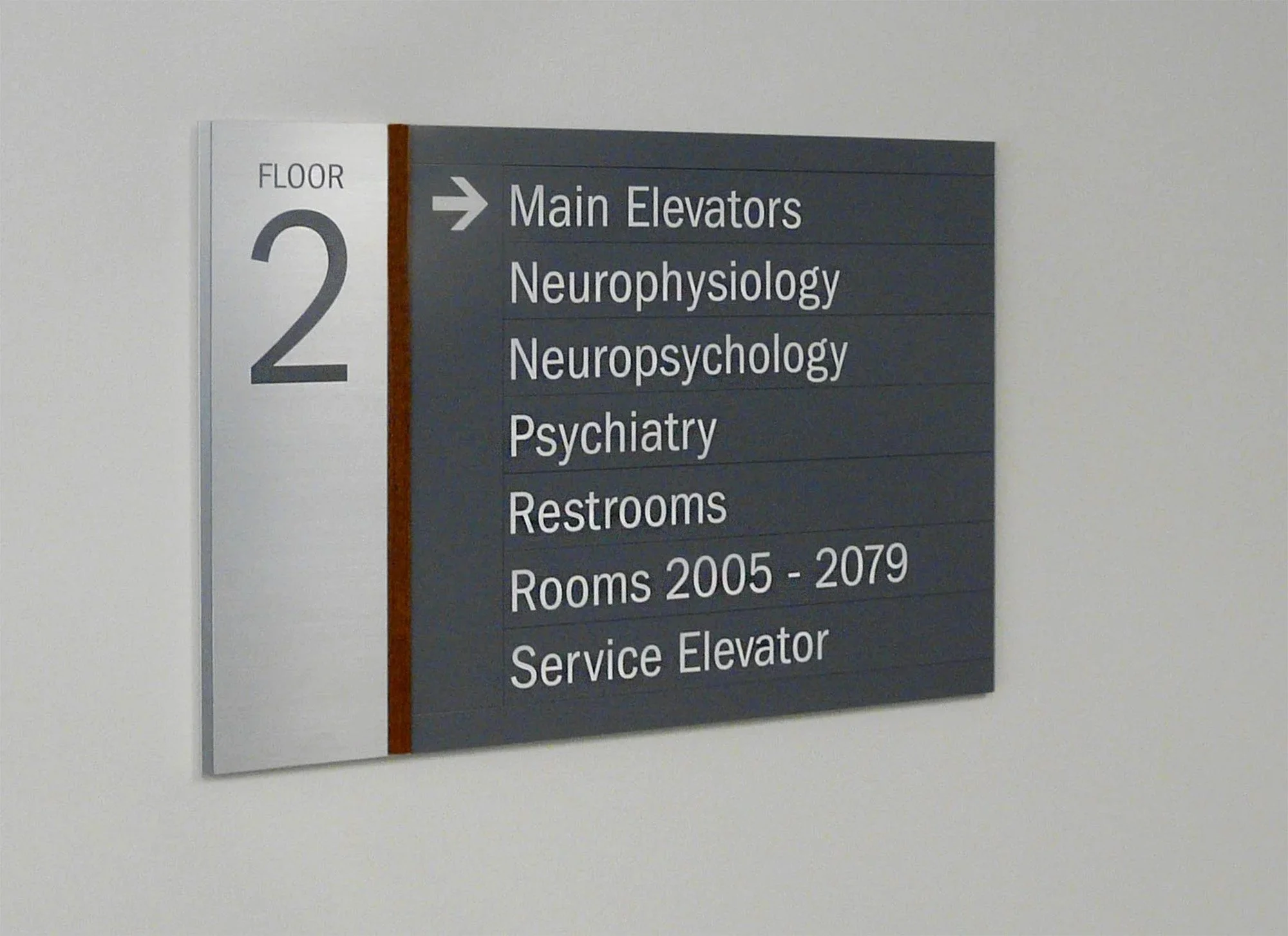
Healthcare & Hospital Navigation:
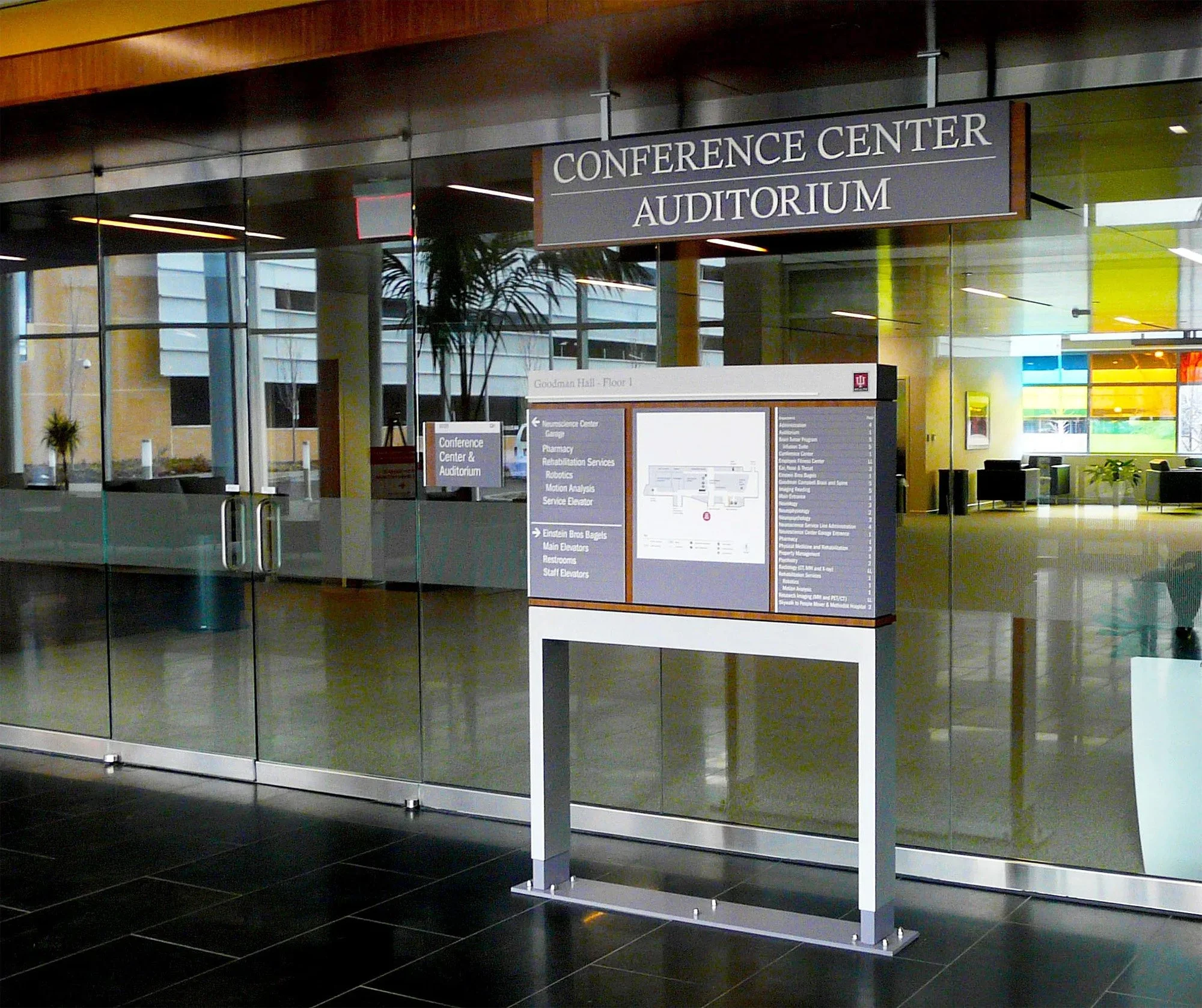
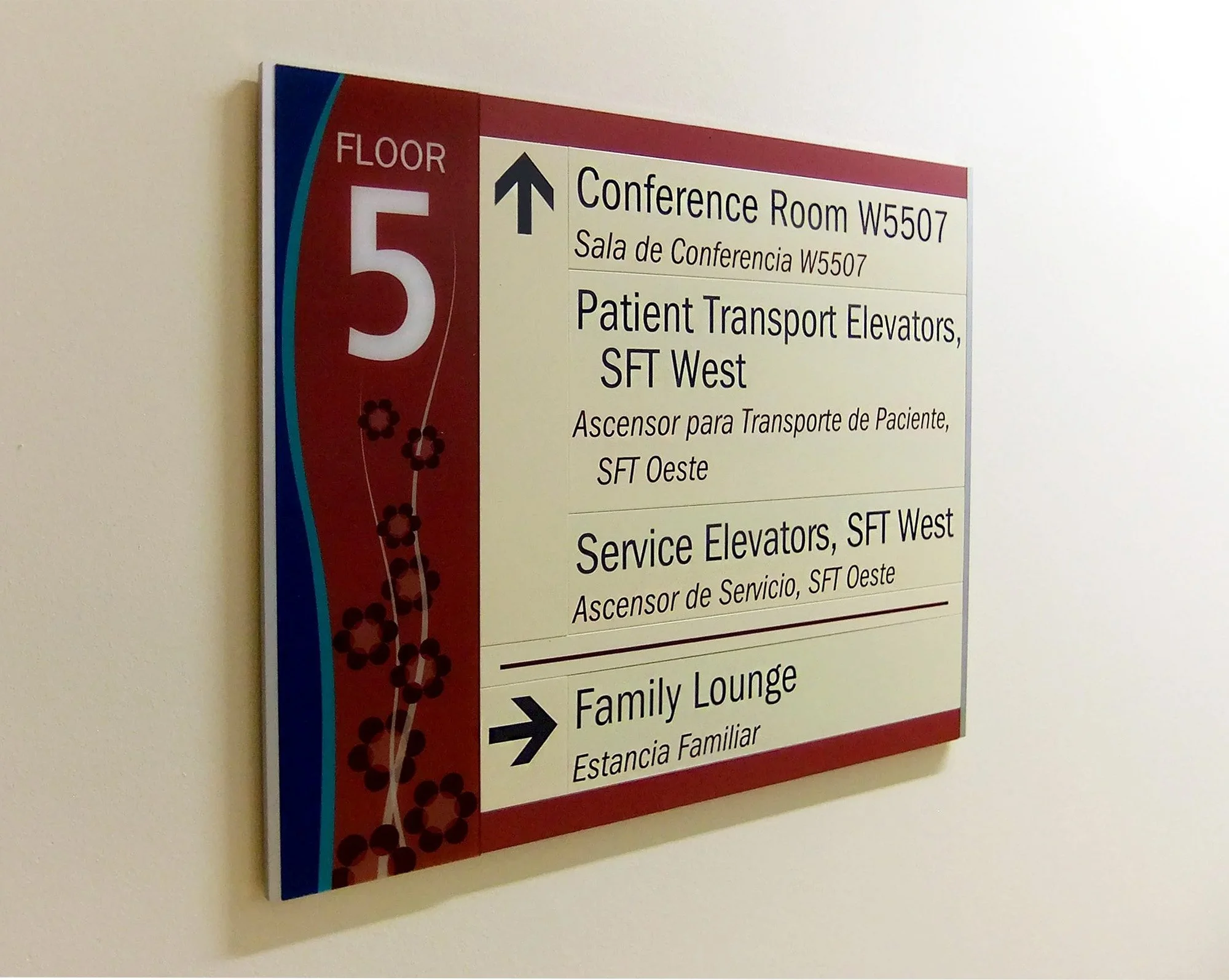
Hospitals present unique challenges: high stress, urgent timelines, and diverse user groups. Our healthcare directional signs prioritize high-contrast legibility and universal symbols to minimize confusion and reduce interruptions to medical staff.
-
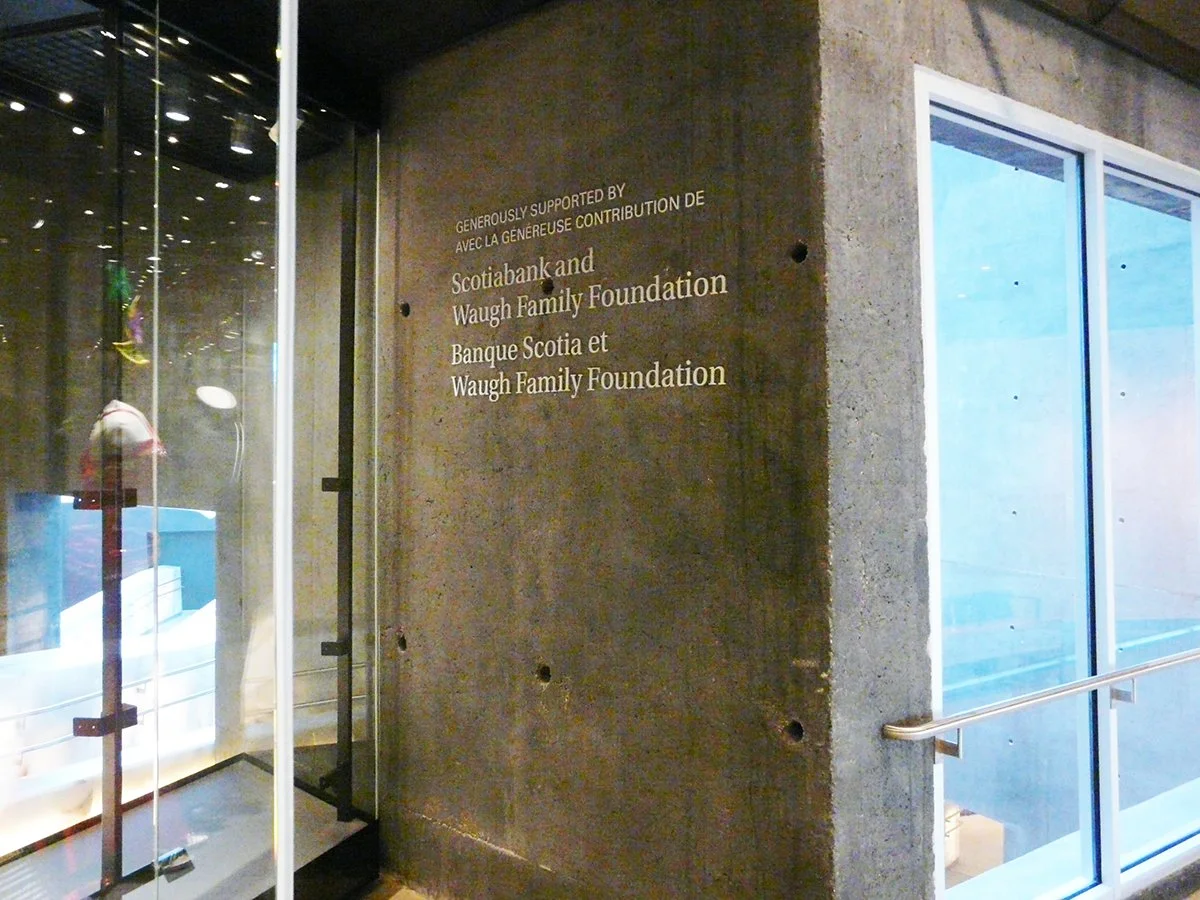
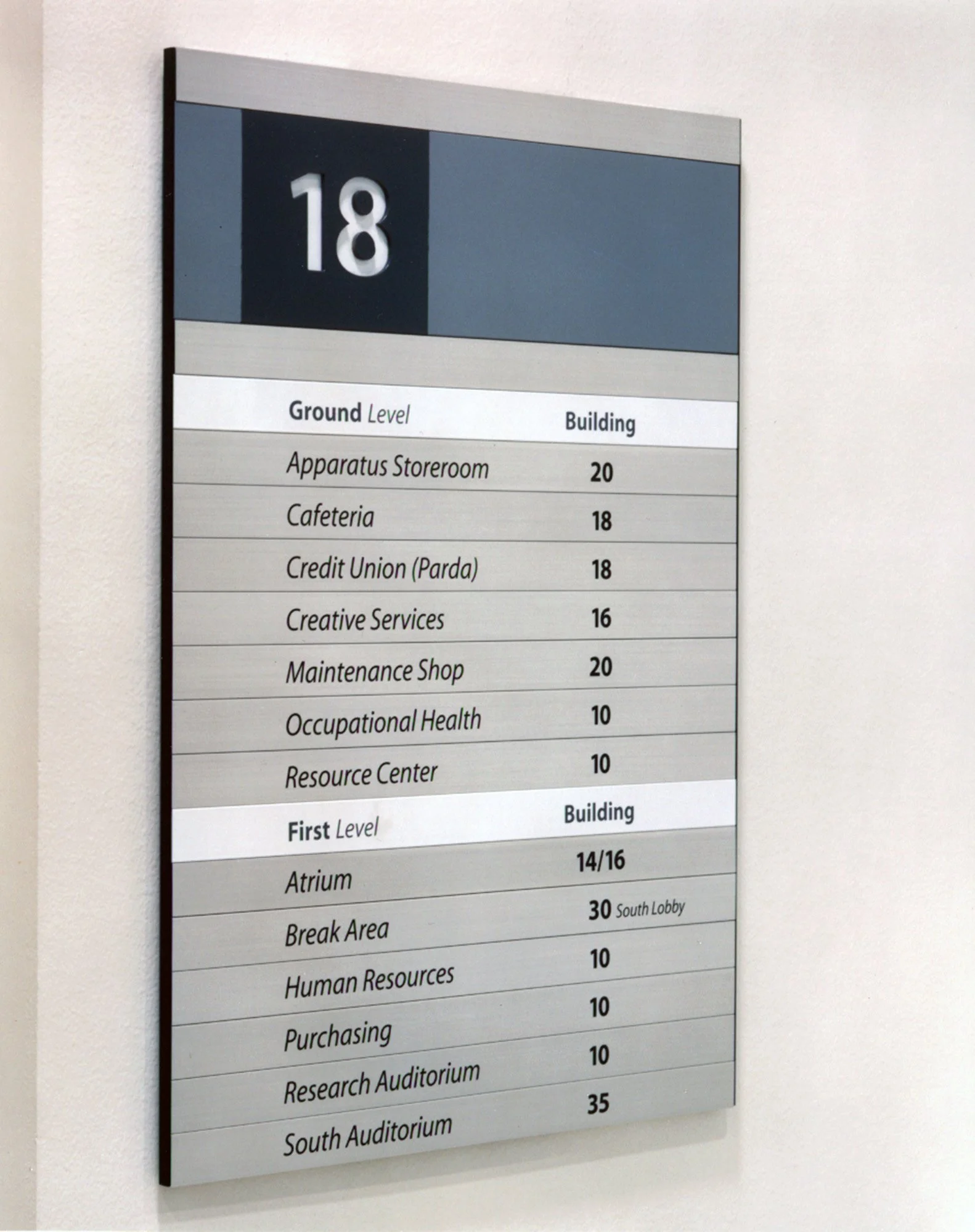
Corporate & Office Environments:
For corporate campuses, directional signage must balance functionality with brand identity. We design systems that clarify circulation for visitors while subtly reinforcing corporate culture and aesthetic standards.
-
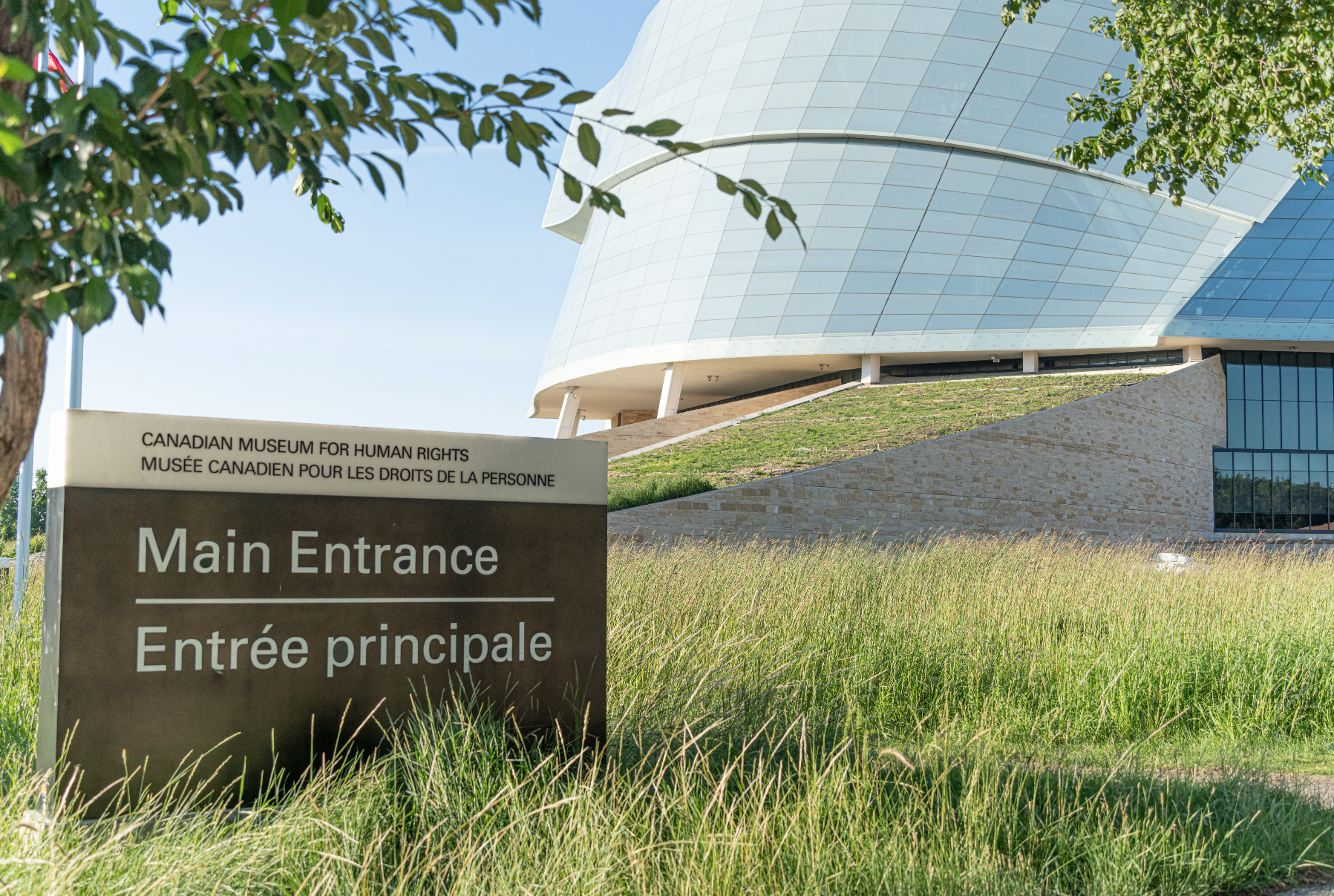
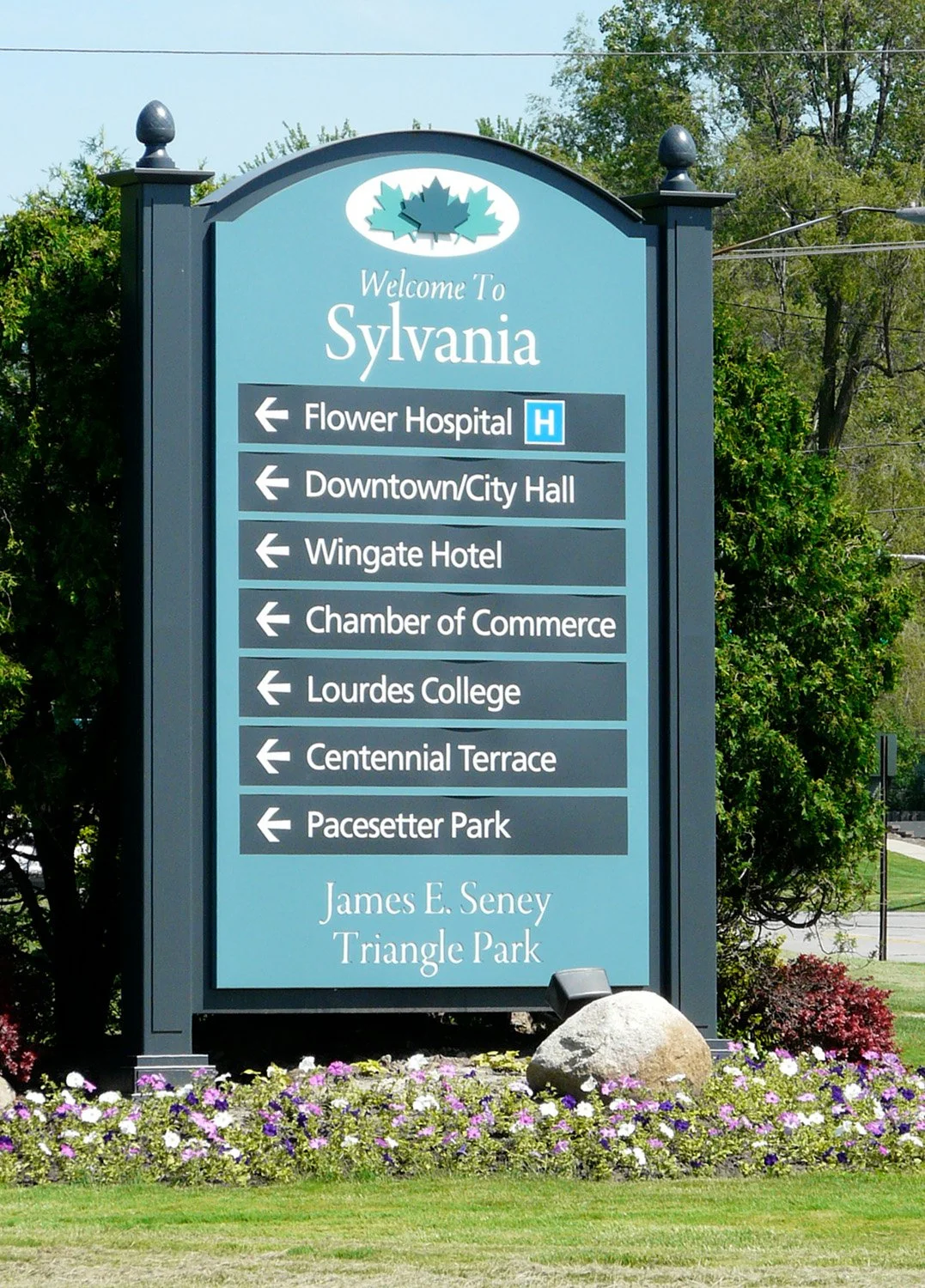
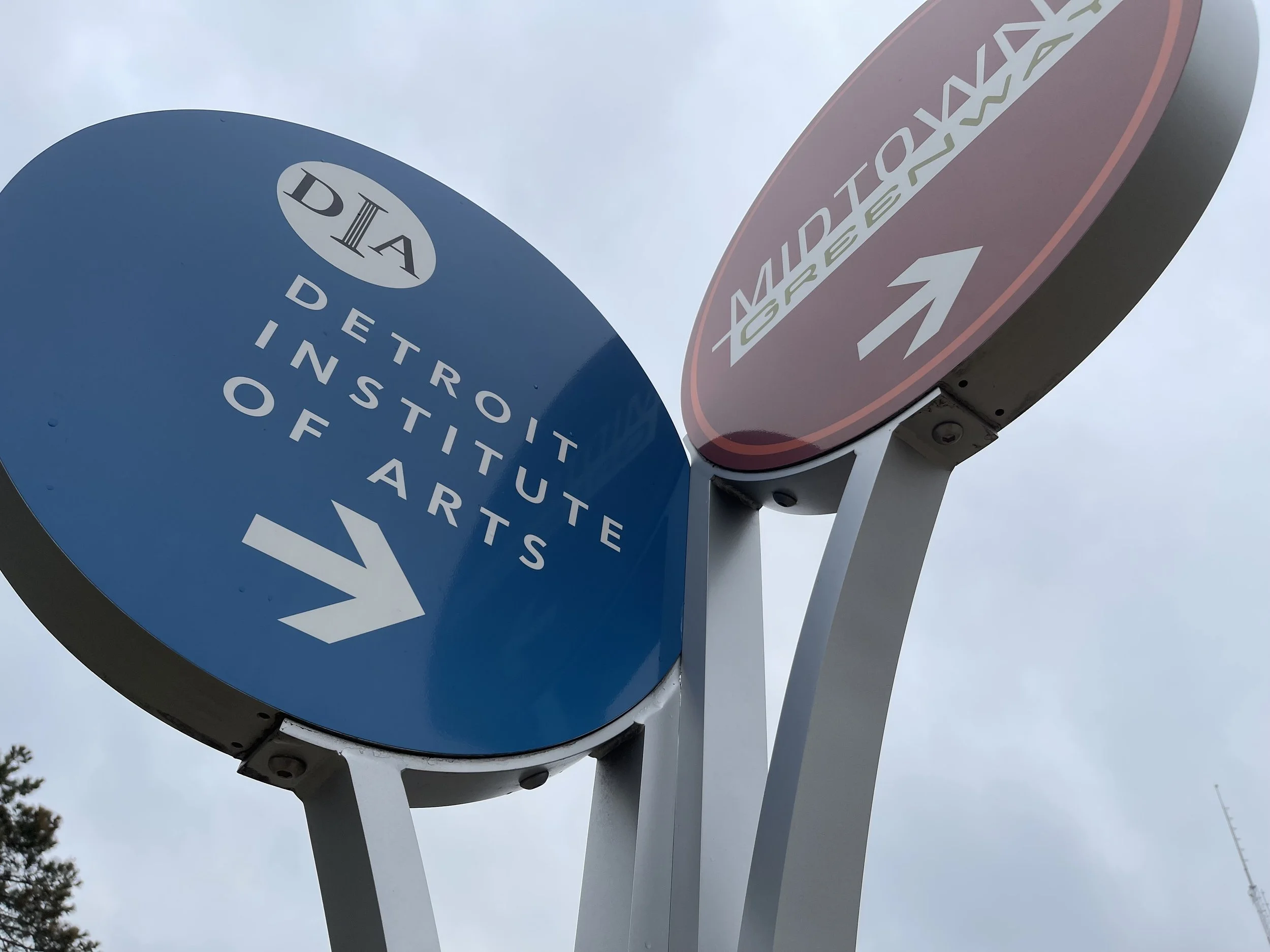
Exterior & Vehicular Wayfinding:
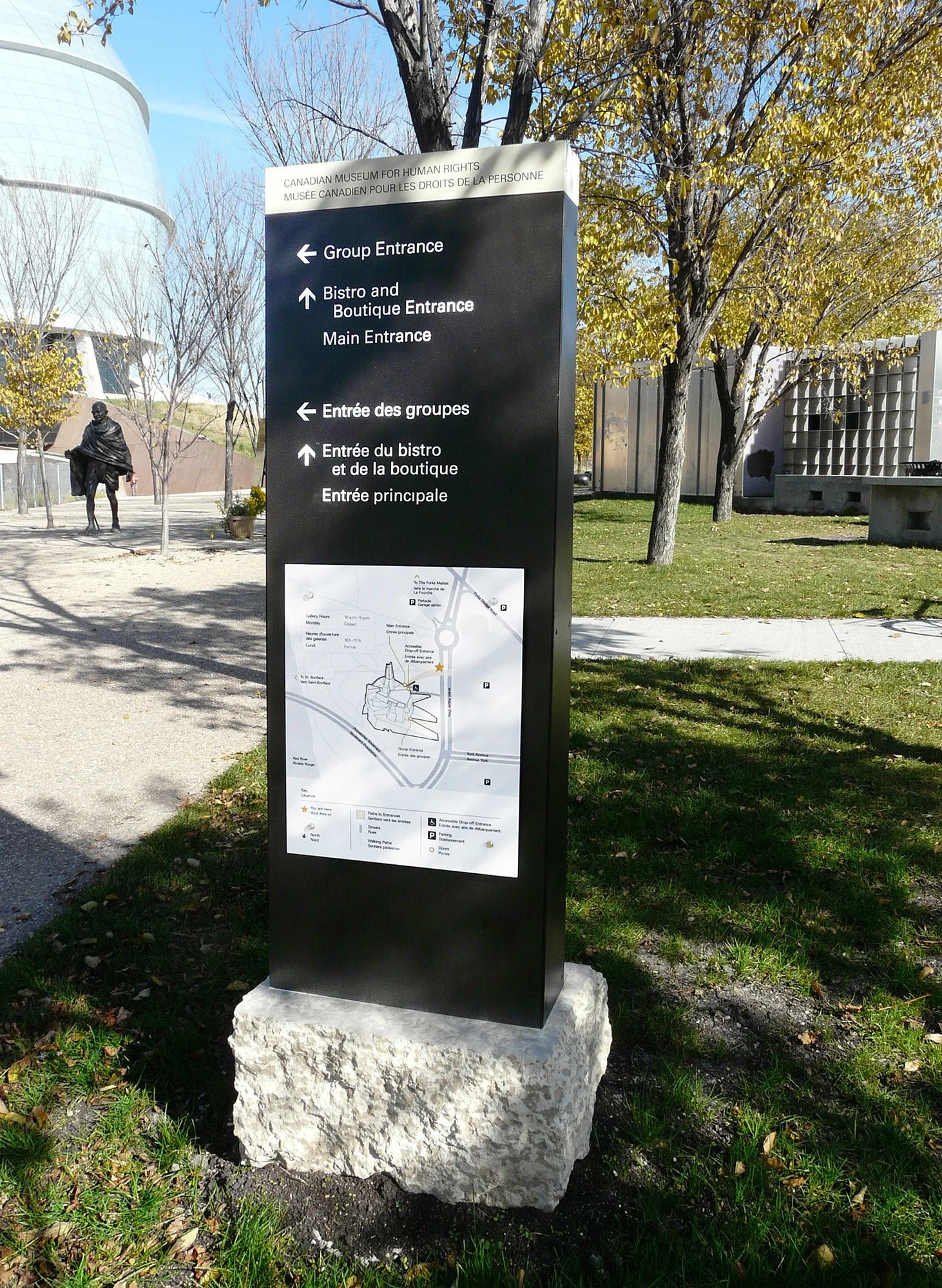
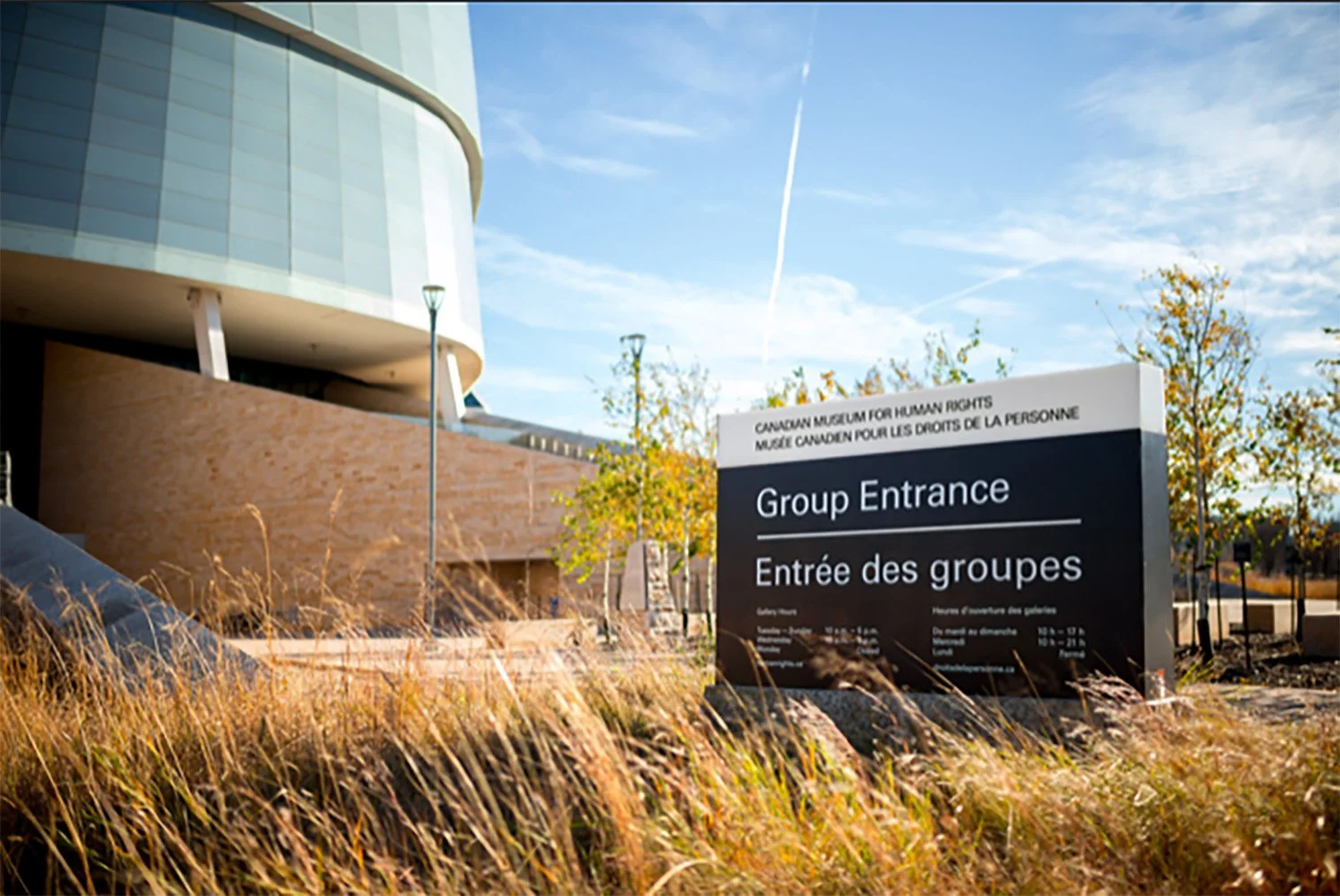
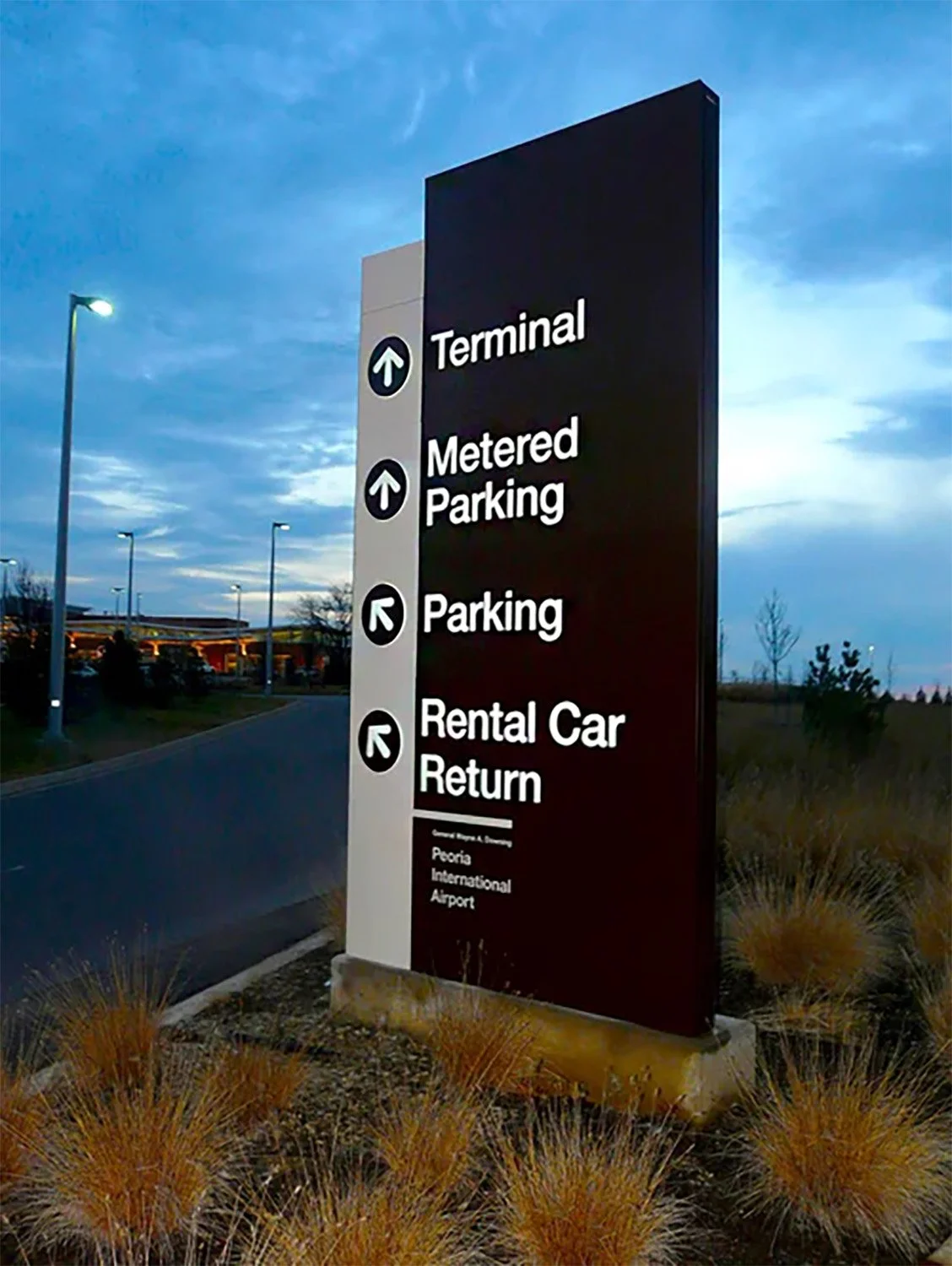
The journey begins at the property line. Our exterior directional systems guide visitors from public roads to internal parking and entry points, establishing a clear arrival sequence before they even step out of their car.
Custom Fabrication vs. Standard
Your facility is unique; your signage should be too. While we follow standard best practices for legibility, our Design-Build approach ensures the physical sign complements your architecture. We consider:
Durability: Selecting materials (aluminum, acrylic, architectural metals) that withstand high-traffic or weather conditions.
Modularity: Designing systems that can be easily updated as tenants or departments move.
Brand Alignment: ensuring the finish, font, and form factor speak the same language as your brand.

Directional Signage in Practice
Our Process: Planning Before Production
At Nicolson Associates, we do not simply fabricate signs; we engineer navigation.
Audit & Analysis:
We evaluate existing traffic patterns and decision points.
Strategy & Logic:
We develop Sign Location Plans and Message Schedules to ensure logical progression.
Design & Documentation:
We create design concepts that merge utility with aesthetics, ready for bidding or fabrication.
Implementation:
We oversee the final installation to ensure the theoretical plan works in practice.

Frequently asked questions
-
Placement is determined by "decision points," intersections or nodes where a user must make a choice. We map these points during the Wayfinding Planning phase to ensure signs are positioned proactively, guiding the user before confusion sets in, rather than reactively.
-
To prevent cognitive overload, industry best practices suggest limiting a single directional sign to 3-5 destinations. If a location has more targets, we use "progressive disclosure," guiding users to general zones (e.g., "Clinical Services") first, then providing specific details (e.g., "Radiology") further down the path.
-
Yes. Whether acting as wayfinding consultants or design-build partners, we frequently collaborate with architects and facility managers to design signage families that respect existing material palettes and spatial proportions.
-
General directionals guide users to major zones (e.g., "Parking," "Elevators," "North Wing"), while specific directionals identify final destinations (e.g., "Room 304," "Dr. Smith"). A successful system uses general signs to move people through main arteries and specific signs for the "last mile" of the journey.
-
Absolutely. Accessibility is a core component of our design process. We ensure all directional signage meets or exceeds ADA requirements regarding character height, contrast ratios, tactile characters (where applicable), and mounting heights.
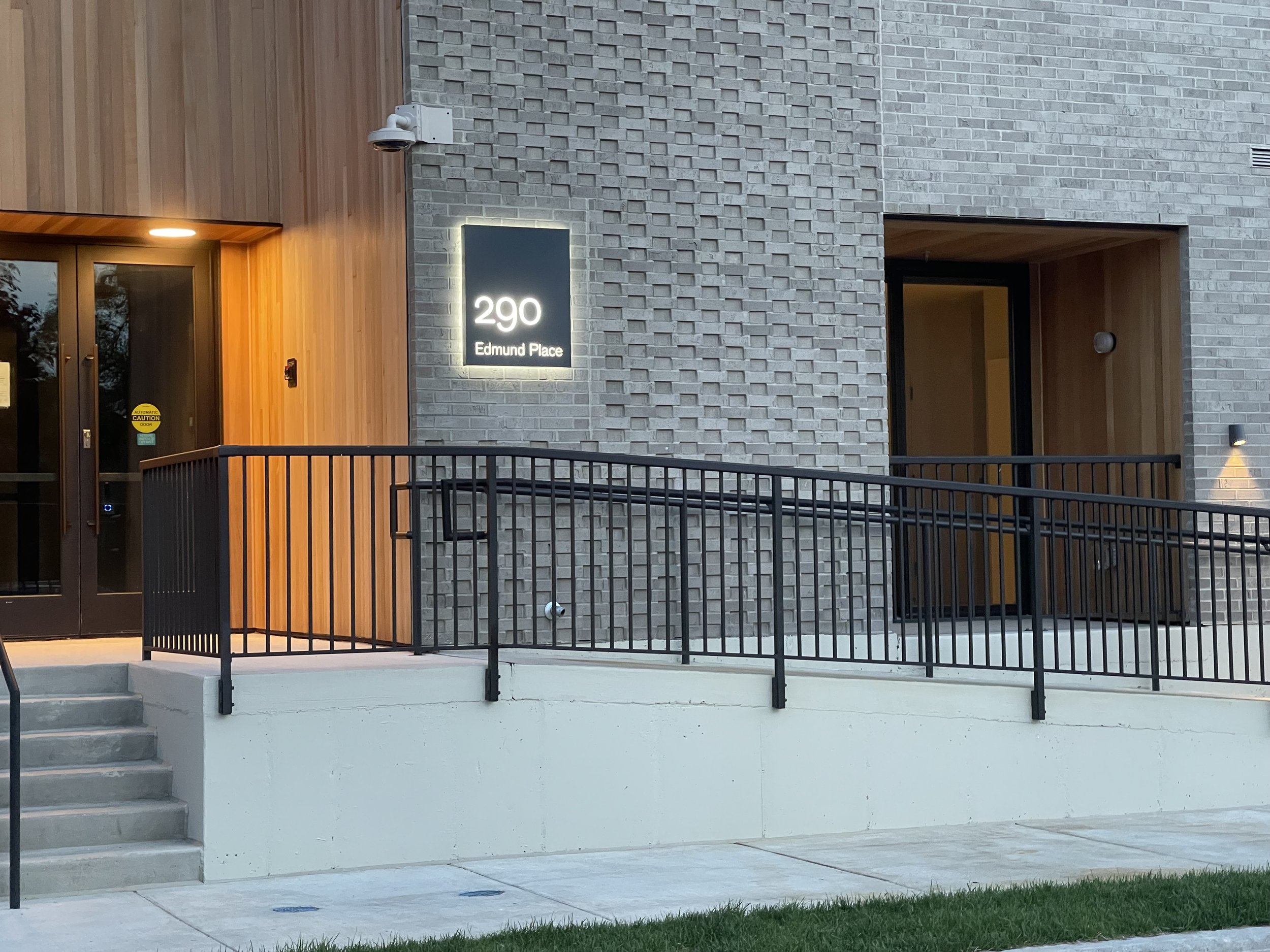
Need directional signage to reduce confusion and support confident navigation?
We design directional signs as part of comprehensive wayfinding systems grounded in strategy, planning, and thoughtful execution.