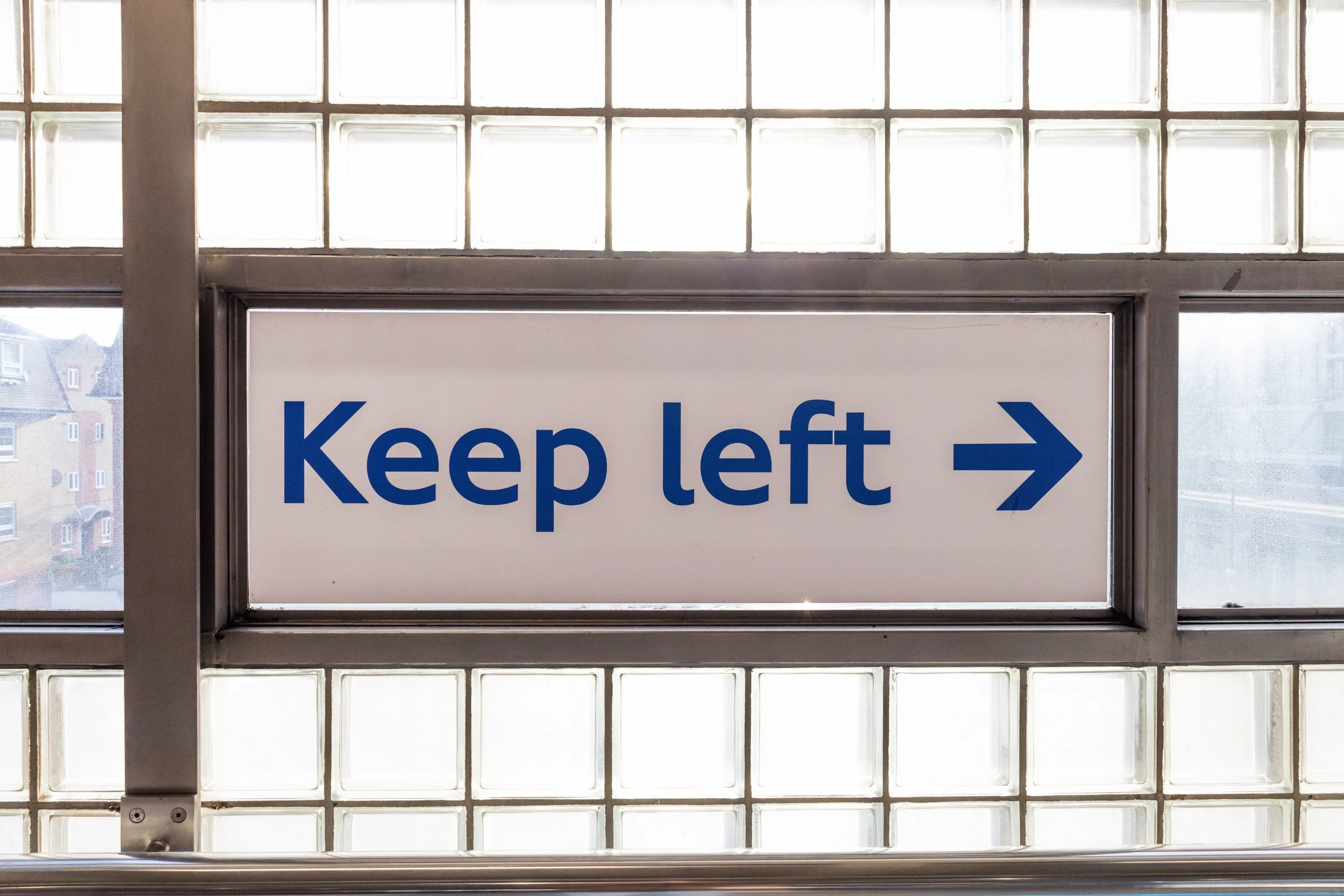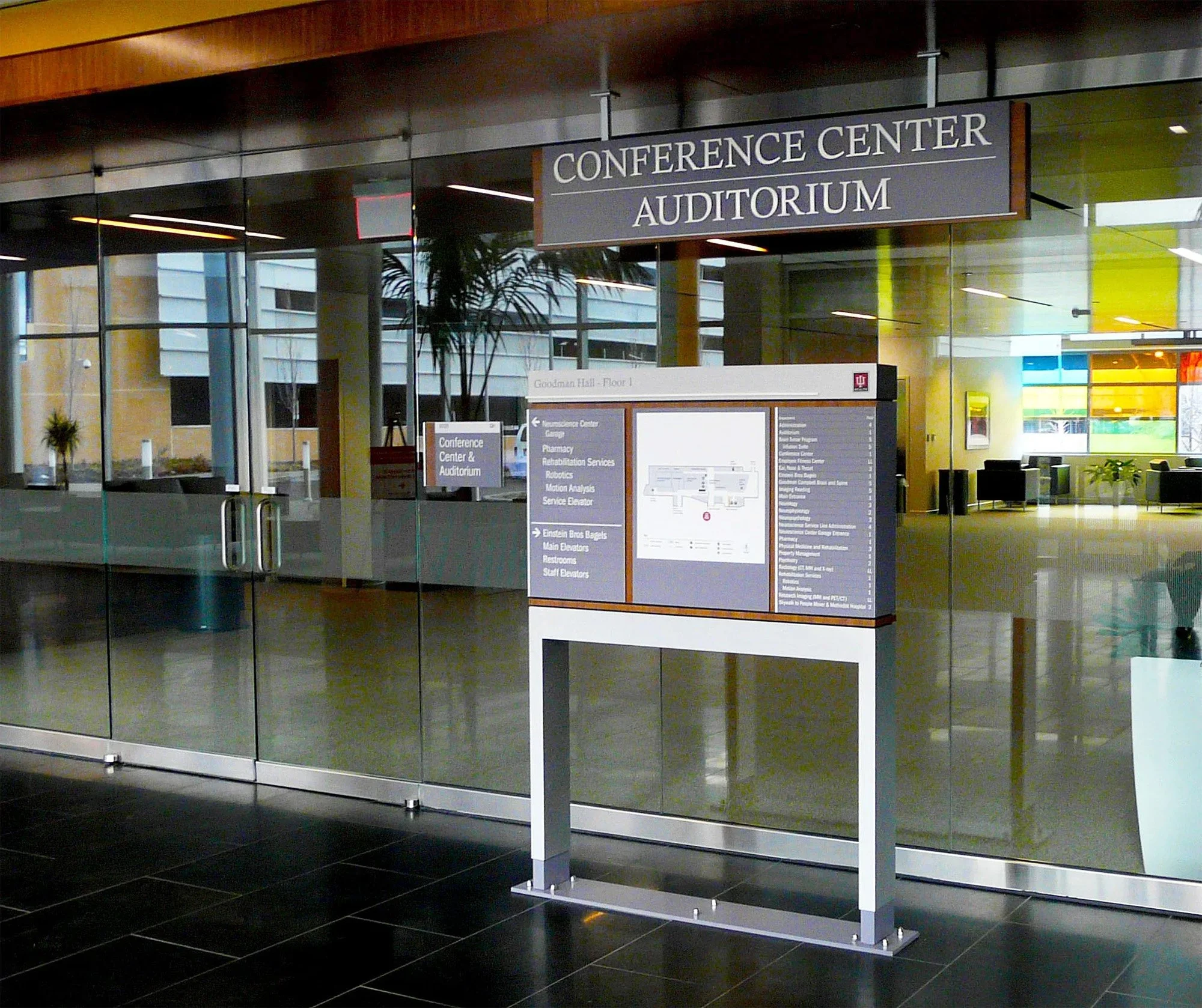
Inside view of a conference center lobby with a directory sign and glass walls. The sign reads "Conference Center Auditorium" and lists various facilities and directions nearby.

Navigating Spaces with Precision

We create effective wayfinding systems through thoughtful planning and design, enabling complex spaces to function clearly and intuitively.

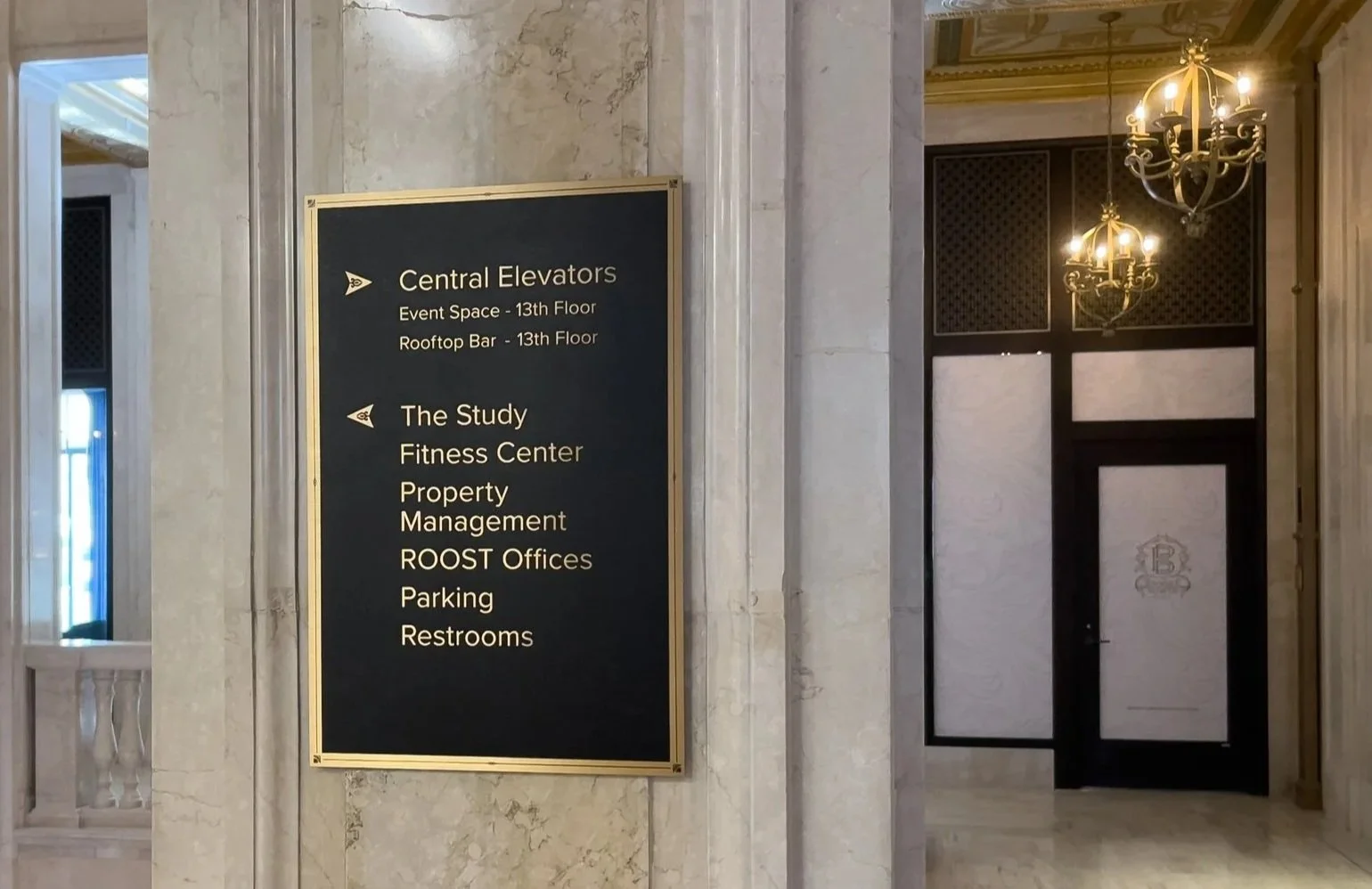
Sign listing directions to central elevators, event space, rooftop bar, the study, fitness center, property management, ROOST offices, parking, and restrooms inside a building with marble walls and ornate chandeliers.
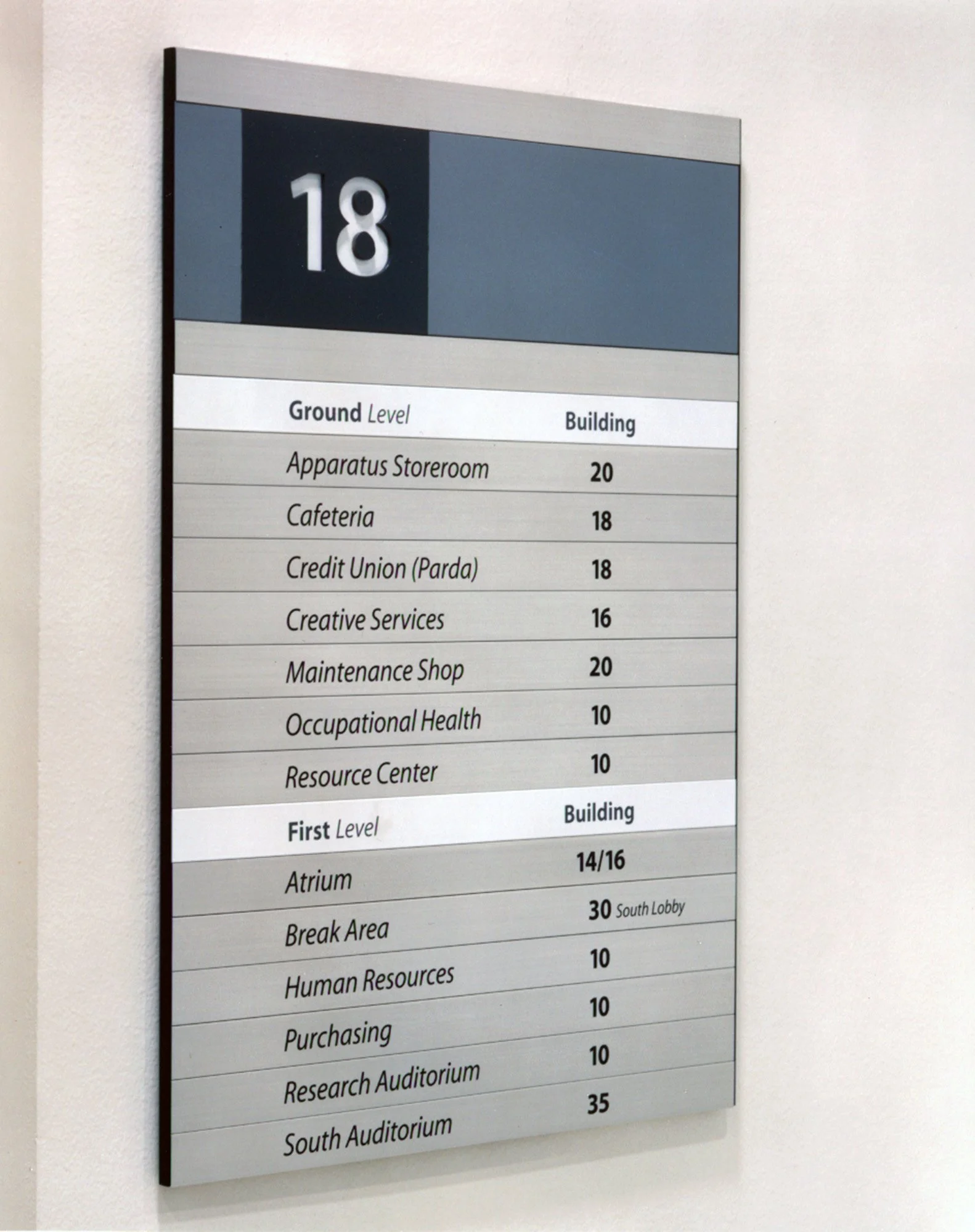
Building directory sign showing room numbers and departments for the ground and first levels of a building.

A Strategy-Led Approach to Wayfinding Systems.

Wayfinding is more than signage, it’s a system that helps people understand where they are, where they’re going, and how to get there with confidence.

At Nicolson Associates, we approach wayfinding as a design and planning discipline, grounded in strategy, informed by human behavior, and shaped by the realities of the built environment.

We help organizations plan, design, and implement wayfinding systems that bring clarity to large, complex spaces, whether you’re starting with a new build or improving an existing environment that no longer works as intended.

Our Process

Our process is built to understand how people actually experience a space and translate that insight into a clear, cohesive navigation system.
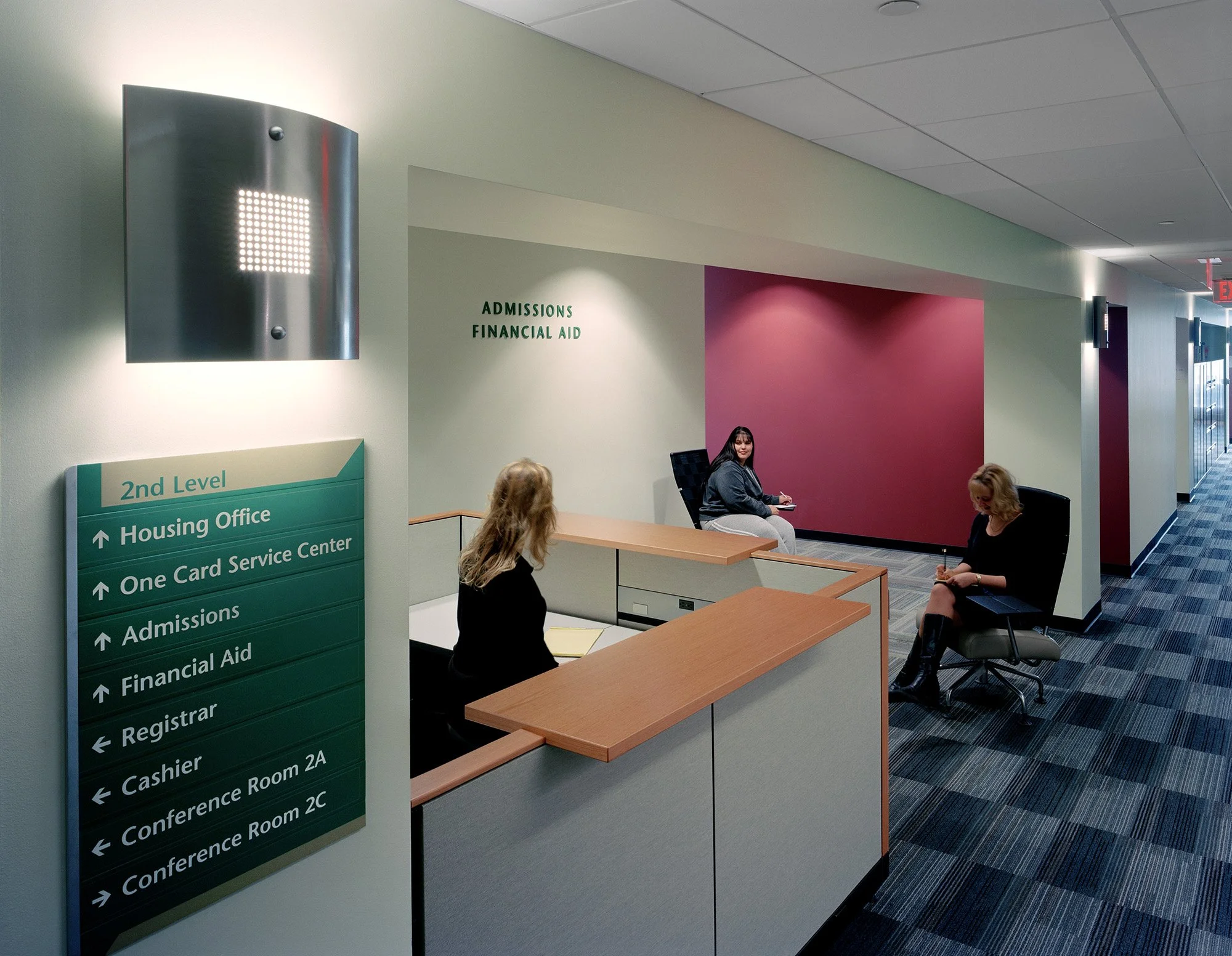
School or university reception area with three women sitting, sign indicating second level offices including housing, financial aid, admissions, registrar, cashier, and conference rooms, and a decorative wall with pink paint.
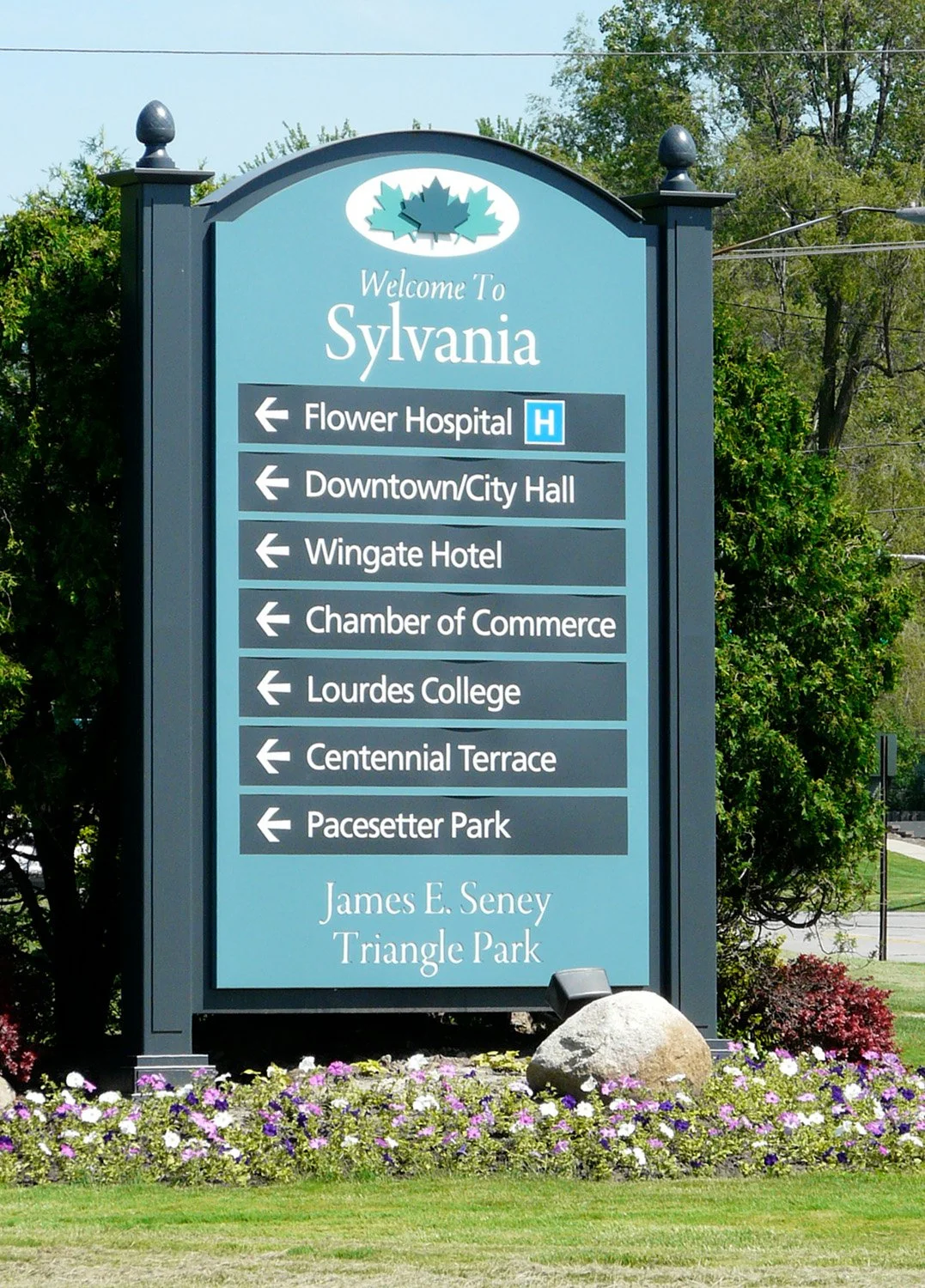
A welcome sign for Sylvania with directional signs pointing to various local locations such as Flower Hospital, Downtown/City Hall, Wingate Hotel, Chamber of Commerce, Lourdes College, Centennial Terrace, Pacesetter Park, and Triangle Park, surrounded by flowers and greenery.

  • Laptop screen displaying a dark map with streets, icons, and annotations for emergency response or police operations.

    1. Every project begins with people

    We start by learning how your environment is used from the perspective of visitors, staff, and stakeholders. Through stakeholder interviews, discovery conversations, and existing-conditions review, we identify where confusion occurs, how decisions are made, and what success looks like for your organization.

    This phase focuses on the human side of navigation, how people process information, recognize cues, and move through complex environments, creating a shared understanding that guides all planning and design decisions that follow.

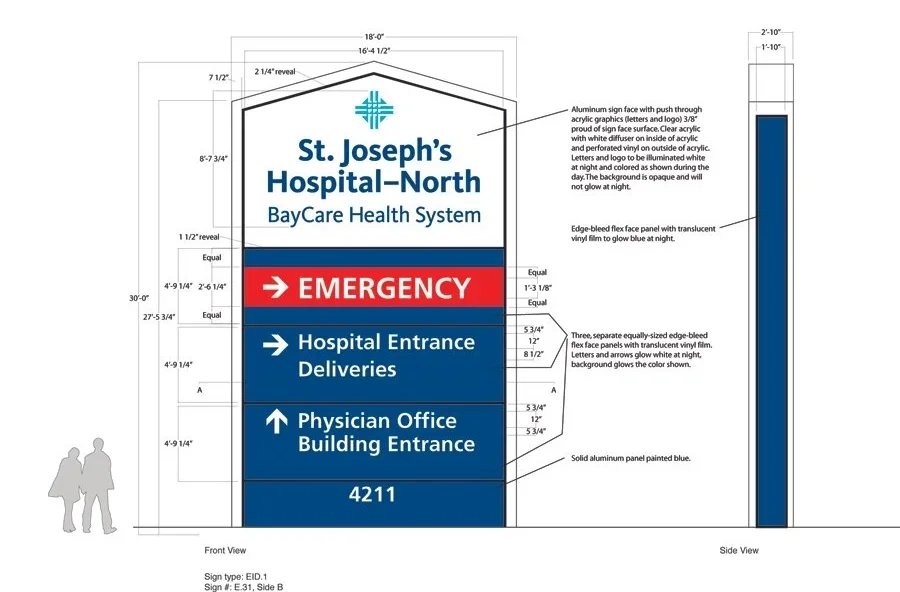
  • Design plans and measurements for a hospital sign, including sections for emergency, hospital entrance, physician office entrance, and a blue background with hospital name and logo.

    2. Planning turns insight into structure

    We analyze floor plans, site plans, circulation paths, destinations, and access points to define how information should be organized across the environment. This work establishes messaging hierarchies, message schedules, and sign locations, creating a logical framework that allows the system to feel intuitive, consistent, and scalable over time.

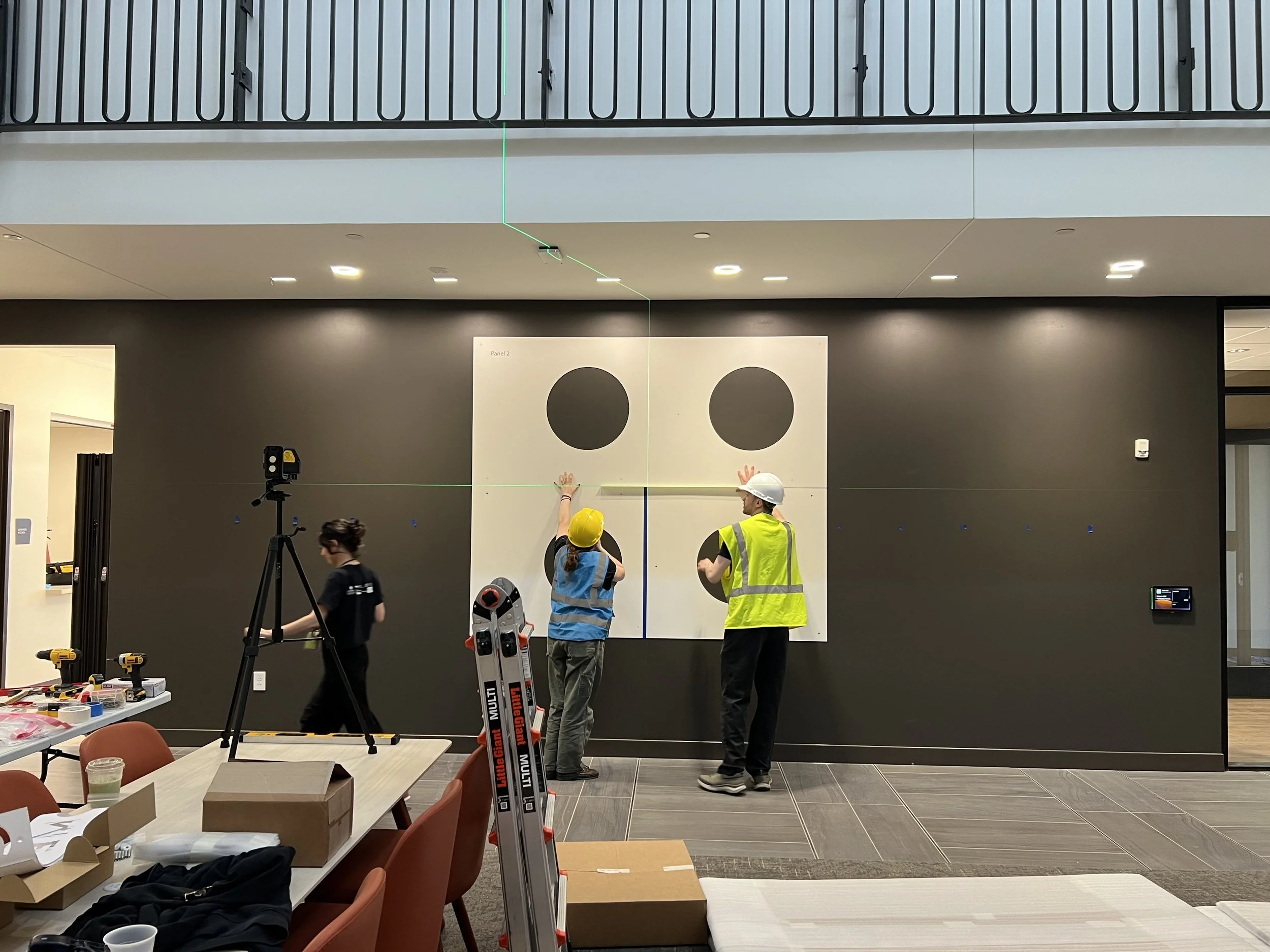
  • Construction workers installing soundproof panels on a dark wall in a modern office. One worker touches the panel, another discusses, a third moves nearby. A tripod with equipment is on a table in the foreground.

    3. Thoughtful execution is essential to successful wayfinding

    We support implementation through clear, fabrication-ready documentation and bid packages that enable accurate pricing and execution. Projects may proceed through a competitive bid process or a design–build approach, depending on your goals. Early in the process, we help determine the path that best aligns with your timeline, budget, and procurement needs.

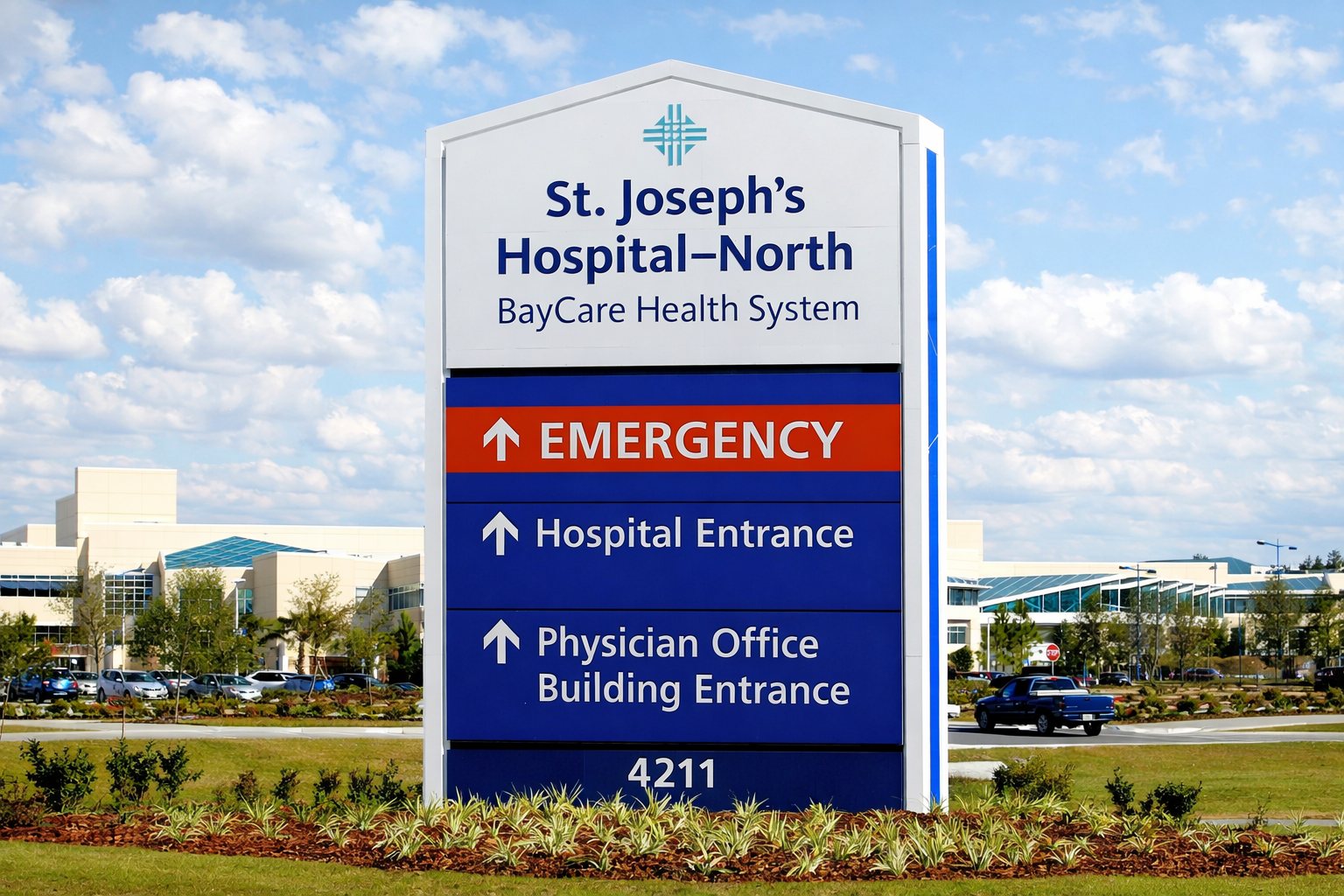
  • Hospital sign indicating emergency, hospital entrance, and physician office building entrance at St. Joseph's Hospital North, part of BayCare Health System.

    4. Design brings the system to life

    With a clear strategy and plan in place, we design cohesive sign families and wayfinding elements that align with architecture, branding, and accessibility requirements. Our design approach balances clarity and visibility with a refined, intentional aesthetic ensuring the system supports navigation without competing with the space itself.

Digital Integration & Interactive Wayfinding

When it adds value, we incorporate digital tools into our wayfinding systems to support clarity, flexibility, and long-term usability.

Our digital team collaborates closely with our planners and designers to integrate interactive directories, digital maps, and dynamic messaging as part of a cohesive navigation strategy, never as a standalone solution.

  • The logo of Cranbrook, featuring the word 'CRANBROOK' with a curved line above and below the text.
  • Graphical logo of Bedrock with a circular emblem containing a stylized B and a horizontal line, followed by the word 'BEDROCK' in bold capital letters.
  • Old Dominion University logo with a crown symbol above the university name in gray text on a white background.
  • Henry Ford Health logo in gray text on a white background
  • Logo of C.S. Mott Children's Hospital, part of Michigan Medicine, featuring a gray M on a white background.
  • SMU Cox School of Business logo with gray text on white background.
  • Logo for The Zekelman Holocaust Center in gray text.
  • Logo with the words 'Forgotten Harvest' and a stylized wheat design.
  • Presbyterian Villages of Michigan logo with a cross symbol and the text 'Presbyterian Villages of Michigan The Foundation'.
  • Logo of UCSF Benioff Children's Hospitals featuring a stylized illustration of children holding hands.
  • Logo of the U.S. Department of Veterans Affairs with a gray VA emblem and text
  • Text reading 'MICHIGAN CENTRAL' in gray uppercase letters on a white background.
  • MD Anderson Cancer Center logo with the words 'Cancer Center' crossed out.
  • Logo with ornate frame, large initials 'BB' in the center, and text 'BOOK TOWER DETROIT' below.
  • Gray text reading 'Lawrence Technological University' on a plain white background.
  • Logo of the Canadian Museum for Human Rights, featuring a stylized abstract figure in gray and the museum's name in gray text.
  • Alma College logo featuring a pine cone and pine needles in a circular design.
  • Logo of the Canadian Museum of History with stylized 'M' and text

Wayfinding Across Industries

Wayfinding challenges vary widely depending on how a space is used, who is navigating it, and what’s at stake. Our approach adapts to the unique needs of each environment—balancing urgency, clarity, and experience.
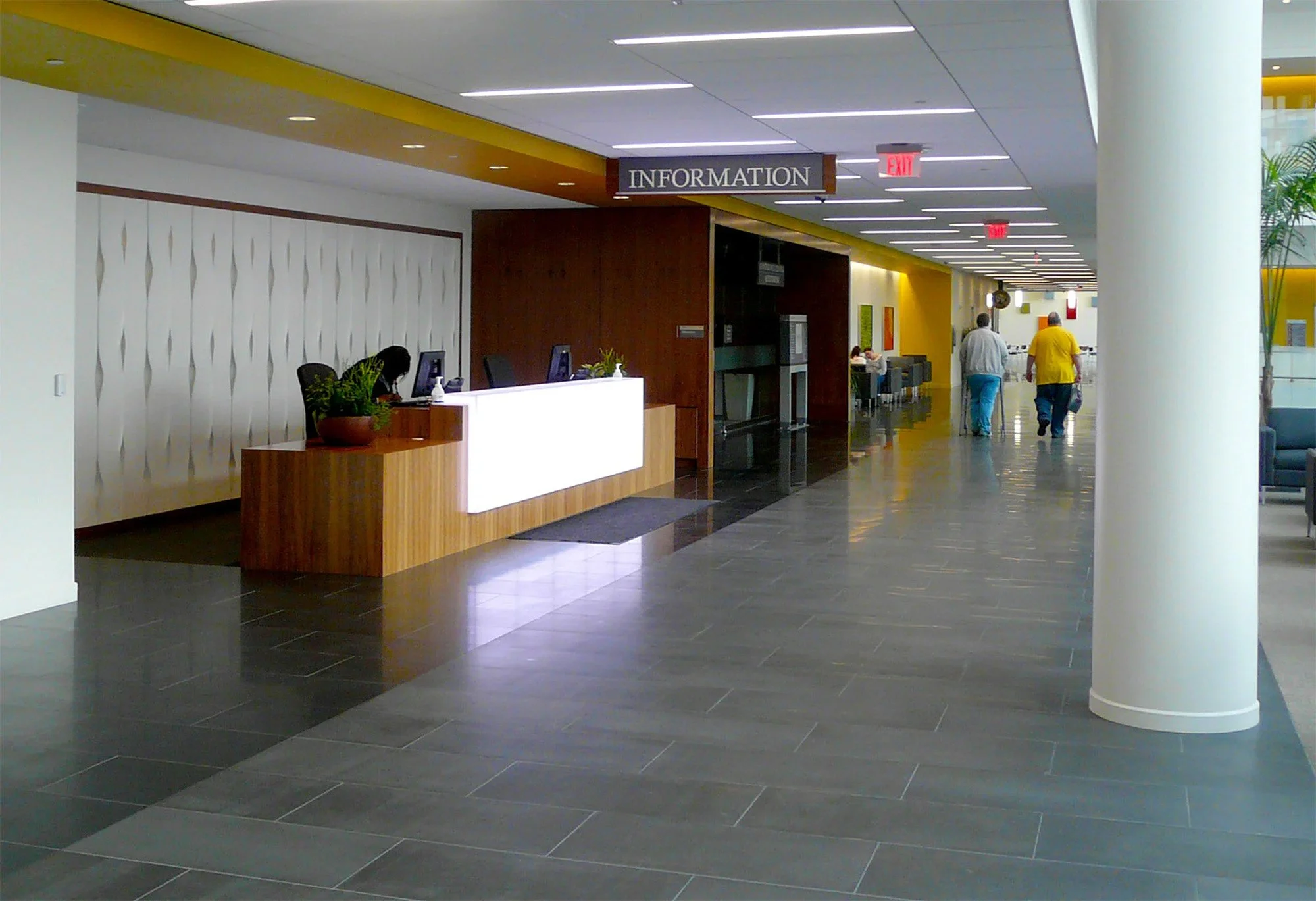
A modern hospital or office building interior with a reception desk labeled "Information," a large white column, a yellow accent wall, and a hallway with people walking.

Healthcare & Medical Campuses

In healthcare environments, wayfinding is critical. Visitors are often stressed, time-sensitive, and unfamiliar with their surroundings. Clear, intuitive navigation reduces anxiety, supports patient care, and helps staff focus on what matters most.
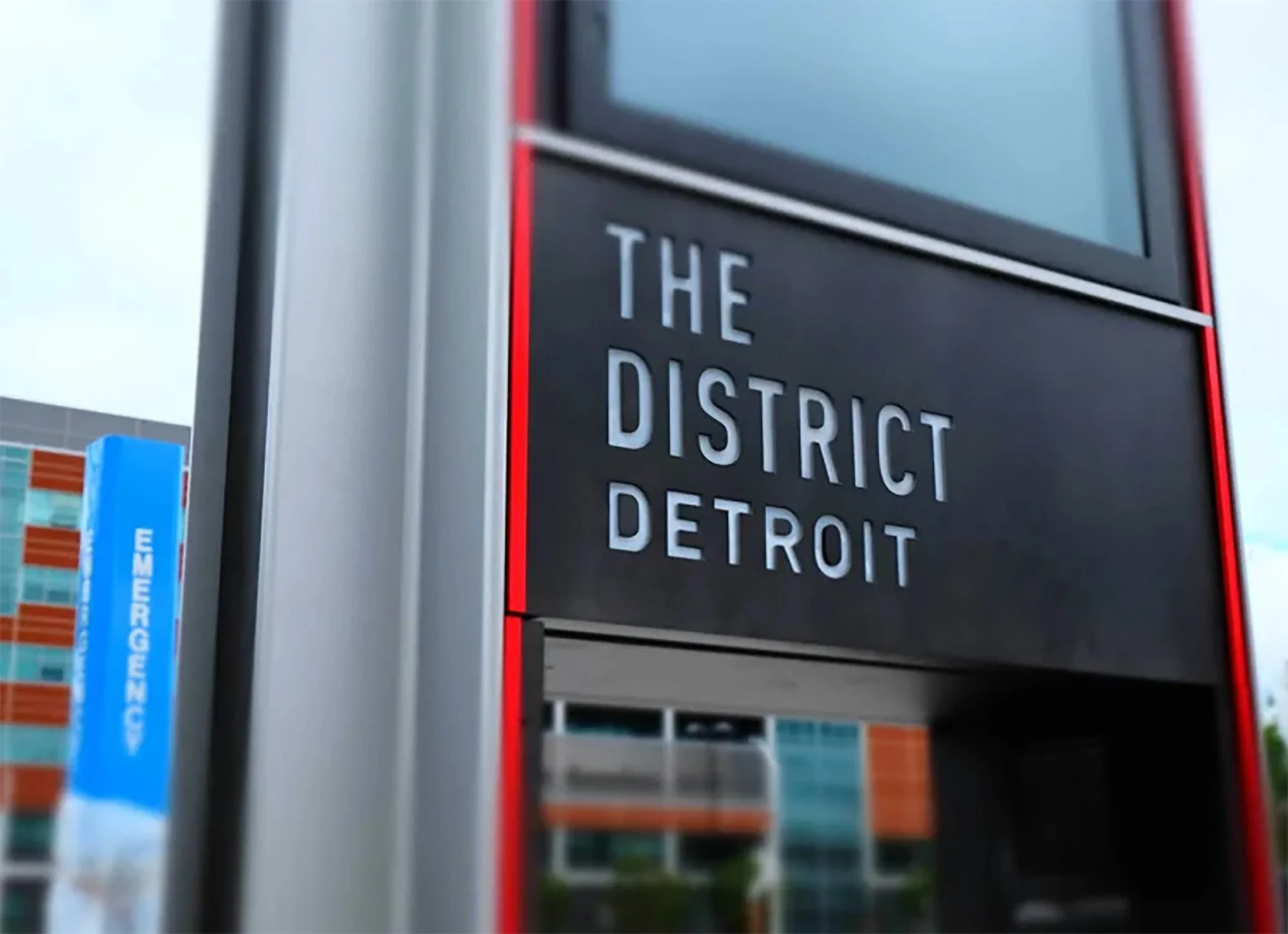
Sign reading 'The District Detroit' near a modern building with an emergency sign in the background.

Civic & Municipal Districts

In civic settings, wayfinding supports public access, operational efficiency, and compliance—helping complex public spaces function clearly and consistently.
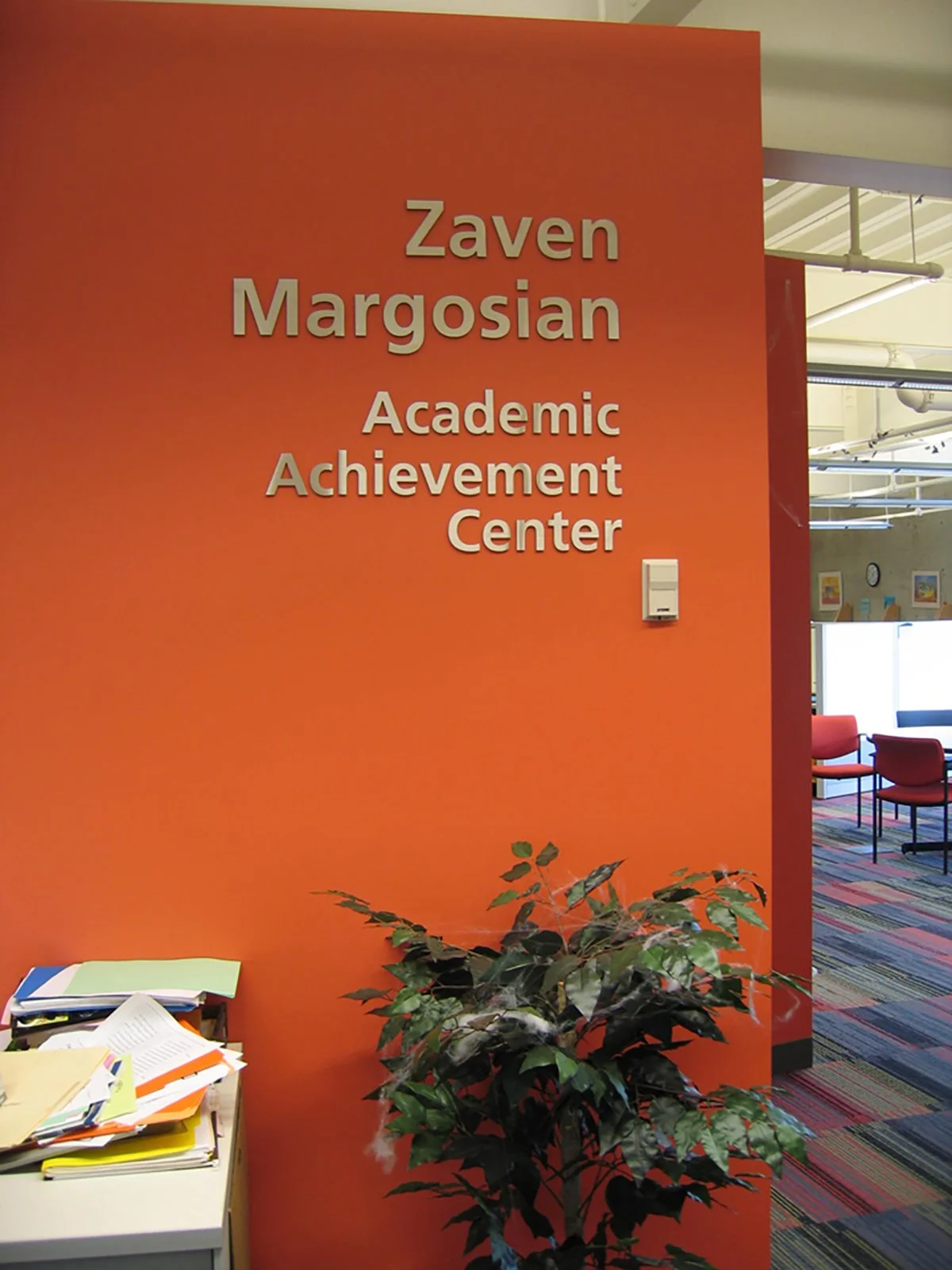
Orange wall with white letters reading 'Zaven Margosian Academic Achievement Center', a potted plant, and a table with scattered papers.

Higher Education & Academic

Universities and colleges are dynamic environments with multiple buildings, entrances, and user groups. Effective wayfinding supports daily movement, special events, and long-term campus growth, creating systems that feel cohesive rather than piecemeal.
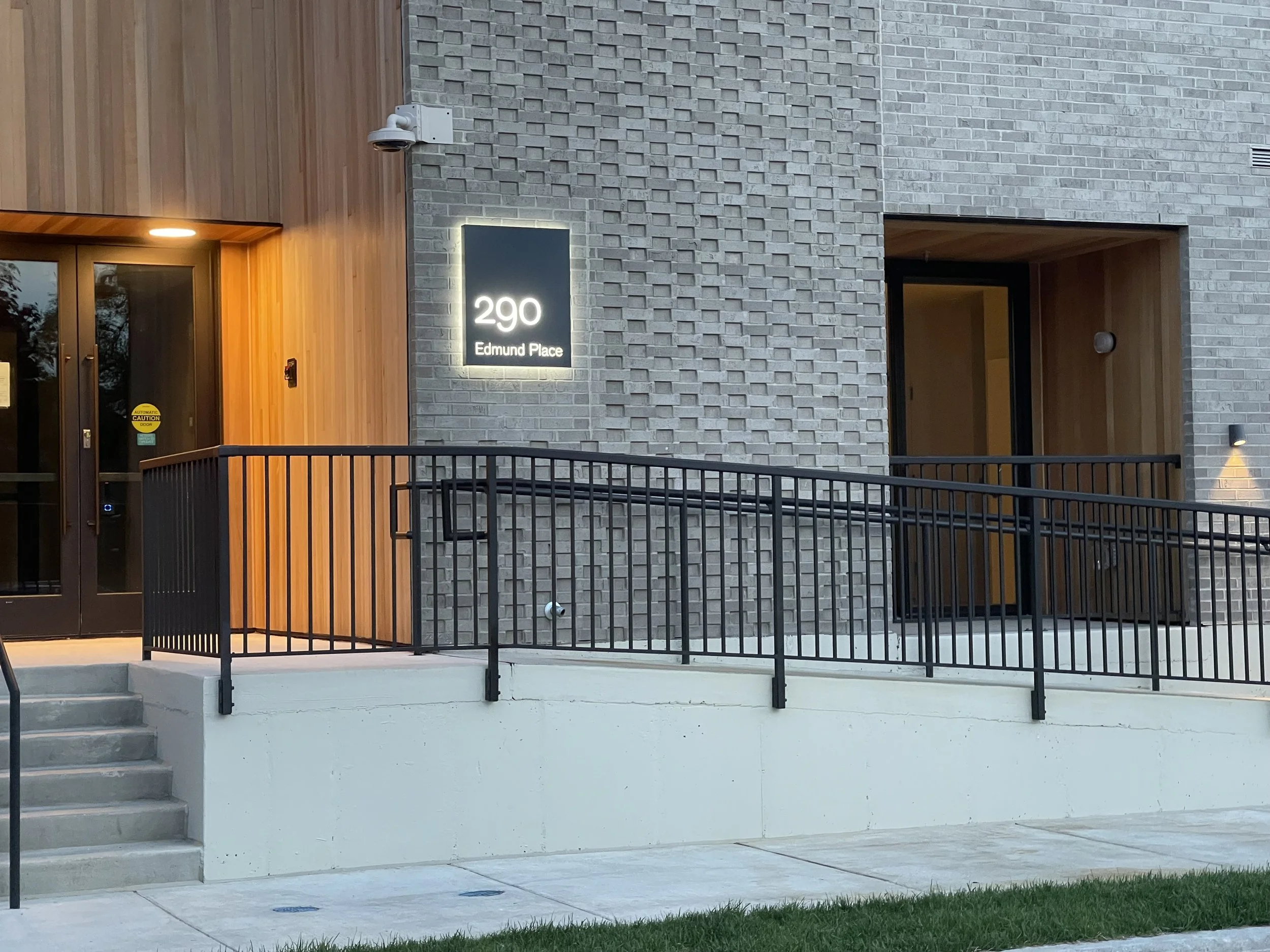
Exterior of a modern building with brick and wood siding, with street number 290 and address Edmund Place illuminated on a sign. The entrance has a staircase and an accessible ramp with black railings.

Residential & Mixed-Use

In residential and mixed-use developments, wayfinding shapes first impressions and daily experience. Thoughtful systems help residents and visitors feel oriented, welcomed, and confident moving through shared spaces.
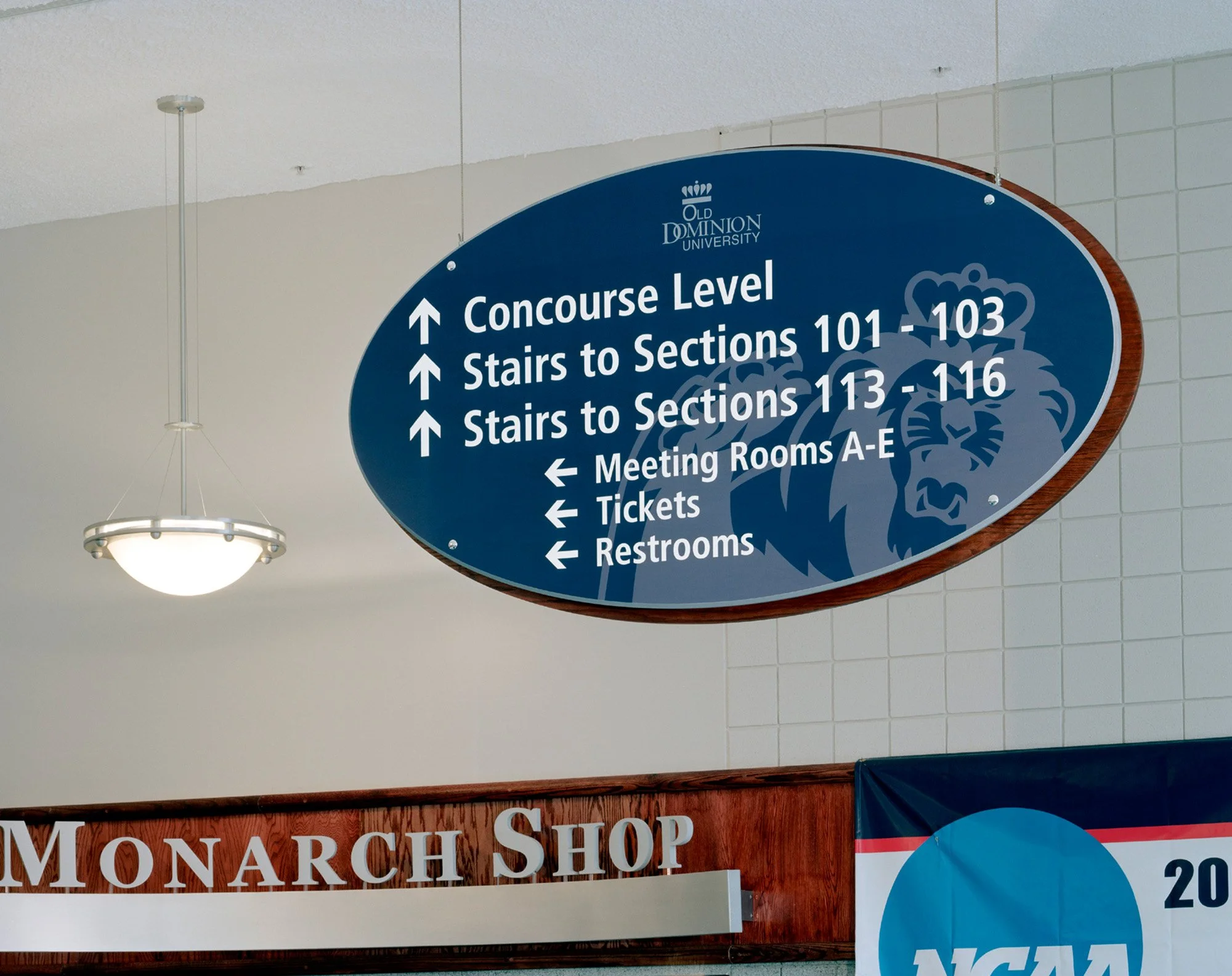
Directional signage at Old Dominion University indicating paths to the Concourse Level, stairs to sections 101-103 and 113-116, meeting rooms A-E, tickets, and restrooms, with a graphic of a lion's head.

Performing Arts & Cultural Venues

Theaters, museums, and cultural institutions often experience large surges of visitors at once. Wayfinding must guide crowds efficiently while supporting the overall experience, helping guests move confidently without detracting from the atmosphere.
Let’s Work Together

If you’re navigating a complex environment and looking for clarity through design and planning, we’d love to talk.