
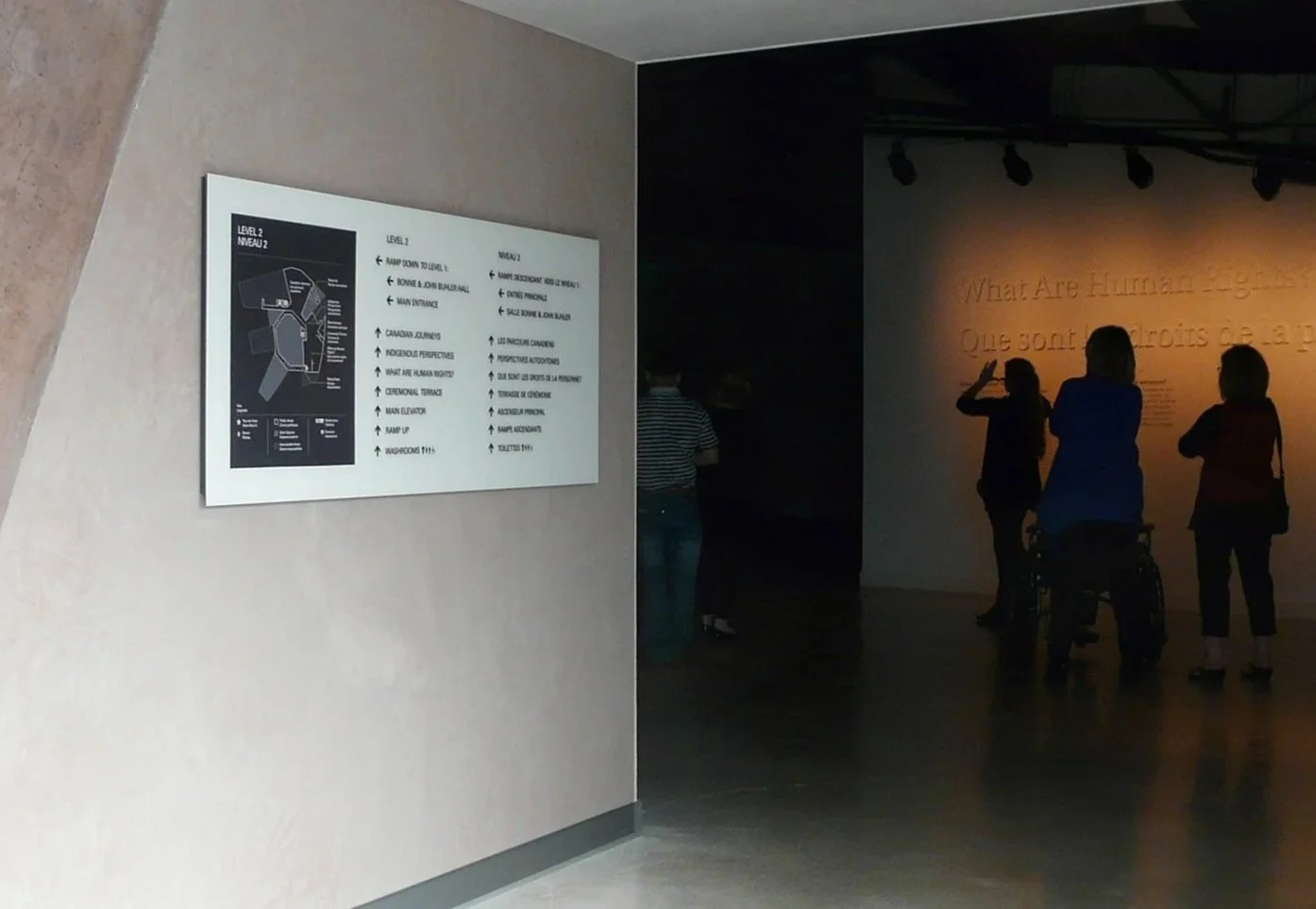
Regulatory, Safety & Code-Required Signs
Safety signage is the one area of wayfinding where ambiguity is not an option. From Fire Life Safety protocols in a high-rise to MUTCD-compliant traffic control on a university campus, regulatory signage protects both your visitors and your liability. At Nicolson Associates, we engineer these critical systems to meet rigorous federal and local codes without compromising the visual integrity of your environment.
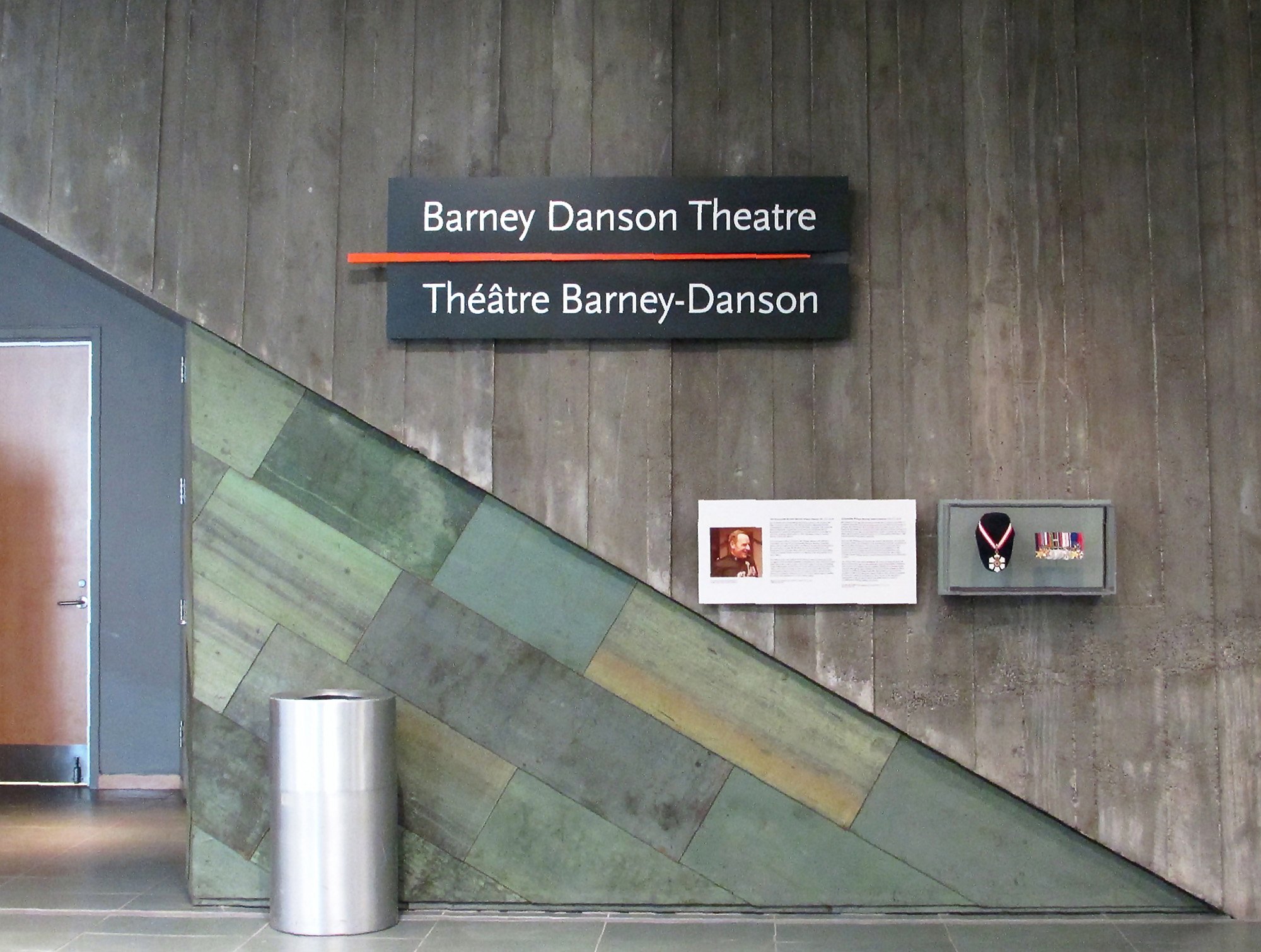
The Intersection of Compliance & Design
Too often, safety signage is treated as an afterthought, a cheap, "stick-on" solution that clashes with architecture. We take a different approach. We design regulatory systems that are:
Code-Compliant: Strictly adhering to ADA, OSHA, NFPA, and MUTCD standards.
Architecturally Integrated: Using high-quality materials (photopolymer, etched metal, acrylic) that match your building’s palette while maintaining required contrast and reflectivity.
High-Impact: Positioning signs at critical "decision points" to ensure warnings are seen before a hazard is encountered, not after.
Critical Safety Categories
We categorize regulatory signage by the authority it serves:
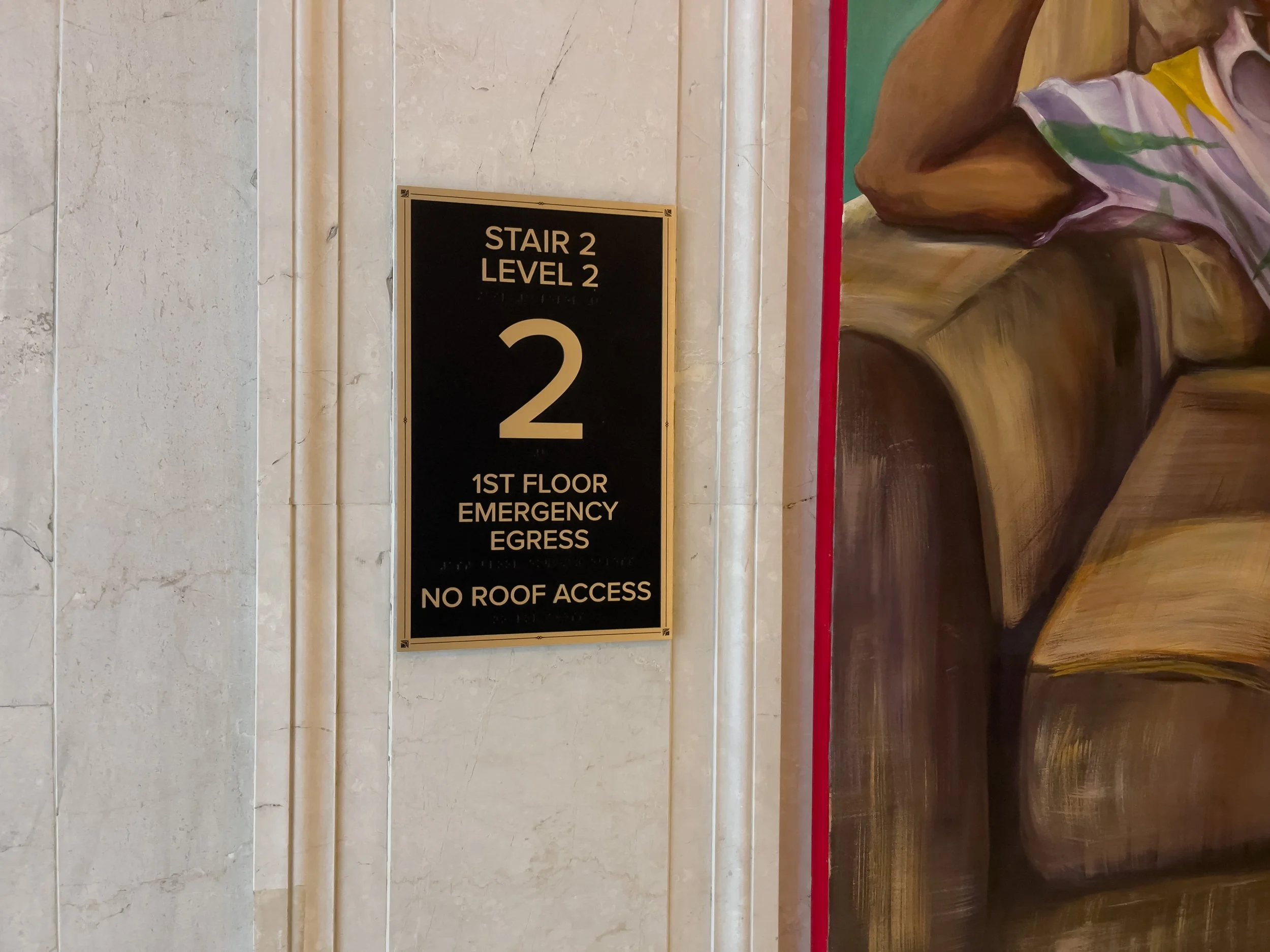
-
Fire & Life Safety
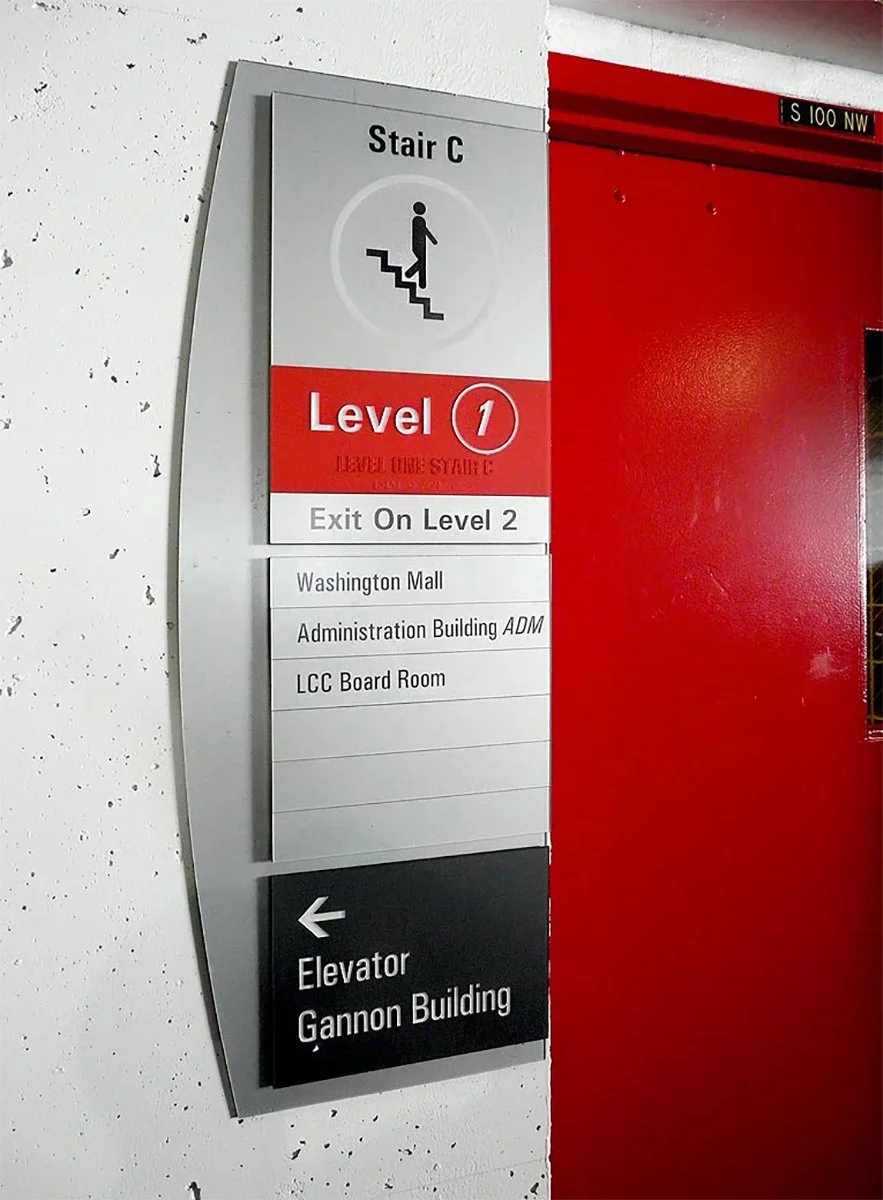
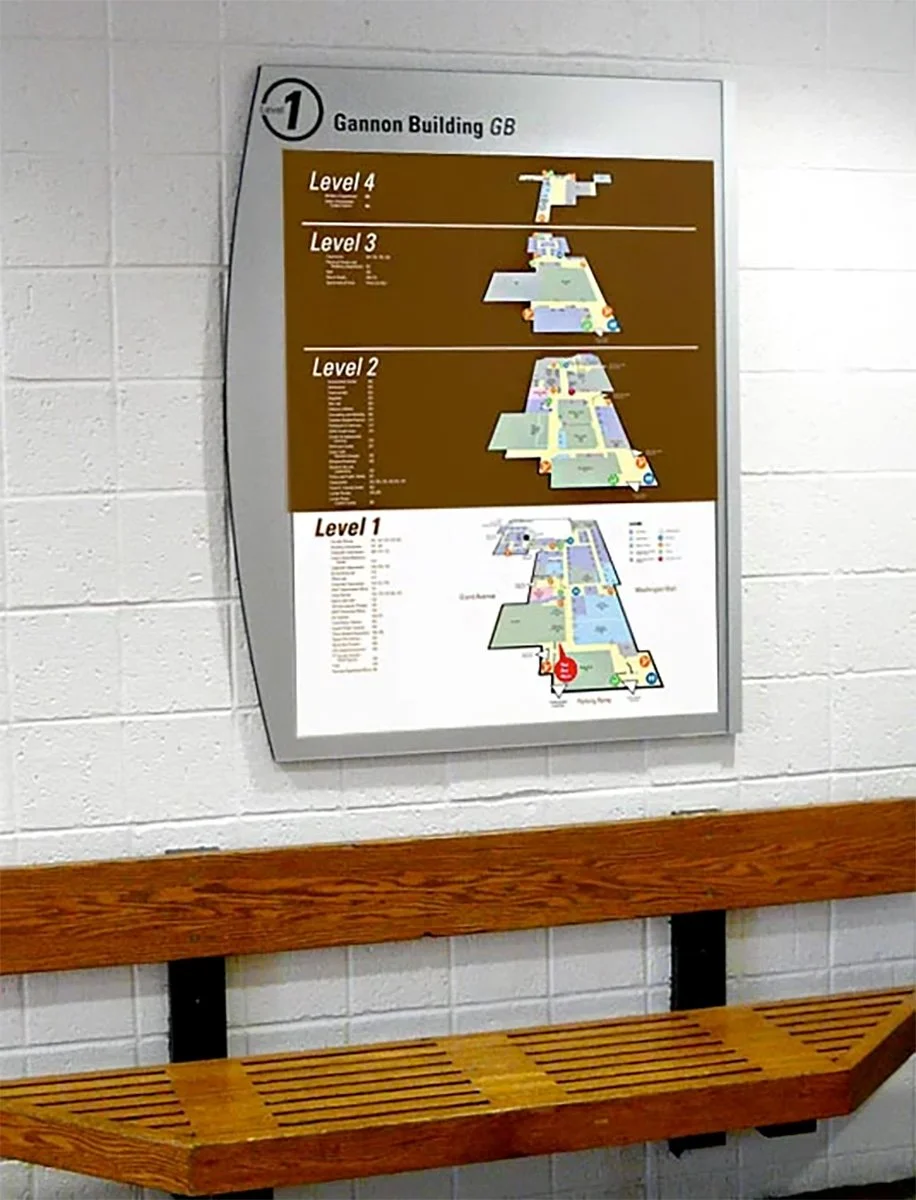
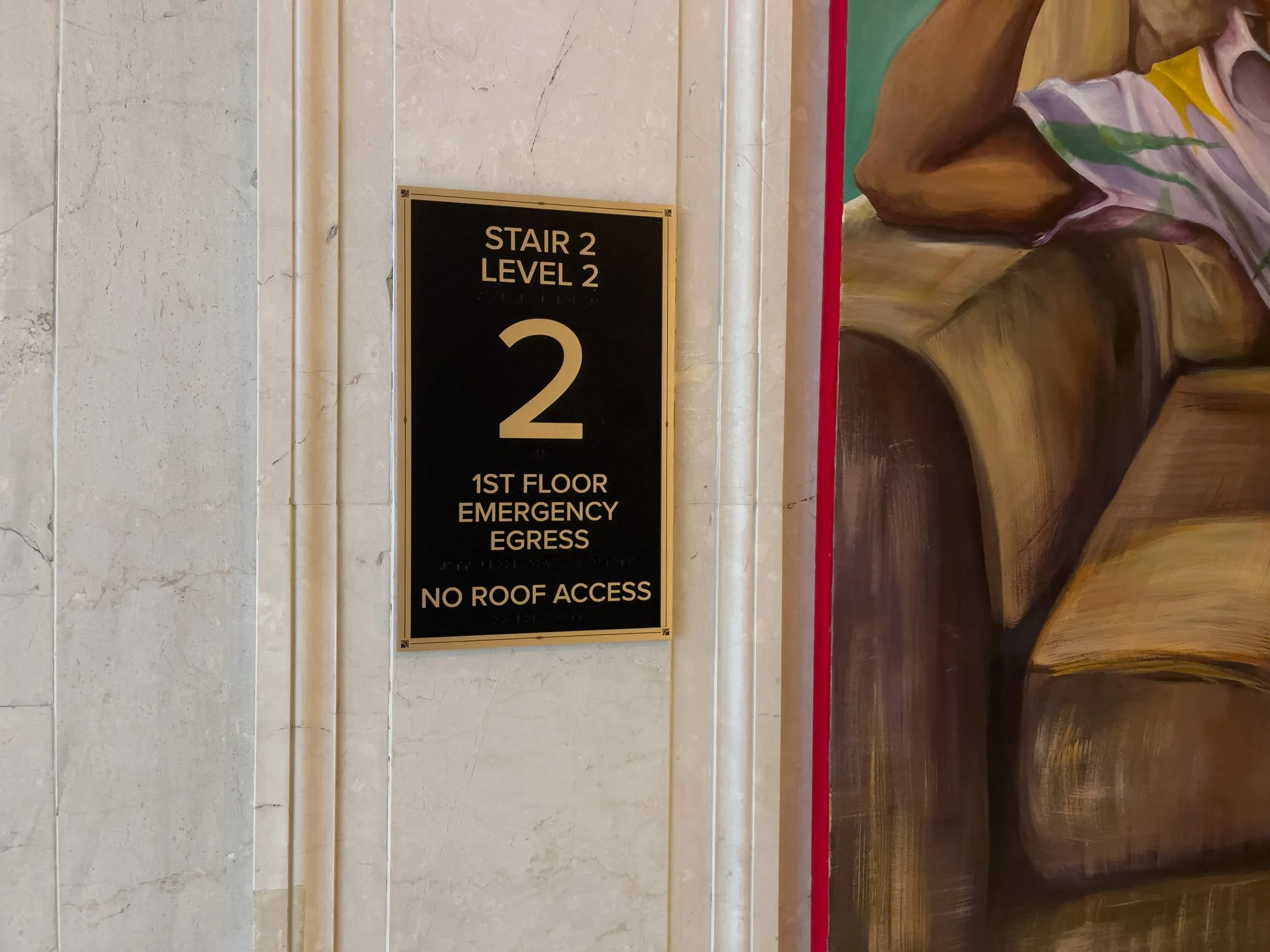
This includes Evacuation Maps, Fire Extinguisher IDs, and Stairwell Identification. We work directly with Fire Marshals and code consultants to ensure every "Exit" sign and egress path meets strict visibility and luminance requirements.
-

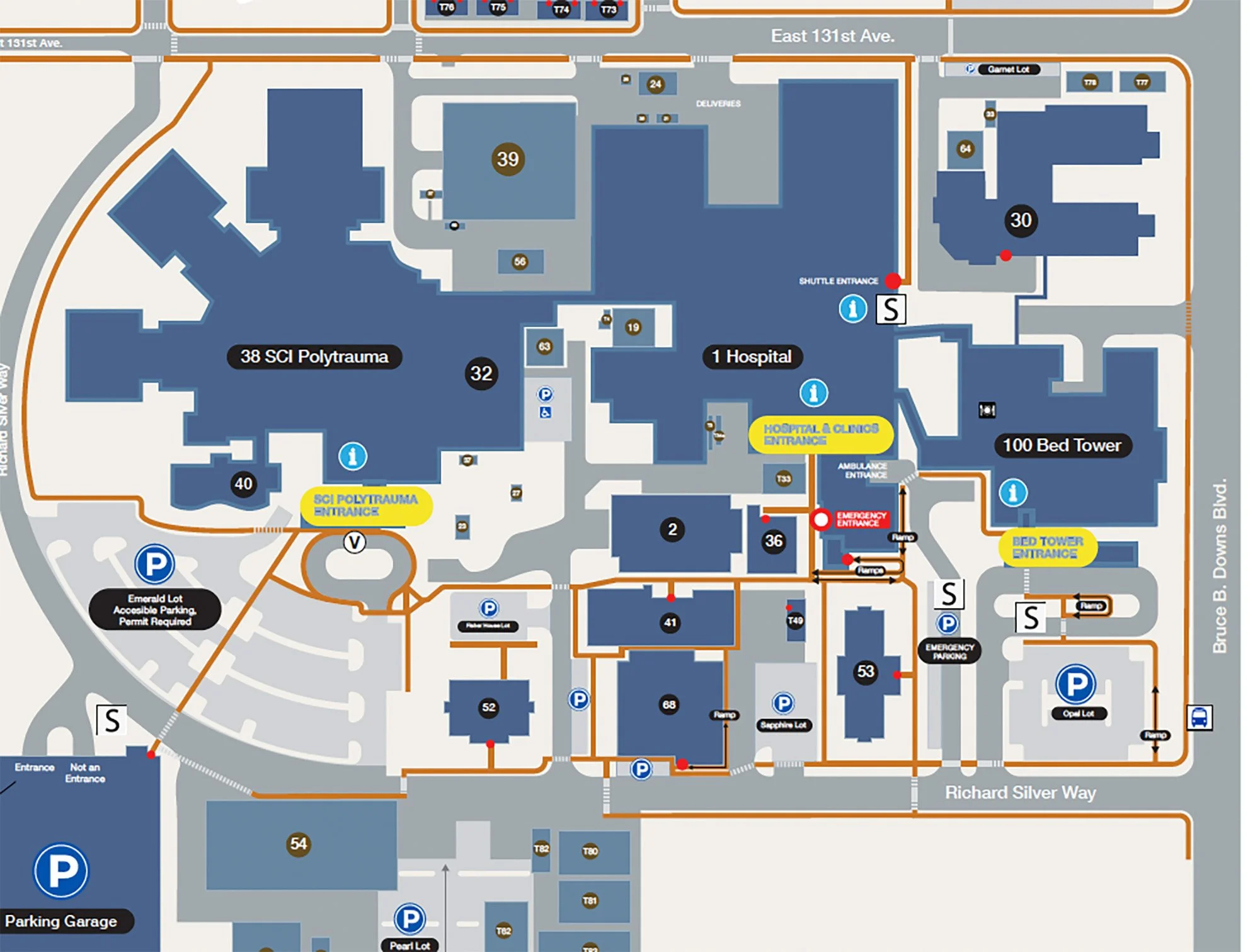
Vehicular & Traffic Control
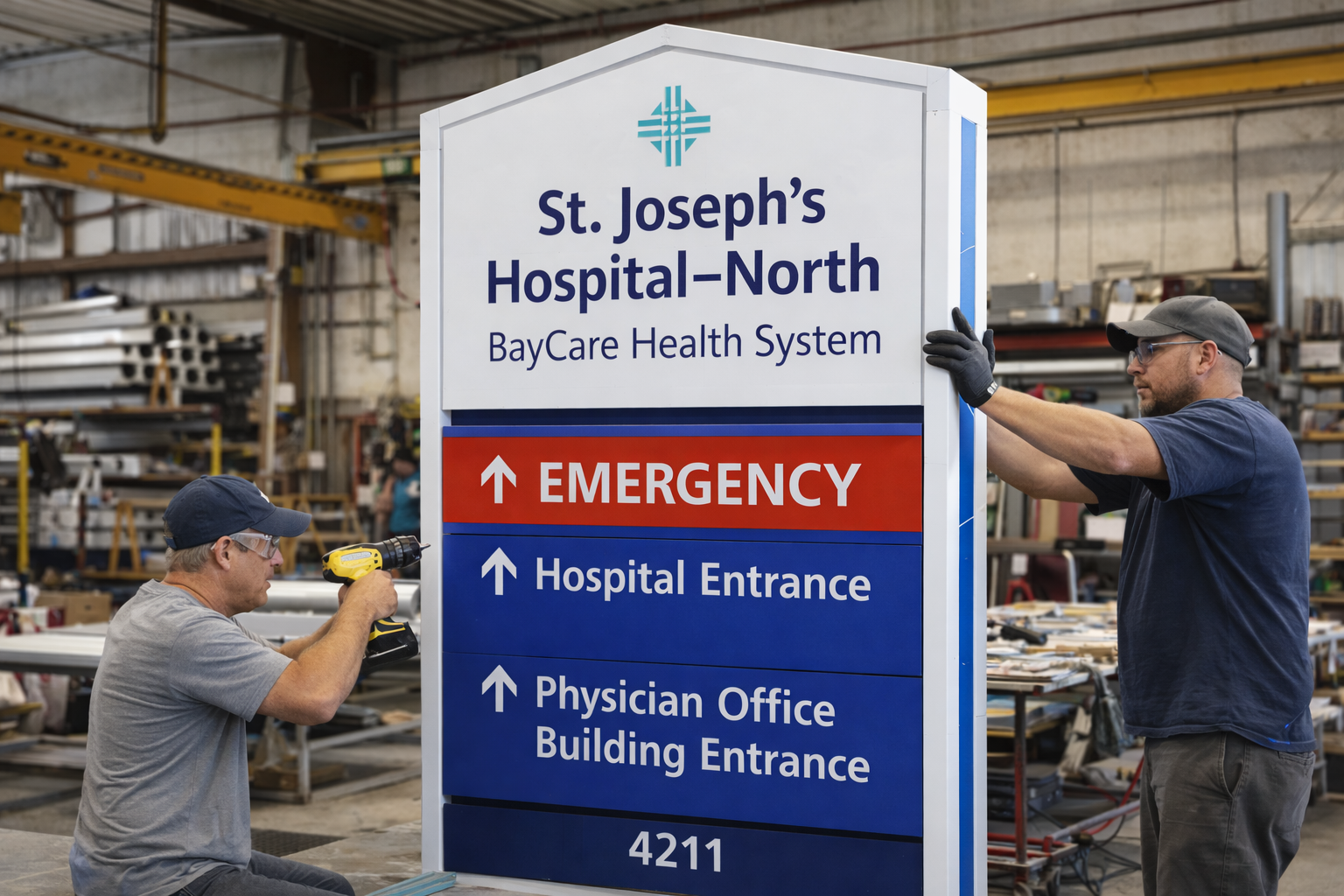
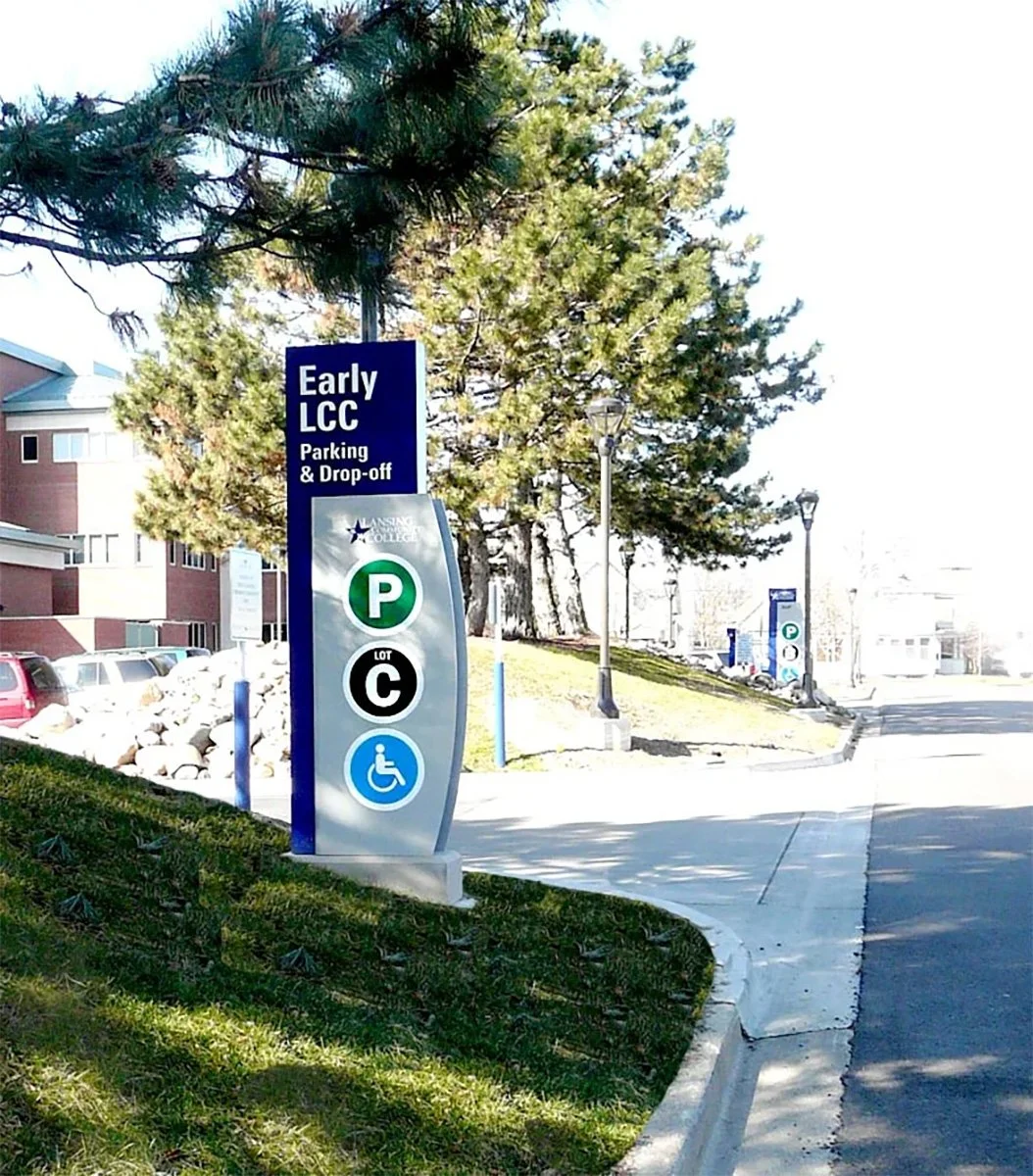
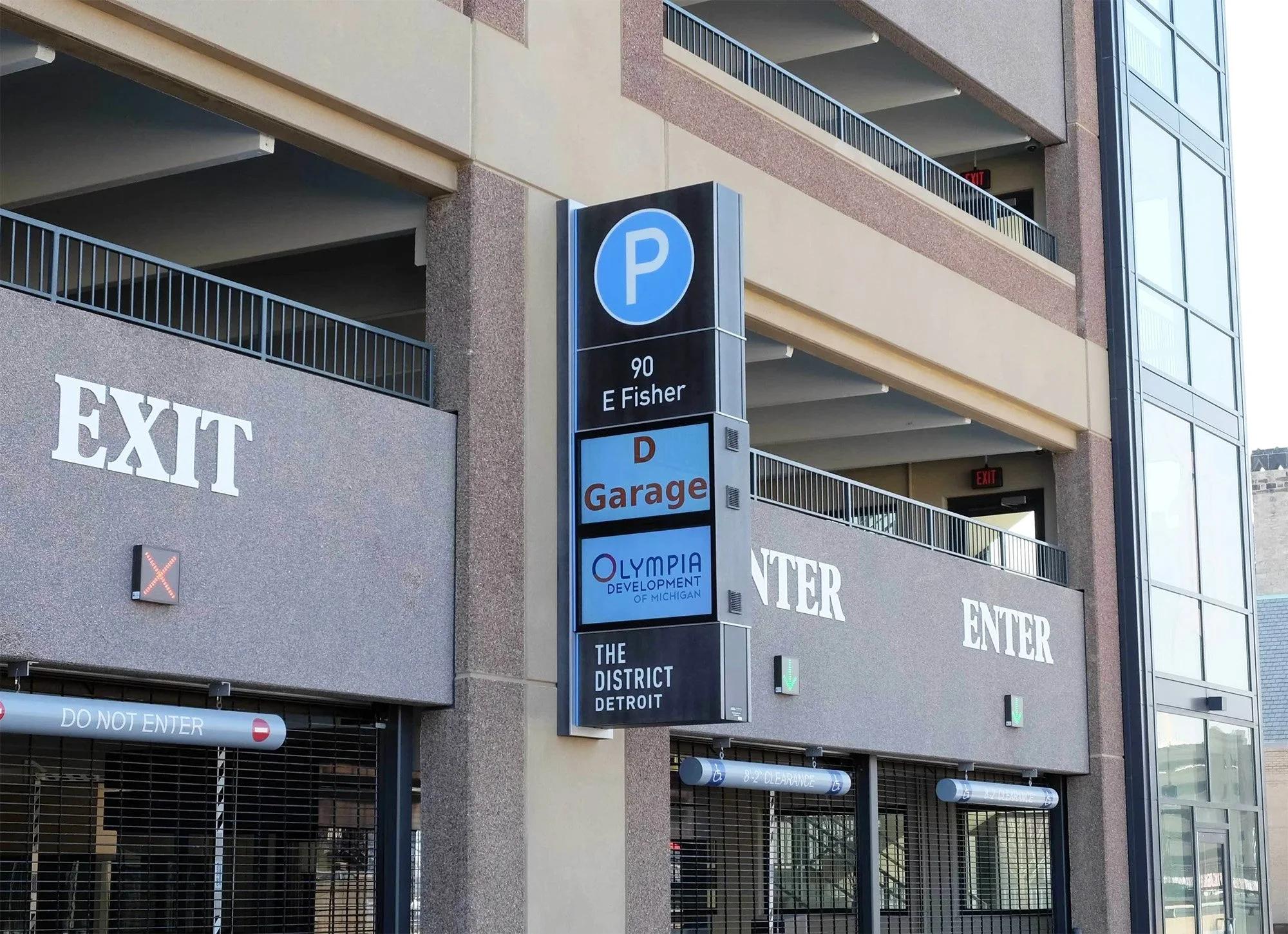
For exterior campuses, "Stop" signs and "Speed Limits" must meet federal retro-reflectivity standards. We fabricate Department of Transportation (DOT) grade signage that ensures legal enforceability and driver safety on private roads.
-
Occupational Health & Safety
For back-of-house, industrial, or laboratory environments. We design durable, chemical-resistant signage for "Biohazard," "High Voltage," and "Authorized Personnel Only" zones that withstand harsh cleaning and environmental stress.
-
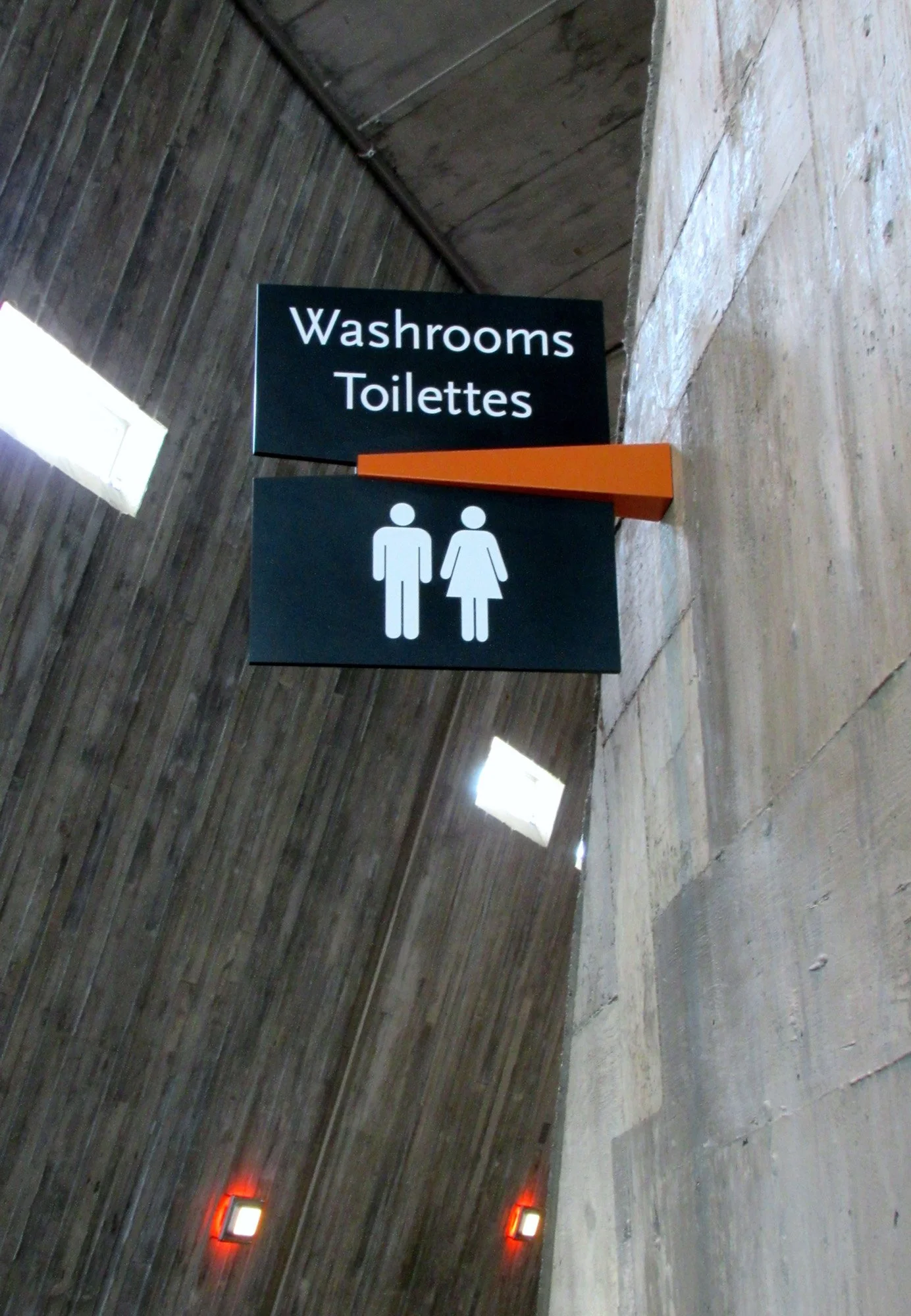
Accessibility & Inclusion
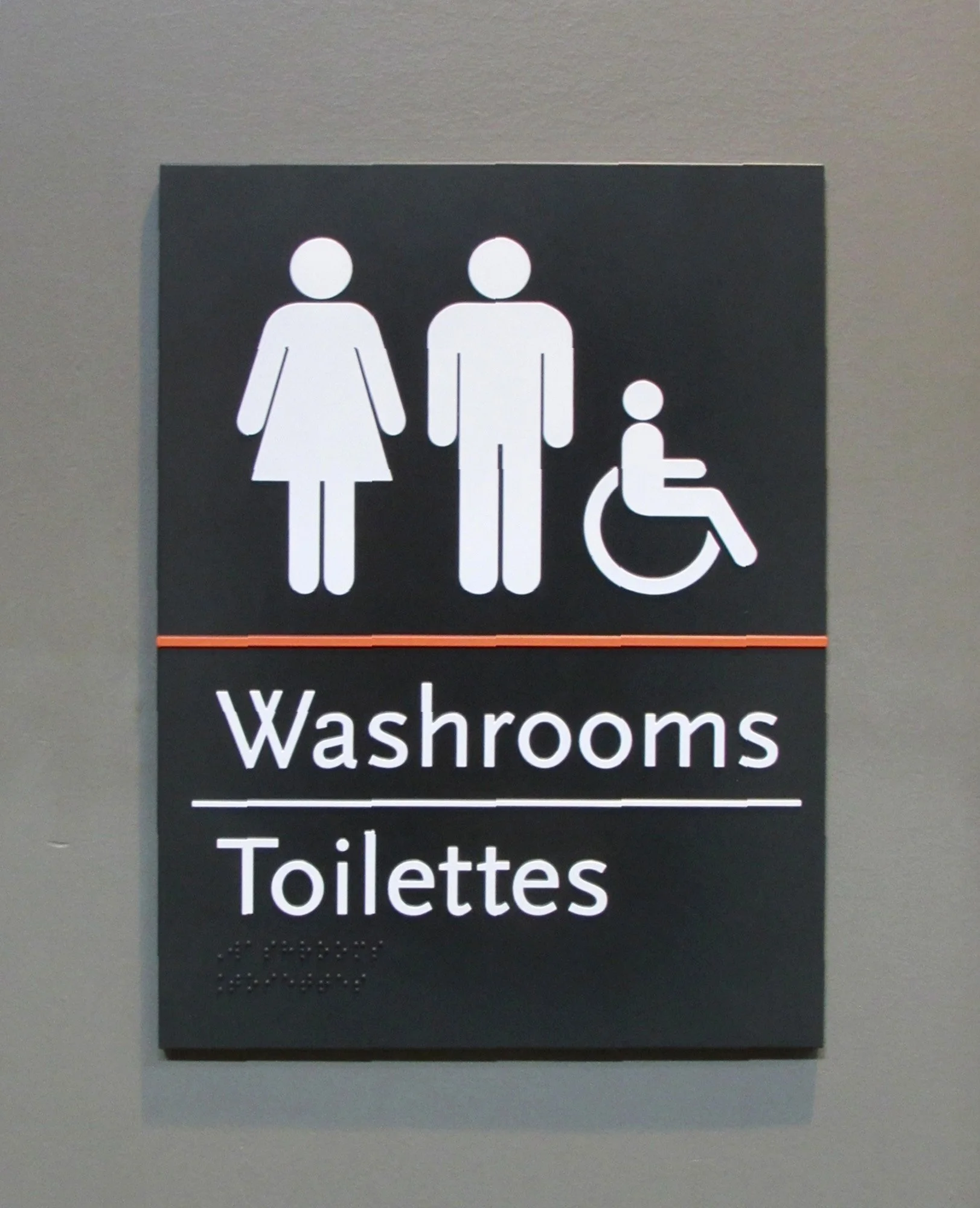
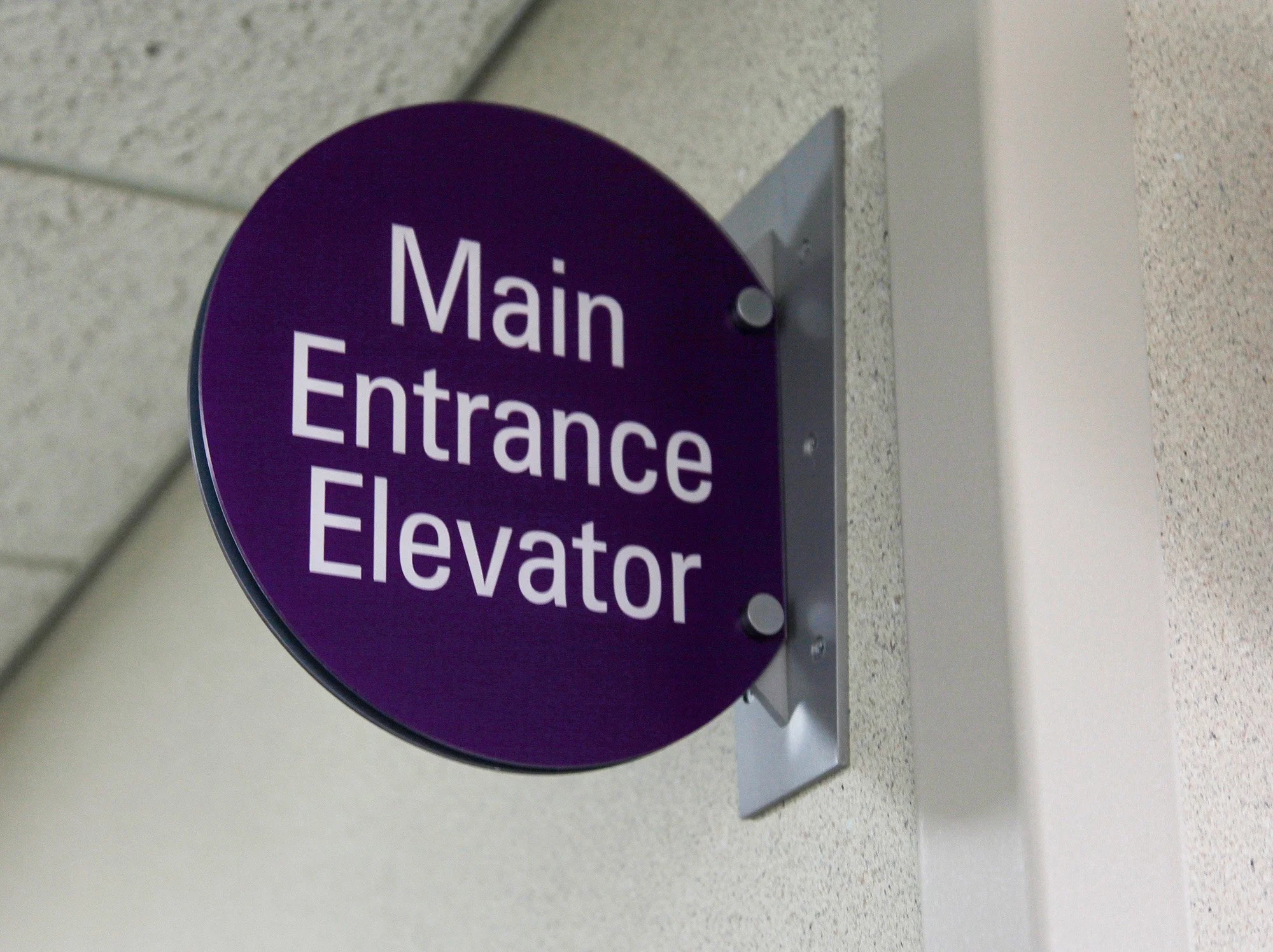
Regulatory signage also includes "Area of Refuge" and accessible entry markers. We ensure these signs are tactile, Braille-equipped, and mounted at compliant heights for universal access.
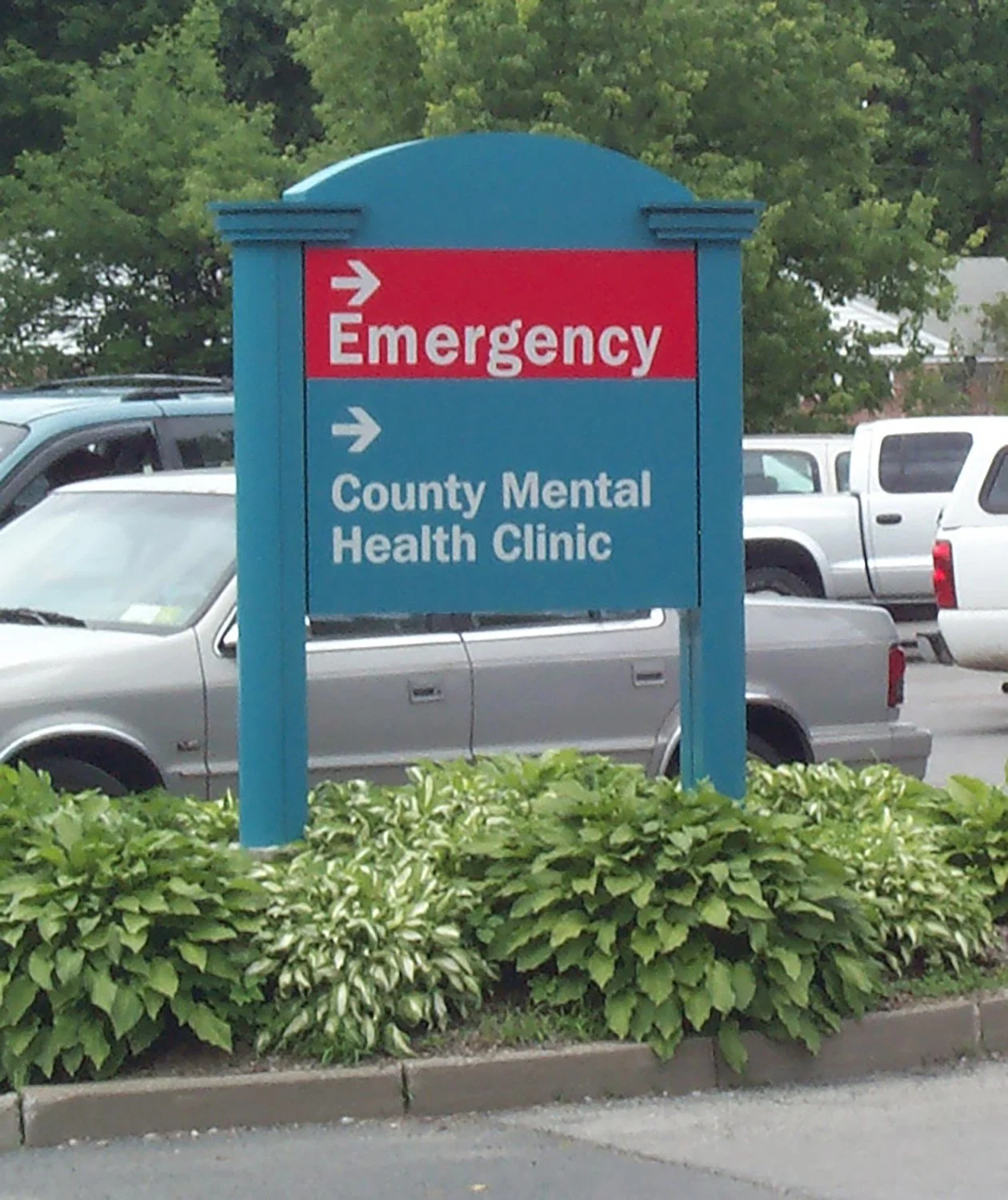
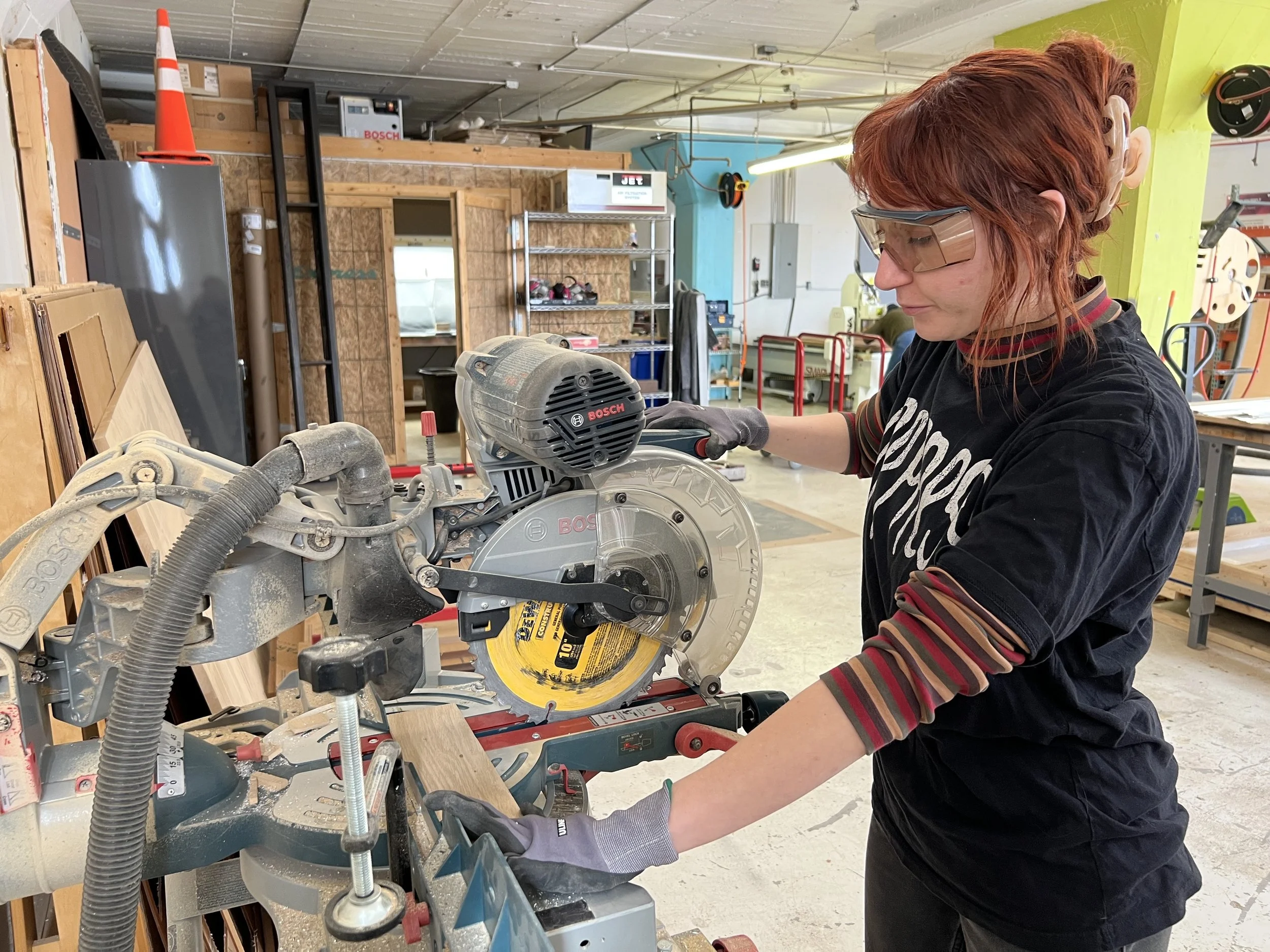
Custom vs. Catalog: Why Fabricate?
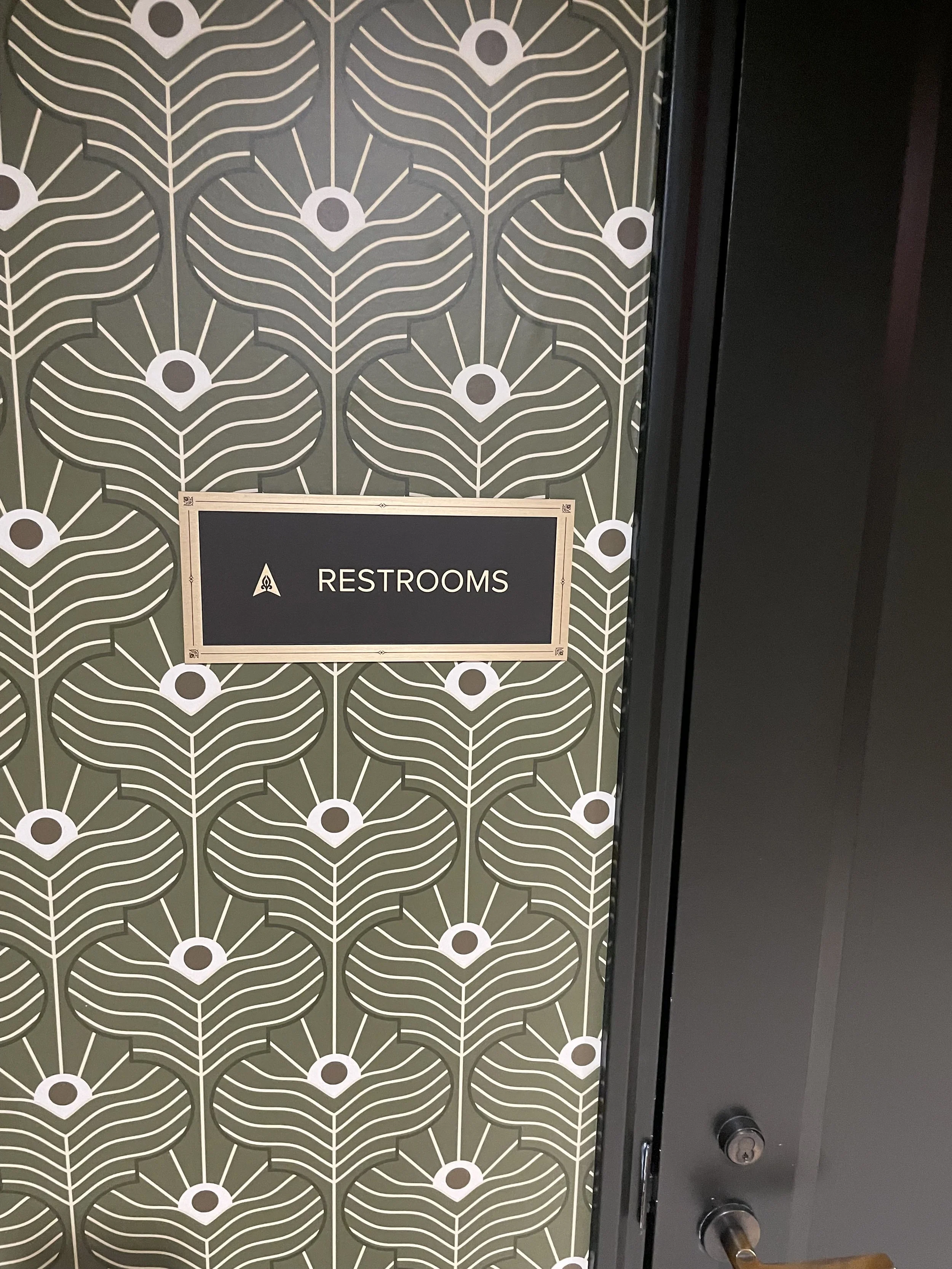
While you can buy a generic "Restroom" sign anywhere, a cohesive facility requires a custom system.
Material Longevity: We replace cheap vinyl stickers with subsurface-printed acrylics or engraved metals that won't peel off or be defaced.
Brand Consistency: We can incorporate your font family and brand colors into regulatory signs (where permitted by code), ensuring that even a "No Smoking" sign feels like part of your voice.
Tamper-Resistance: For schools and public spaces, we use specialized mounting hardware that prevents theft and vandalism.

Safety & Regulatory Signage in Practice
Our Process: Audit, Design, Verify
Regulatory signage leaves no room for error.
Code Audit:
We review your site plans against local building codes and ADA guidelines.
Location Planning:
We map every required sign from the parking lot entrance to the janitor's closet.
Fabrication:
We produce signs using code-approved materials and finishes.
Punch-List & Verification:
We walk the site to ensure every sign is installed at the correct height and location to pass final inspections.

Frequently asked questions
-
Yes. If your campus is open to public traffic, your signs likely need to meet MUTCD retro-reflectivity standards. We ensure all exterior traffic signs use the correct "High Intensity Prismatic" (HIP) or "Diamond Grade" sheeting to be visible at night.
-
Generally, no. Fire and Life Safety codes (NFPA) are very strict about color (usually Red or Green) and contrast. However, we can customize the housing, mounting bracket, and finish of the fixture to blend with your ceiling or wall, provided the illuminated text remains compliant with applicable regulations.
-
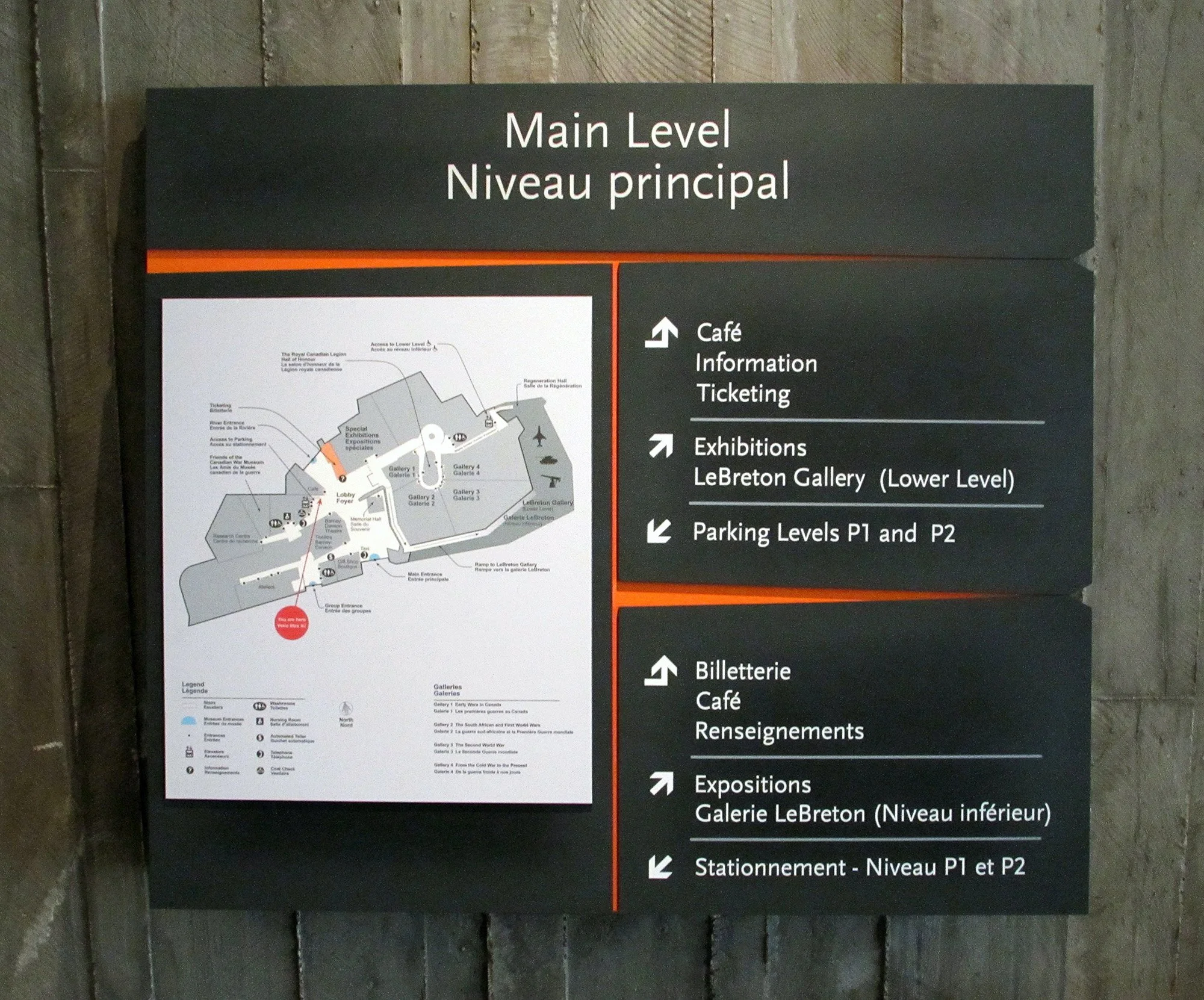
Most commercial and public buildings are required to post evacuation maps in key locations (lobbies, elevators, stairwells). We design these to be clear, non-cluttered, and oriented "Heads-Up" (meaning the map is rotated to match the viewer's perspective), which is critical during an emergency.
-
ADA rules apply to permanent room signs and safety labels. We ensure tactile depth (1/32"), character height, upper-case lettering, and Grade 2 Braille are all precisely manufactured to avoid fines and lawsuits.
-
Absolutely. We often perform "Signage Retrofits," surveying an older facility, identifying non-compliant or damaged signs, and replacing them with a fresh, code-compliant system that instantly modernizes the space.
Need safety and regulatory signage that communicates clearly and supports compliance?
We design regulatory and safety signs as part of comprehensive wayfinding systems grounded in strategy, planning, and thoughtful execution.