Best Materials for Durable Outdoor Wayfinding Signage (And What to Avoid)
Outdoor wayfinding signage must perform reliably for decades, not just years. These architectural elements guide pedestrians and motorists through sprawling campuses, healthcare facilities, and civic spaces. Consequently, choosing the right material is not merely an aesthetic choice; it directly affects structural integrity, readability, maintenance costs, and the overall user experience.
This guide explores the materiality of long-lasting outdoor signage, analyzing which substrates perform best in the built environment and which are prone to failure.
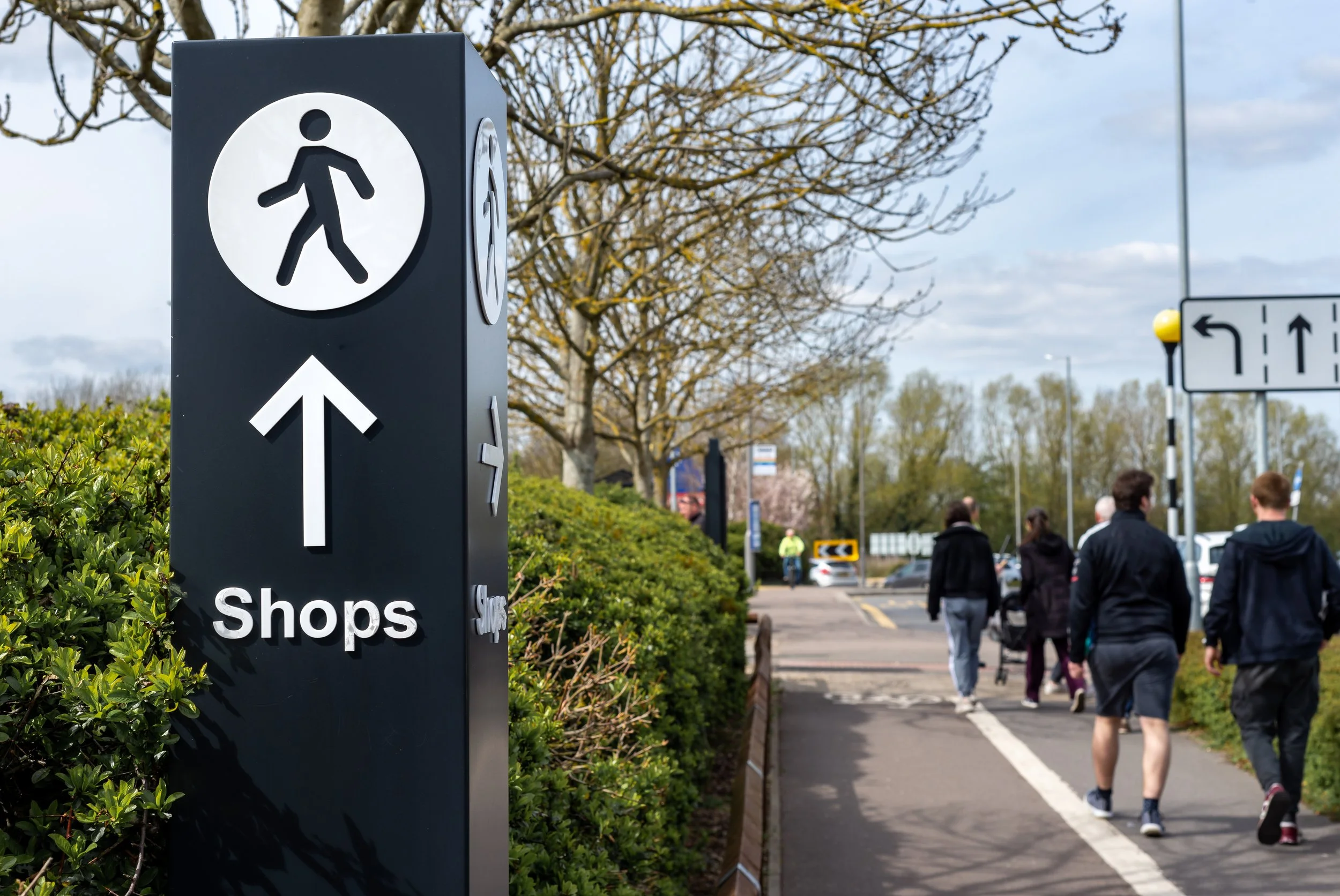
Understanding Why Outdoor Sign Material Matters for Wayfinding
Role of Material Choice in Long-Term Durability
Unlike temporary marketing displays, wayfinding signage is permanent infrastructure. It is exposed to relentless environmental stress and physical interaction. Materials must remain dimensionally stable and visually consistent over their entire lifecycle. Inferior specifications lead to rapid degradation, faded text, delaminating faces, and structural corrosion, ultimately compromising the facility's brand and navigation.
Impact of Weather, UV Exposure, and Temperature
Exterior signage must withstand a complex array of forces: UV radiation, moisture ingress, wind loads, and freeze-thaw cycles. Thermal expansion is a critical factor; materials that perform well in climate-controlled interiors often warp or buckle outdoors when subjected to extreme heat or cold. A robust material strategy accounts for these physical shifts to prevent failure at joints and fastening points.
Wayfinding vs. Promotional Signage
Wayfinding is functional and statutory, whereas promotional signage is often transient. Because wayfinding systems must meet strict safety and accessibility codes, the material selection prioritizes longevity and legibility over low upfront costs. The goal is permanence.
Key Factors to Consider When Selecting Outdoor Sign Materials
Environmental Exposure and Site Conditions
Specification begins with a site analysis. A facility in a coastal environment requires different alloy grades than one in an arid desert or a region with heavy snowfall. Saline air, industrial pollutants, and UV index levels all dictate which materials will survive. Ignoring these site-specific conditions is the leading cause of premature signage failure.
Expected Lifespan and Total Cost of Ownership (TCO)
Initial fabrication costs rarely reflect long-term value. While durable materials like stainless steel or bronze carry a higher upfront investment, they significantly reduce the Total Cost of Ownership by minimizing repair, refinishing, and replacement cycles.
Maintenance Requirements
Some materials, like untreated metals, develop a patina; others require regular cleaning or protective clear coats to maintain their original appearance. For healthcare facilities and universities where maintenance teams are already stretched thin, specifying low-maintenance materials is a strategic operational decision.
ADA Compliance and Accessibility
Outdoor accessibility is non-negotiable. Materials must comply with ADA requirements for contrast, tactile finishes, and non-glare surfaces. The choice of material affects the fabricator’s ability to adhere to these strict federal standards without compromising the design intent.
Brand Aesthetics and Finish Options
Materiality extends the architectural brand. Whether the goal is sleek modernity or heritage tradition, the finishes, brushed, anodized, painted, or oxidized, must align with the organization's visual language while retaining their durability.
Best Outdoor Sign Materials for Wayfinding Signage
Aluminum Signage
Aluminum is the industry standard and the workhorse of the architectural signage industry. It is lightweight, structurally rigid, and naturally corrosion-resistant. It accepts a wide variety of high-performance finishes, including polyurethane paints and anodizing, making it highly versatile for complex wayfinding programs.
Best Applications: Aluminum is the preferred substrate for post-and-panel systems, monolithic totems, and vehicular directionals. Its strength-to-weight ratio allows for the fabrication of large-scale elements without overburdening the foundation or mounting structure.
Stainless Steel Signage
Durability in High-Traffic Environments. For environments requiring maximum resilience, stainless steel is unmatched. It resists impact, vandalism, and extreme weather. In coastal areas, marine-grade (316) stainless steel is essential to prevent pitting and corrosion from salt spray.
Ideal Use Cases Stainless steel is frequently utilized for high-touch elements, such as pedestrian kiosks, donor recognition walls, and architectural lettering in civic or institutional settings.
Bronze Signage
Longevity and Architectural Appeal: Bronze is chosen for its permanence and prestige. Unlike materials that degrade, bronze ages gracefully, developing a natural patina that protects the metal. It implies stability and history, making it a favorite for institutions with a long legacy.
Common Uses: Bronze is the material of choice for commemorative plaques, university donor walls, and heritage markers that demand timelessness.
Composite Aluminum Panels (ACM)
Lightweight Structure and Flatness Aluminum Composite Material (ACM) consists of two thin aluminum skins bonded to a polyethylene or fire-retardant core. This results in a panel that is incredibly flat, dimensionally stable, and significantly lighter than a solid aluminum plate.
Where Composites Perform Best ACM is ideal for large-format directional panels and wall-mounted directories. Its rigidity prevents the "oil-canning" (rippling) effect often seen in thin sheet metals.
High-Performance Rigid Plastics and Acrylics
When Plastics are Appropriate. While generally less durable than metal, UV-stabilized acrylics and polycarbonates have a specific role in exterior wayfinding, particularly for illuminated faces and tactile text elements. When properly integrated into a metal enclosure, they provide necessary contrast and light transmission.
Limitations: These materials should be used selectively. Even high-grade plastics are more susceptible to thermal expansion and UV degradation over time than their metal counterparts.
Outdoor Sign Materials to Avoid or Use with Caution
Untreated Wood Signage
Moisture and Maintenance Risks Wood is hygroscopic; it absorbs and releases moisture, leading to warping, checking, and rot. While aesthetically pleasing, it requires aggressive, ongoing maintenance to survive outdoors. For permanent wayfinding, wood effects made from aluminum or high-pressure laminate are superior alternatives.
Low-Grade PVC and Foam Boards
Why These Materials Fail: Expanded PVC and foam products are intended for interior or temporary use. In the outdoors, UV radiation makes them brittle, and heat causes severe warping. They lack the structural density required for permanent installation.
Temporary Vinyl and Banner Materials
Short-Term Solutions: Vinyl banners and calendered vinyl graphics are temporary fixes, not wayfinding solutions. They fade rapidly and lack the authority of a permanent architectural element.
Matching Outdoor Sign Material to Wayfinding Location
Healthcare Campuses
Hospitals require materials that project cleanliness and competence. Aluminum and stainless steel are standard here due to their sterile appearance and ease of cleaning, which help ensure the facility looks well-maintained. See our healthcare wayfinding case study for an example.
Educational Institutions
Universities often require a blend of durability and tradition. A common strategy is to use bronze or stone for primary identification to suggest permanence, paired with modular aluminum systems for directional signage that can be updated as the campus evolves.
Municipal and Civic Systems
City signage faces the harshest abuse, from road salt to vandalism. Heavy-gauge aluminum and stainless steel with graffiti-resistant coatings are the only viable options for ensuring longevity in the public right-of-way.
Parks and Trails
Nature requires materials that withstand dampness and shade. Corten steel (weathering steel), stone, and anodized aluminum are popular choices that blend with the landscape while resisting organic growth and moisture.
The right materials are just the start see how our outdoor recreation wayfinding systems bring durable, weather-resistant navigation to parks, trails, and athletic facilities.
Design-Build Advantage in Outdoor Wayfinding Material Selection
Early Decision Making
Material selection should not be an afterthought. In a Design-Build model, fabrication experts are involved during the design phase. This ensures that the specified materials are not only aesthetically correct but also manufacturable and installable within the project budget.
Impact of Fabrication and Installation
Even the best material will fail if fabricated incorrectly. Issues like dissimilar metal corrosion (galvanic reaction) or improper drainage within a sign cabinet can destroy a sign from the inside out. Expert fabrication anticipates these technical challenges.
Balancing Design with Reality
A Design-Build team can value-engineer a project, suggesting alternative materials that achieve the architect’s visual intent while offering superior weatherability or lower costs.
Maintenance and Longevity Planning
Cleaning and Inspection
A proactive maintenance schedule is essential for preserving the finish of outdoor signage. Regular cleaning removes pollutants that can degrade coatings, while inspections catch loose fasteners before they become safety hazards.
Reducing Long-Term Costs
Investing in self-protective materials (such as anodized aluminum or bronze) reduces the need for repainting. This lowers the operational burden on facility management teams.
Planning for Future Expansion
Campuses grow. Using modular systems allows for replacing individual slats or panels without discarding the entire sign structure, ensuring the system remains current and sustainable.
Choosing the Right Outdoor Sign Material for Long-Term Success
A Strategic Approach
There is no single "perfect" material; there is only the right material for the specific application. A successful project balances the site's physical realities with the user's needs.
When to Work with a Specialist
Complex environments require more than a sign shop; they require an architectural partner. Nicolson Associates leverages a comprehensive Design-Build methodology to holistically evaluate these material choices, delivering wayfinding systems that are durable, compliant, and perfectly integrated into the built environment.