Interactive Digital Wayfinding Displays: Are They Worth It in 2026?
Interactive digital wayfinding solutions help users navigate physical spaces using dynamic screens, maps, and responsive tools. As a core component of modern wayfinding signage strategies, these platforms adapt to user input and changing environmental conditions to provide real-time, context-aware routing. By allowing users to engage with the environment through touchscreens and multilingual interfaces, these systems transform the visitor journey and make indoor navigation highly intuitive.
How Digital WayfindingDiffers from Traditional Signage
Traditional systems rely on static elements like physical directional signs, printed maps, and environmental graphics. Facility teams must physically replace these elements to update them. Conversely, digital wayfinding uses software to deliver dynamic directions. It adjusts routes, updates tenant information in real time, and provides interactive guidance. Static signs dominate simple layouts, while digital platforms thrive in complex or frequently changing environments.
Core Components of a Digital Wayfinding System
A complete digital navigation package typically includes:
Touchscreen kiosks that capture direct user input at critical decision points.
Digital directories that showcase dynamic destinations and routes.
Mapping software that calculates optimal navigation paths in real-time.
Content Management Systems (CMS) that empower administrators to push immediate global updates.
Types of Interactive Wayfinding Solutions
Kiosk-Based Wayfinding: Standalone interactive kiosks serve as primary indoor navigation tools at entrances and major intersections.
Mobile-Integrated Wayfinding: These platforms connect directly to personal mobile devices, allowing users to receive directions on the go.
Large-Format Interactive Displays: Strategically mounted wall directories in high-traffic areas offering broad overviews and specific routing.
How They Improve User Experience in Complex Environments
Interactive displays transform the user journey by making navigation direct and intuitive. Visitors search for destinations, view optimal routes, and receive step-by-step directions without needing to ask staff for help. This autonomy significantly reduces visitor stress. Furthermore, these platforms champion accessibility through clear visuals, readable typography, and inclusive design features.
Why Interactive Wayfinding Is Gaining Momentum in 2026
Demand for Real-Time Navigation in Smart Buildings
Modern smart buildings demand navigation tools that respond instantly to real-time conditions. Interactive displays integrate directly with building management systems to reflect immediate changes, such as meeting room availability or temporary corridor closures.
The Rise of Data-Driven Experiences
Users now expect personalized, responsive environments. Interactive displays adapt to user behavior, time of day, or specific locations. They deliver highly relevant navigation experiences that improve overall spatial usability.
Integration with Broader Digital Ecosystems
Wayfinding no longer operates in a silo. Modern displays integrate with facility management software, broader digital signage networks, and cloud platforms. This connectivity empowers administrators to maintain centralized control and push consistent updates across multiple campuses simultaneously.
Digital directories and interactive kiosks are transforming how shoppers navigate malls and lifestyle centers see how we integrate these tools into complete retail wayfinding systems.
Benefits of Interactive Digital Wayfinding Displays
Improved Navigation: Direct, clear instructions help visitors find their destinations faster and eliminate bottlenecks in high-traffic corridors.
Enhanced Engagement: Users actively control their search experience, increasing their dwell time and interaction with the brand environment.
Real-Time Updates: Facility managers can change directions, update tenant directories, or modify pathways instantly without creating new physical signs.
Actionable Analytics: These platforms track user searches and popular destinations, providing architectural teams with data to improve future spatial planning.
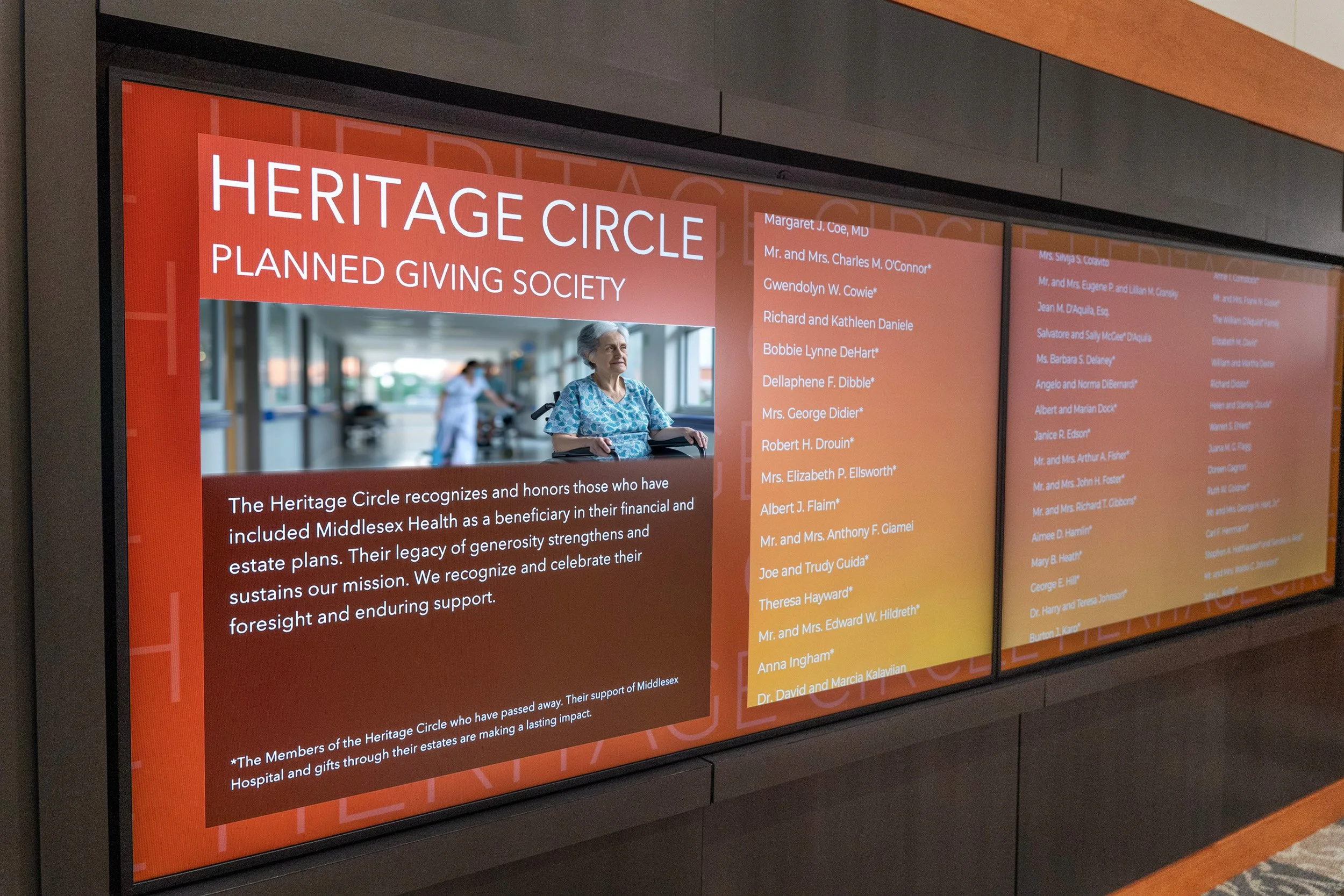
Stronger Environmental Integration: Digital screens seamlessly blend with architectural elements and the donor recognition wall, telling a cohesive brand story.
Challenges and Limitations to Consider
Higher Initial Investment: Hardware, software licensing, installation, and system integration require a larger upfront budget compared to static signs.
Ongoing Maintenance: Content management systems require regular updates, and facility teams must regularly monitor hardware to ensure consistent uptime.
Risk of Over-Engineering: Simple environments do not need interactive screens. Forcing digital solutions into straightforward spaces creates unnecessary complexity and frustrates users.
Accessibility Demands: Design teams must rigorously test user interfaces to ensure strict ADA compliance and inclusive usability for all visitors.
Cost vs. ROI: Are Interactive Displays Worth It?
Evaluating the total cost of ownership requires facility managers to look beyond the initial setup and include lifecycle maintenance, software subscriptions, and operational expenses. However, efficiency gains drive the ROI. Facilities offset initial costs by reducing reliance on reception staff, speeding visitor processing, and minimizing operational disruptions.
Where Interactive Wayfinding Works Best
Healthcare Facilities: Patient navigation platforms reduce missed appointments and alleviate stress in complex hospital wings, a benefit clearly demonstrated in recent healthcare wayfinding system case studies.
Universities and Campuses: Digital directories guide new students and visitors across sprawling, multi-building environments.
Corporate Offices: Interactive lobby displays streamline workplace navigation and reduce the burden on front-desk personnel.
Museums and Cultural Spaces: Screens blend exhibition routing with deep, engaging educational content.
Mixed-Use Developments: Digital tools unify navigation across retail, residential, and commercial zones.
When Traditional or Static Wayfinding Is More Effective
Simple Environments: Linear spaces function perfectly well with clear, static directional signage.
Budget-Constrained Projects: Traditional signs offer superior cost-effectiveness with minimal long-term maintenance.
Low Visitor Turnover: Environments hosting the same daily users do not require the dynamic flexibility of digital screens.
Hybrid Wayfinding Systems: The Practical Approach
The most effective environments champion a hybrid approach. Static signage provides the baseline architectural navigation, while interactive digital touchpoints offer deep, detailed guidance at critical intersections. By starting with a core wayfinding strategy rather than leading with technology, organizations can scale their digital integrations over time and add screens only where user behavior clearly dictates the need.
Future of Digital Wayfinding Beyond 2026
The future points toward AI-powered navigation that predicts user routes based on crowd flow and real-time data. Furthermore, augmented reality (AR) increasingly bridges the gap between large-format architectural displays and users' personal mobile devices, extending smart wayfinding into the broader connected city.
Key Takeaways
Interactive digital wayfinding uses screens, touch interfaces, and real-time data to guide people through complex environments, combining mapping and user interaction into one platform.
These tools deliver real value in large, high-traffic environments like hospitals, campuses, and mixed-use developments by improving visitor flow and reducing reliance on staff for directions.
While requiring a higher initial investment than traditional signage, interactive displays generate long-term ROI through operational savings, enhanced visitor experiences, and reduced spatial confusion.
Digital platforms excel in complex spaces with constantly changing information, whereas static signage often remains the superior choice for smaller or simpler environments.
Conclusion
Interactive digital wayfinding displays deliver immense value in complex, shifting environments by turning navigation challenges into seamless journeys. Yet, technology alone cannot solve spatial confusion. Organizations achieve the highest return on investment only when they align digital screens with a strategic, human-centered approach to architectural design.
This is where expert planning makes the difference. At Nicolson Associates, we bridge the gap between physical space and digital technology, designing and building wayfinding systems that truly support the people who use them.
Ready to bring clarity to your facility? Contact Nicolson Associates today to start the conversation with a wayfinding expert.
FAQs for Digital Wayfinding
1. How do interactive digital wayfinding systems impact operational efficiency in large facilities?
Interactive digital wayfinding reduces the need for staff assistance by guiding visitors directly to their destinations. This improves operational efficiency, especially in hospitals, campuses, and corporate buildings where staff often spend time giving directions. It also helps reduce delays, missed appointments, and congestion in high-traffic areas.
2. What factors should be evaluated before investing in a digital wayfinding system?
Organizations should assess space complexity, visitor volume, frequency of layout changes, and existing signage systems. Budget, long-term maintenance, and integration with building systems also play a critical role. A clear wayfinding strategy should always come before selecting technology.
3. Can interactive wayfinding systems integrate with existing building technologies?
Yes, modern digital wayfinding systems can integrate with facility management systems, digital signage networks, and cloud-based platforms. This enables real-time updates, centralized control, and improved coordination with building operations, such as room scheduling and access control.
4. What are the most common mistakes organizations make when implementing digital wayfinding?
A common mistake is focusing on technology rather than on user behavior and spatial planning. Poor display placement, unclear interface design, and a lack of content strategy can reduce effectiveness. Overusing interactive systems in simple environments can also create unnecessary complexity.
5. How does user data from digital wayfinding systems improve future space planning?
Digital wayfinding systems collect data such as search patterns, popular destinations, and navigation paths. This data helps identify high-traffic areas, points of confusion, and user behavior trends. Organizations can use these insights to improve layout design, signage placement, and overall navigation efficiency.