What Is a Wayfinding Master Plan? And Why Projects Fail Without One
Many architectural and facility projects fail not because the physical signs lack aesthetic appeal, but because the wayfinding signage was never designed as a cohesive, strategic system. In complex environments such as healthcare campuses, universities, civic spaces, and commercial properties, a disjointed approach to navigation inevitably leads to visitor confusion, severe operational inefficiencies, and costly post-construction retrofits. When teams skip strategic planning and rush straight into design or fabrication, they end up placing beautiful signs in the wrong locations, using inconsistent terminology, and frustrating the very people they are trying to guide.
A wayfinding master plan is the foundational strategy that must precede design, fabrication, or installation. It is a comprehensive blueprint that dictates how people understand where they are, determine where they need to go, and navigate the built environment with confidence. At Nicolson Associates, we know that effective wayfinding systems require a clear structure based on user movement, destination hierarchy, and strict accessibility standards. This guide breaks down exactly what a master plan entails, why it is critical, and why treating signage as a last-minute checklist is a guaranteed recipe for failure.
What Exactly Is a Wayfinding Master Plan?
A wayfinding master plan is a strategic document that guides people in navigating a multi-site environment, district, campus, or complex building. It goes far beyond simply dropping pins on a floor plan to indicate where ADA-compliant signs should be bolted to the wall. It defines the operational logic of the entire navigation system.
A complete strategy connects interior signs, exterior signs, digital wayfinding, and architectural cues into a single, unified language. The ultimate goal is simple but profound: to remove the "stress of navigation" so visitors can move through a space intuitively and safely.
Defining Navigation Goals and User Journeys
A successful plan starts by defining what the system must achieve. For most facilities, the system needs to help people find entrances, identify their current location, choose the most efficient route, and return to their point of origin with zero friction.
Crucially, a master plan analyzes the user experience across different demographics. A first-time patient arriving at a hospital is under high stress and needs immediate, glaringly clear directional signs. A daily staff member needs subtle confirmation. A delivery vendor needs specific logistical routing. A thorough user journey analysis maps where these different groups arrive, where they hesitate, and where wayfinding solutions must intervene.
Why Projects Fail Without a Strategic Plan
When facility owners and architectural teams skip the master planning phase, the resulting problems often masquerade as "design issues" when they are actually "system failures." Here is why projects derail without a cohesive strategy.
1. Starting With Aesthetics Instead of Strategy
Many teams start a signage project by debating colors, materials, or beautiful custom signage fonts. While visual identity matters, it should never lead the process. If you design the signs before you map the circulation paths, you will create visually stunning markers that fail to guide people. Attractive signs cannot fix unclear destination hierarchies, inconsistent department naming, or missing decision points.
2. The "Band-Aid" Approach to Signage
Without a master plan, signage problems compound slowly over time. One department requests a custom plaque. A renovation temporarily shifts a hallway route, and a printed piece of paper is taped to a door—where it remains for six months. Over time, the facility becomes cluttered with mismatched, conflicting messages. A master plan establishes strict signage standards that prevent rogue, one-off decisions and protect the building's visual integrity.
3. Placing Signs After the Decision Point
Location matters just as much as legibility. A beautifully fabricated directional sign is completely useless if the visitor only sees it after they have already guessed which way to turn down a corridor. A master plan maps out critical intersections, elevator banks, and lobbies, ensuring that information is presented exactly when the user needs to make a decision, not a moment too late.
4. Treating ADA Compliance as an Afterthought
ADA regulations are not just a punch-list item for final inspection. If teams address the Americans with Disabilities Act requirements too late, they frequently encounter architectural conflicts. Suddenly, the required mounting heights for tactile characters and Grade 2 Braille clash with wall sconces, or the required clear floor space is blocked by door swings. A master plan integrates ADA-compliant wayfinding from day one, preventing expensive rework.
Core Components of a Complete Wayfinding Strategy
A robust wayfinding master plan provides the project team with actionable, factual data. While the scope varies by facility, a professional master plan typically includes the following core elements:
Existing Conditions Audit & Stakeholder Interviews
Before creating new solutions, you must understand the current failures. An audit reviews missing signs, outdated terminology, circulation bottlenecks, and accessibility gaps. This is paired with stakeholder interviews—speaking with leadership, security, maintenance, and front-desk staff. Staff members often know exactly where visitors get lost because they spend hours every week acting as a human directory.
Destination and Message Hierarchy
Inconsistent naming is the enemy of navigation. If a patient is told to go to "Oncology," but the directory says "Cancer Center," and the wall sign says "Infusion Clinic," the system has failed. A master plan dictates a strict naming standard across the entire facility. Furthermore, it establishes a message hierarchy: preventing information overload by deciding which primary destinations get top billing on overhead signs, and which secondary destinations are reserved for smaller identification signs.
Comprehensive Sign Type Programming
Not every sign does the same job. A master plan categorizes the required sign family, which typically includes:
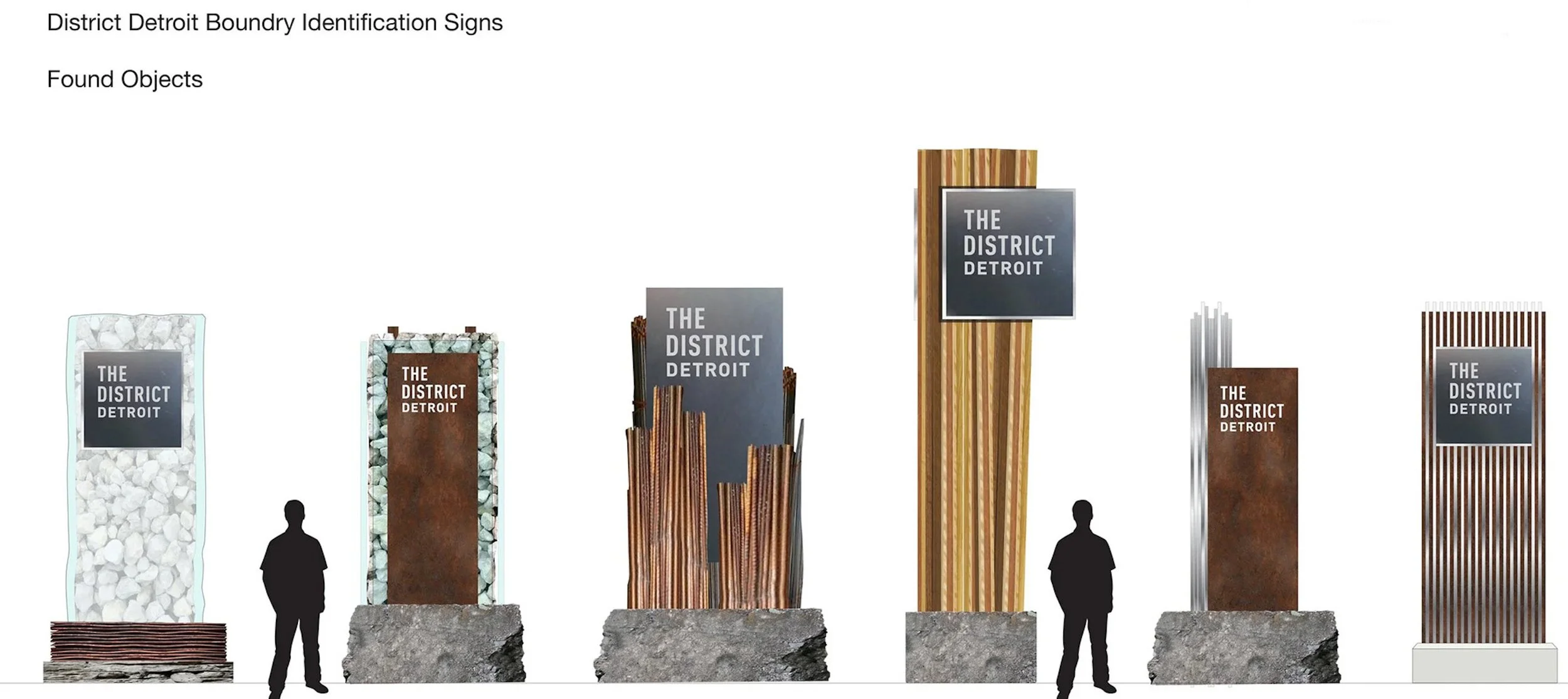
Gateway and Exterior Signs: To capture attention from the roadway.
Directories and Maps: For initial orientation in lobbies.
Overhead Directional Signs: For navigating long corridors and intersections.
Room Identification Signs: Featuring raised text and Braille for permanent spaces.
Regulatory and Life Safety Signs: For exits, stairwells, and strict code compliance.
Budgeting, Phasing, and Implementation
Large campuses rarely replace every sign overnight. A master plan provides an implementation roadmap, identifies high-priority zones requiring immediate intervention, and structures the rollout of Phases 1 and 2 and long-term maintenance. This protects the budget and minimizes disruption to daily operations.
Environments That Demand Strategic Navigation
While every building benefits from clear signage, certain complex environments absolutely require a master plan to function effectively:
Healthcare Facilities: Where patients are navigating under immense emotional and physical stress, and where lost visitors directly impact clinical efficiency. Healthcare campuses are among the most complex navigation environments, learn how strategic healthcare wayfinding signage brings clarity to hospitals, clinics, and medical offices.
Higher Education Campuses: Where sprawling, multi-building footprints, shifting department names, and massive event crowds require an adaptable, scalable wayfinding system.
Corporate & Commercial Campuses: Where balancing high-end brand aesthetics with strict tenant routing and accessibility codes is critical for leasing and user satisfaction.
Civic & Government Buildings: Where the general public is often unfamiliar with the space, they must be able to easily locate specific service counters, courtrooms, and accessible routes. High-density residential and mixed-use developments require master-planned navigation see our approach to residential and mixed-use wayfinding that connects parking, lobbies, amenities, and individual units.
The Cost of Skipping the Process
A master plan connects strategy to fabrication. Without it, fabricators are forced to guess on dimensions, materials, and mounting conditions. Installers arrive on-site only to find that the planned sign locations conflict with lighting fixtures or HVAC registers. This results in change orders, reprinted sign faces, blown budgets, and delayed grand openings.
By defining the system before production begins, a wayfinding master plan drastically reduces risk, aligns all stakeholders, and guarantees that the final installation matches the architectural vision.
Build a System That Works for Everyone
Implementing a successful wayfinding program requires a proactive, strategic approach. Treating signage as an afterthought almost always leads to aesthetic mismatches, operational frustration, and code violations.
Whether you are managing a massive healthcare campus, a university, or a modern corporate headquarters, your wayfinding signage should seamlessly support the full visitor journey. Don't settle for a basic sign vendor when you need to create solutions that stand the test of time, adapt to future growth, and pass strict legal scrutiny.
At Nicolson Associates, we partner with architects, facility managers, and building owners to turn confusing, complex environments into clear, accessible spaces. As a true design-build partner, we guide your project from the initial master planning and strategy phases through custom fabrication and precise installation.
Stop treating the symptoms of poor navigation and fix the system.
Are your visitors constantly asking for directions? Are temporary paper signs cluttering your walls?
Contact Nicolson Associates today to discuss developing a comprehensive Wayfinding Master Plan for your facility.
FAQs for Wayfinding Master Plan
1. How do I know if my facility needs a wayfinding master plan instead of just new signs?
Your facility likely needs a wayfinding master plan if visitors still get lost despite existing signs. This usually means the issue is not only the sign design. It may involve unclear routes, poor sign placement, inconsistent destination names, confusing entrances, or missing decision points. New signs can help only when the wayfinding strategy is clear first.
2. What problems should a wayfinding master plan identify before signage design starts?
A wayfinding master plan should identify the key issues affecting visitor navigation. This may include confusing parking, unclear entrances, missing directional signage, outdated department names, weak message hierarchy, accessibility gaps, and signs placed after key decision points. The goal is to solve navigation problems before design, fabrication, and installation begin.
3. Why do wayfinding projects fail when teams skip the planning phase?
Wayfinding projects fail without planning because teams often start with colors, materials, or sign styles before they understand how people move through the space. This can lead to poor sign locations, inconsistent messages, duplicate signs, missed destinations, ADA signage issues, and costly changes during fabrication or installation.
4. How does a wayfinding master plan help hospitals, campuses, and public buildings?
A wayfinding master plan helps guide different user groups through complex environments. In hospitals, it can support patients and families. On campuses, it can help students, visitors, and event guests. In public buildings, it can help people find departments, service counters, entrances, and exits. It creates a signage system based on real visitor journeys rather than isolated sign requests.
5. What should be included in a wayfinding master plan for a growing facility?
A wayfinding master plan for a growing facility should include a site audit, circulation analysis, destination hierarchy, naming standards, sign-type strategy, sign-location plan, message schedule, ADA and regulatory signage review, digital wayfinding needs, and a phased implementation plan.